Furofuki Daikon (Simmered Daikon with Sweet Miso Sauce)
Furofuki daikon (風呂吹き大根) is thick rounds of daikon radish simmered in dashi until they’re soft enough to cut with chopsticks, then topped with a sweet, glossy miso sauce. It’s one of the plainest dishes in Japanese home cooking — a winter side dish your grandmother would make — and if you’ve watched Demon Slayer, you might know it as Muichiro Tokito’s favorite food.
Here’s how we actually make it at home. I cooked the daikon in an electric pressure cooker, which turns an hour of simmering into 15 minutes, and made the miso sauce with our own rice miso — a batch a local koji shop makes for us from our rice. The leftover dashi from simmering the daikon didn’t go to waste either: it became that night’s miso soup.
Disclosure: some links below are affiliate links. As an Amazon Associate I earn from qualifying purchases, at no extra cost to you.
 Save
The Short Answer
If you just want the method:
- What it is: furofuki daikon is daikon radish simmered in dashi until very soft, served hot with a sweet miso sauce — a classic Japanese winter side dish, and Muichiro’s favorite food in Demon Slayer.
- The prep: cut the daikon into 3 cm (1¼-inch) rounds, peel, bevel the edges, and score a shallow cross on one side.
- The cooking: 400 ml water, 1 dashi packet, and a pinch of salt, then 15 minutes at high pressure in an electric pressure cooker (or about an hour simmering in a pot).
- The miso sauce: miso, sugar, sake, mirin, and water, stirred over medium-low heat until thick and glossy.
Why You’ll Love This Recipe
- Silky, melt-in-your-mouth daikon. Simmered this long, the radish loses its bite completely and soaks up the dashi.
- A miso sauce worth making on its own. Sweet, salty, and rich — it’s also good on tofu, eggplant, or konnyaku.
- Hands-off in a pressure cooker. 15 minutes under pressure instead of an hour watching a pot.
- Nothing goes to waste. The cooking liquid is a ready-made dashi for miso soup.
What is Furofuki Daikon?
Furofuki literally means something like “bath-blown,” and there are a few stories about where the name came from — one is that you blow on the steaming hot daikon to cool it down, the way you’d blow on a hot bath. Whatever the origin, it’s a dish about one ingredient: daikon, cooked slowly until it’s soft and mild, with a spoonful of sweet miso on top. It’s eaten in winter, when daikon is at its sweetest.
In Japan, it’s an everyday side dish rather than a special one — something you’d find next to rice, miso soup, and grilled fish on a cold evening.
Muichiro’s Favorite Food in Demon Slayer
In Demon Slayer (Kimetsu no Yaiba), furofuki daikon is listed as the favorite food of Muichiro Tokito, the Mist Hashira. It’s a very fitting choice for a quiet, understated character — this is about as simple and unshowy as Japanese food gets. If you came here because of him, this is the real home-style version of the dish, the way Japanese families make it on a cold night.
Ingredients (Serves 2)
| Ingredient | Amount | Notes |
|---|---|---|
| Daikon radish | ¼ (2 rounds, 3 cm thick) | The thick middle section is best |
| Water | 400 ml (about 1⅔ cups) | For simmering |
| Dashi packet | 1 | Or 2g instant dashi granules |
| Salt | A pinch | For simmering |
| Miso | 1 tbsp | Miso sauce; I used our homemade rice miso |
| Sugar | ½ tbsp | Miso sauce |
| Sake | ½ tbsp | Miso sauce |
| Mirin | ½ tbsp | Miso sauce |
| Water | 1 tbsp | Miso sauce |
| Kabosu or yuzu peel | A few slivers | Optional garnish |
The miso sauce is everything here, so use a miso you like eating. Ours is a dark, long-fermented rice miso; with a lighter white miso, the sauce will be sweeter and paler. If you don’t have miso yet, my guide to the types of miso paste will help you choose. For the simmering dashi, a Kuze Fuku dashi packet is what I keep in the cupboard (no dashi packet? see my dashi substitutes), and hon-mirin gives the sauce its gloss.
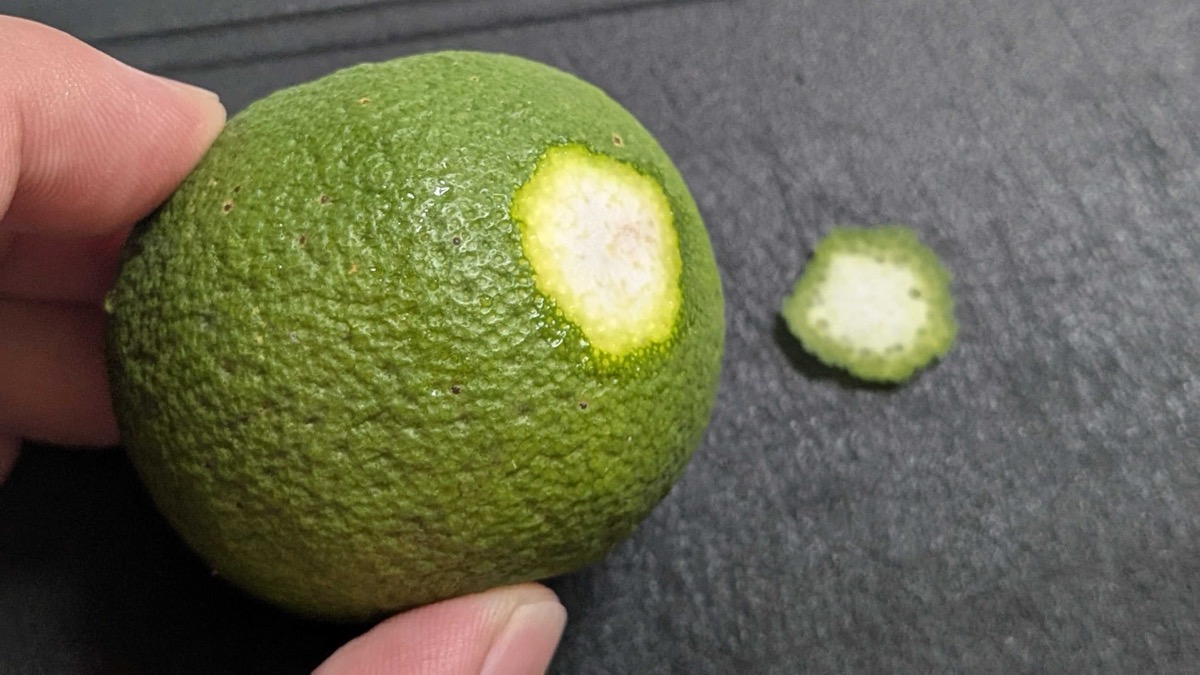
For the garnish I used a few slivers of kabosu peel, a green citrus grown mainly in Oita Prefecture in Kyushu. Yuzu peel is the classic choice; lemon or lime zest works if that’s what you have.
 Save
 Save
How to Make Furofuki Daikon
Step 1: Cut and Peel the Daikon
Cut the daikon into rounds about 3 cm (1¼ inches) thick. Peel them thickly — the layer just under the skin is stringy and doesn’t soften well, so it’s worth taking off more than you would for a salad.
 Save
Step 2: Bevel the Edges and Score a Cross
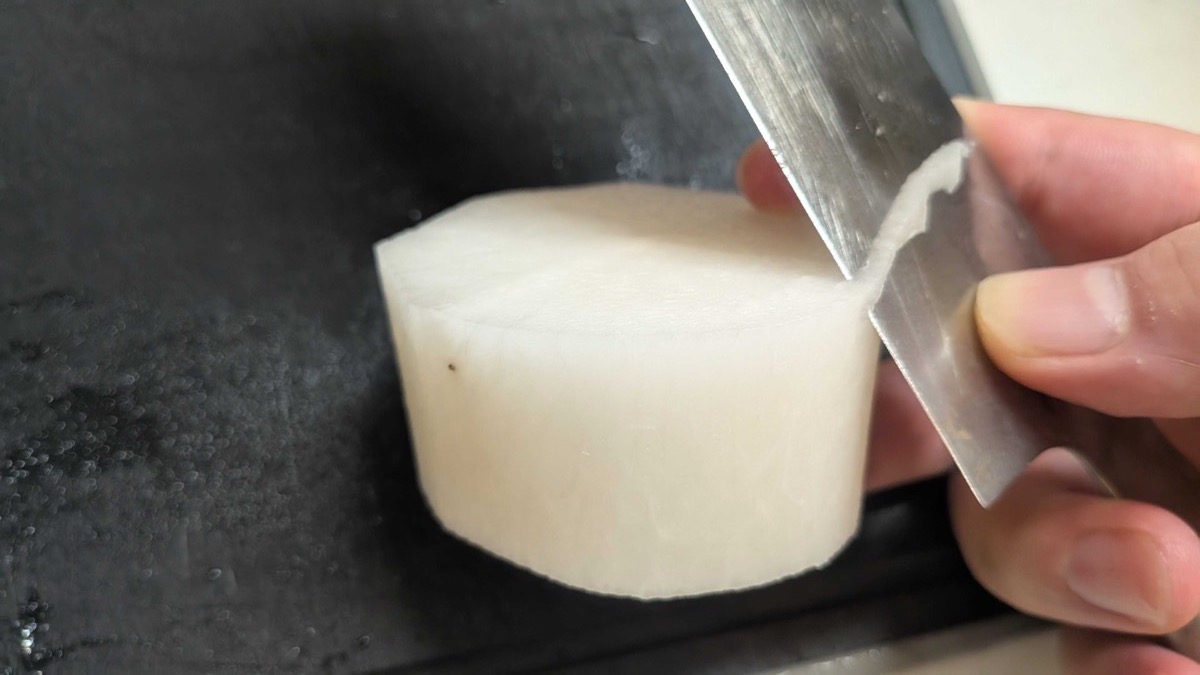
Shave a thin strip off the sharp edges of each round with your knife. This is called mentori, and it stops the edges from crumbling during the long cook, so the rounds keep their shape.
 Save
Then cut a shallow cross, about a third of the way through, into one flat side of each round (kakushi-bocho, a “hidden cut”). It helps the heat and dashi reach the center, and makes the daikon easier to cut with chopsticks later. Put this side face down when you serve it.
 Save
Step 3: Pressure Cook for 15 Minutes
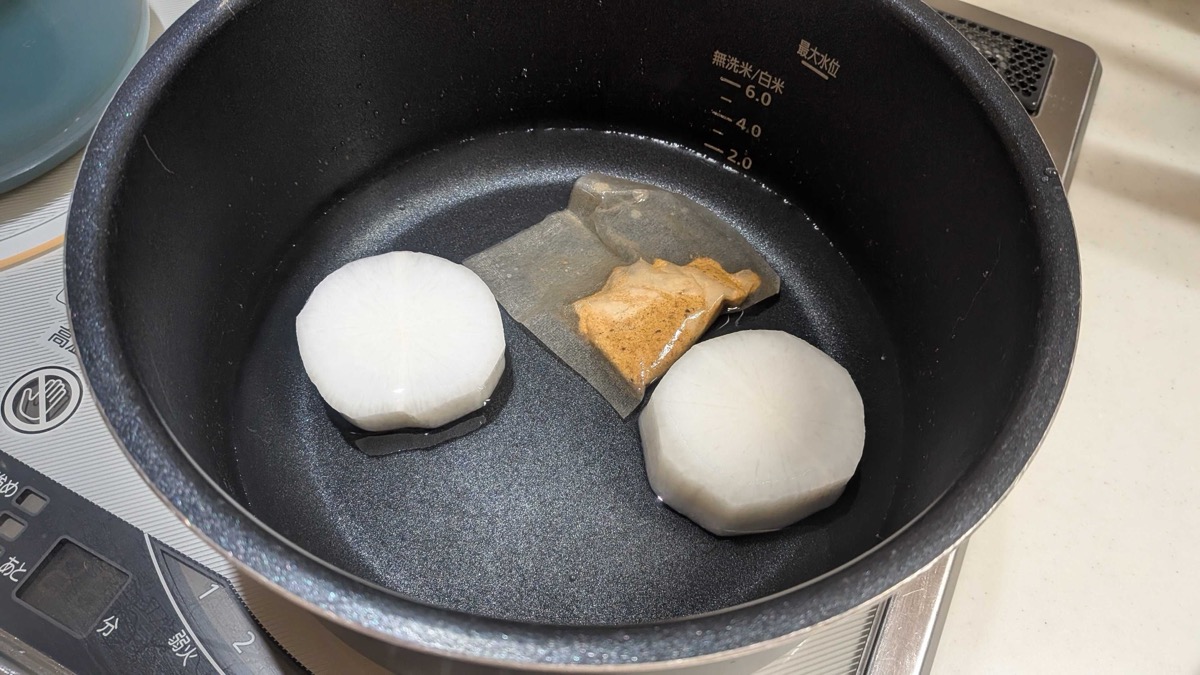
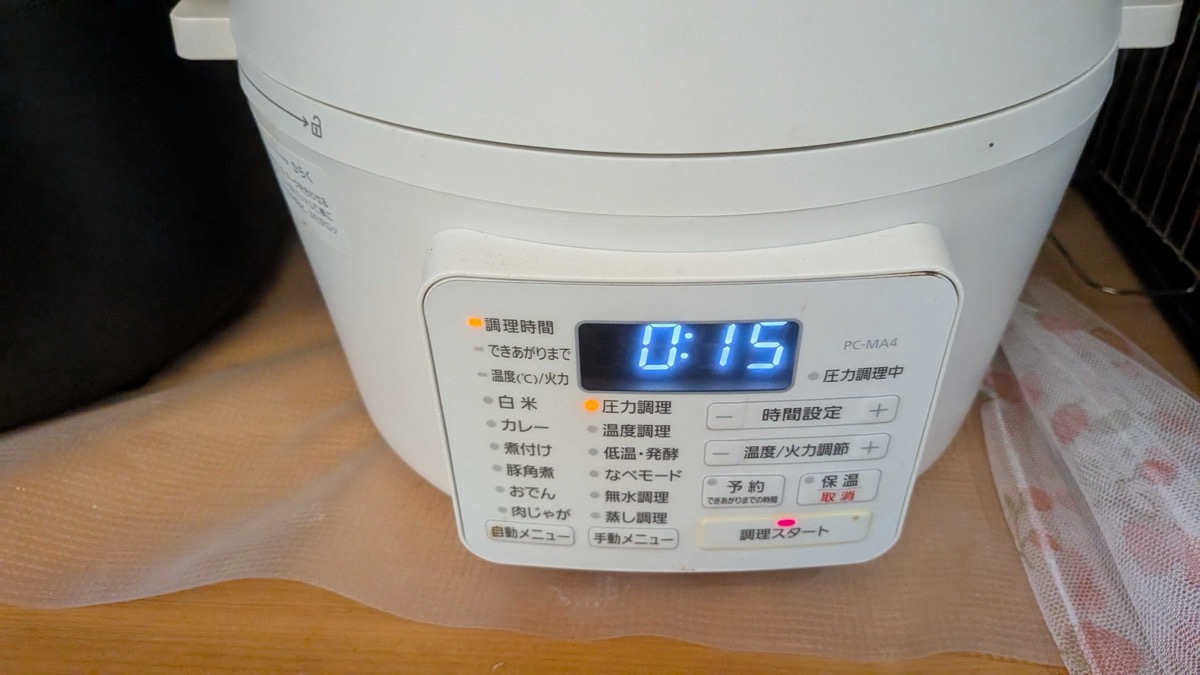
Put the daikon in the pressure cooker pot with the water, dashi packet, and a pinch of salt. Lock the lid and cook at high pressure for 15 minutes, then let the pressure release naturally.
 Save
 Save
Mine is an Iris Ohyama electric pressure cooker, a Japanese brand that isn’t sold in the US. Any electric pressure cooker works the same way; the Instant Pot Duo Mini is a popular one there, though I haven’t used it myself. No pressure cooker? Simmer the daikon in a pot with the same liquid (add more water as needed so it stays covered) for about an hour, until a skewer slides in with no resistance.
 Save
Step 4: Make the Miso Sauce
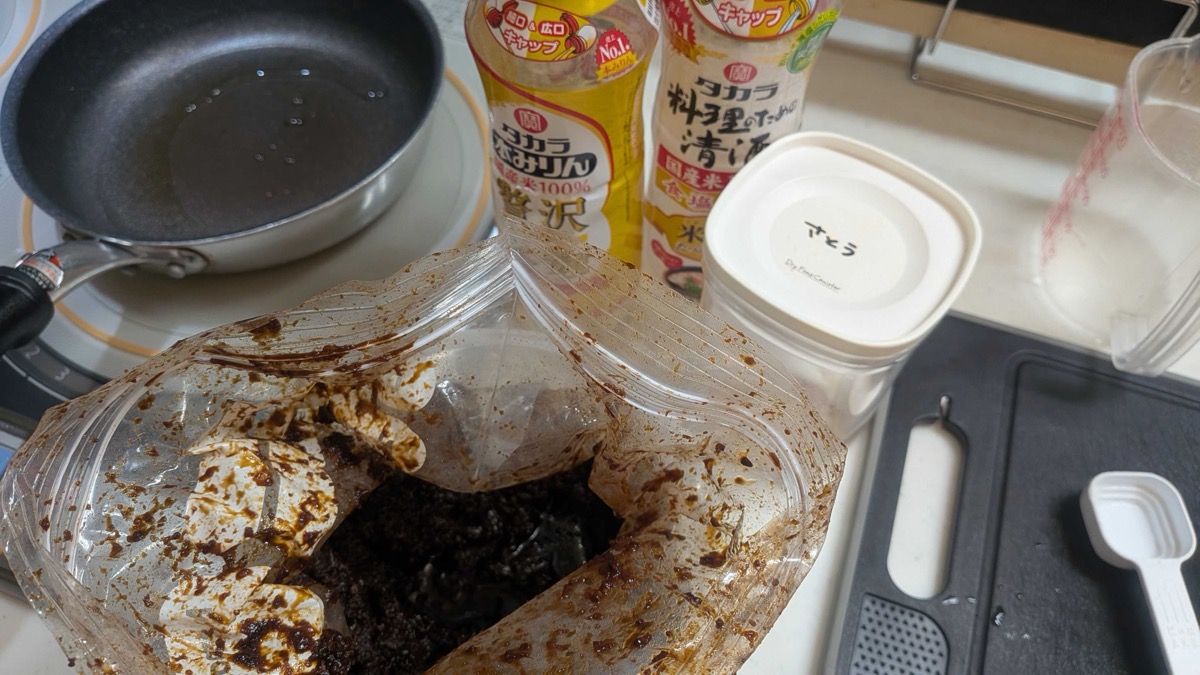
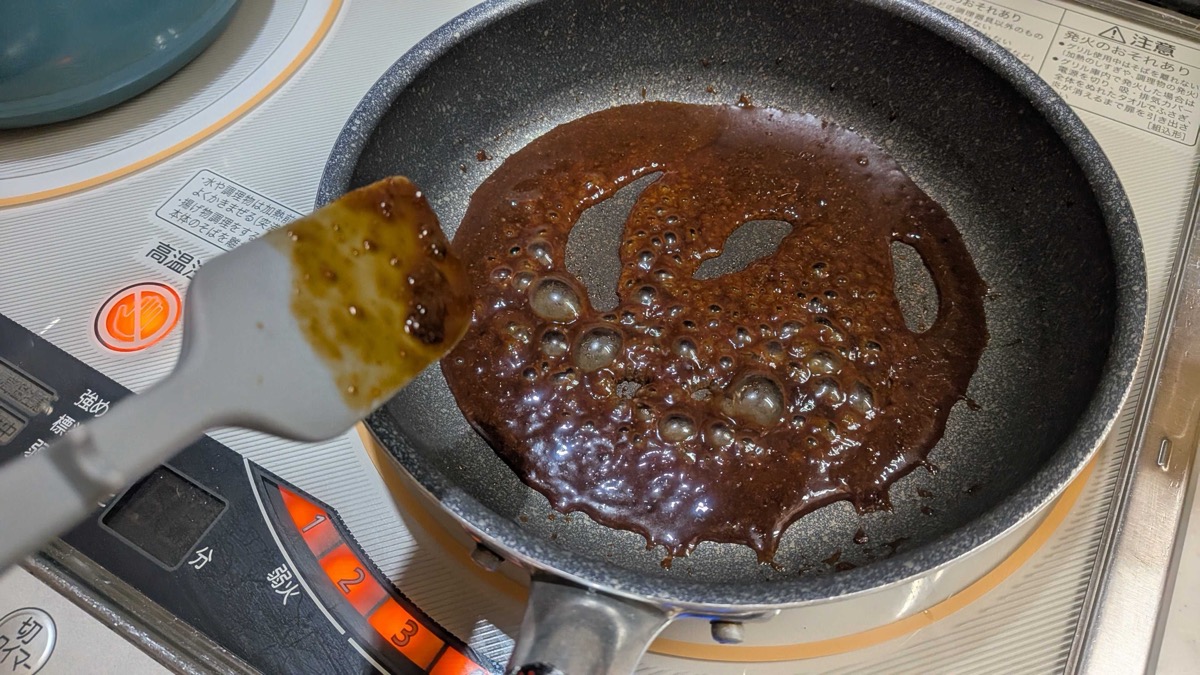
While the daikon cooks, put the miso, sugar, sake, mirin, and water in a small frying pan or saucepan and stir until smooth. Cook over medium-low heat, stirring constantly, until the water has evaporated and the sauce is thick and glossy. It only takes a couple of minutes, and the sugar can catch quickly, so don’t walk away.
 Save
 Save
Step 5: Serve Hot with the Miso on Top
Put each round of daikon in a small bowl, scored side down, with a little of the hot broth. Spoon the miso sauce on top and finish with a few slivers of citrus peel. Eat it hot — that’s the whole point of the dish.
 Save
Step 6: Turn the Leftover Dashi into Miso Soup
Don’t pour out the cooking liquid. It’s dashi that has picked up the sweetness of the daikon, and it makes a very good base for miso soup. That’s what we had with it.
Tips and Variations
- Use the middle of the daikon. It’s the widest and the most tender. The top end is sweeter and better raw; the bottom end is sharper.
- Make extra miso sauce. It keeps in the fridge for about a week and is great on grilled tofu, eggplant, or konnyaku (that’s dengaku).
- Add yuzu to the sauce. A little grated yuzu or kabosu zest stirred into the miso sauce makes it brighter and more aromatic.
- Add ground meat for a heartier version. Stir-fried ground chicken mixed into the miso sauce (tori-miso) turns it into more of a main dish.
What to Serve It With
- A bowl of rice and miso soup made with the leftover dashi.
- Grilled or simmered fish for a classic winter dinner.
- Another daikon dish? Try daikon and beef nimono, or the pressure cooker nikujaga.
Storing and Reheating
Keep the cooked daikon in its broth in the fridge for up to 3 days, and the miso sauce separately in a small container for up to a week. Reheat the daikon in its broth until hot all the way through, then add the miso sauce just before serving. Like most Japanese simmered dishes, it often tastes even better the next day.
Frequently Asked Questions
What does furofuki daikon taste like?
The daikon itself is soft, juicy, and very mild — almost like a gentle, savory turnip that has soaked up dashi. The miso sauce on top is sweet and salty, and carries most of the flavor.
What is Muichiro’s favorite food?
In Demon Slayer, Muichiro Tokito’s favorite food is furofuki daikon — simmered daikon radish with miso sauce, the dish in this recipe.
How long do you pressure cook daikon?
For 3 cm (1¼-inch) rounds, 15 minutes at high pressure with a natural release makes them completely tender. In a regular pot, plan on about an hour of gentle simmering.
Can I use white miso?
Yes. White miso makes a sweeter, lighter-colored sauce; red or dark miso makes a deeper, saltier one. Adjust the sugar to taste.
Furofuki Daikon (Simmered Daikon with Miso Sauce)
Ingredients
Method
- Cut the daikon into 3 cm (1 1/4 inch) rounds and peel thickly. Bevel the sharp edges with a knife and score a shallow cross into one flat side.
- Put the daikon, water, dashi packet, and salt in an electric pressure cooker. Cook at high pressure for 15 minutes and let the pressure release naturally. (In a pot: simmer for about 1 hour, keeping the daikon covered, until a skewer slides in easily.)
- Meanwhile, mix the miso, sugar, sake, mirin, and water in a small pan. Cook over medium-low heat, stirring constantly, until thick and glossy.
- Serve each daikon round scored-side down in a bowl with a little broth. Top with the miso sauce and slivers of citrus peel.
- Use the leftover cooking liquid as dashi for miso soup.