Easy Miso Soup with Dashi Packets (Everyday Japanese Recipe)
The Miso Soup Japanese People Actually Make at Home
If you’ve ever had miso soup at a Japanese restaurant, you might think it’s something special. But in Japan, miso soup is the most ordinary thing on the table — it shows up at breakfast, lunch, and dinner, almost every single day.
This is how I make it at home. It takes about 10 minutes, uses a dashi packet for the broth, and the result tastes far better than anything from an instant packet. Out of dashi? These are the dashi substitutes I actually fall back on.
My Miso: Made from Last Year’s Rice
Before we start, let me tell you about my miso. I don’t buy it at the supermarket — I take last year’s leftover rice to a local koji shop (麹屋, kouji-ya) in Kyushu, and they turn it into fresh miso for me.
This is actually more common in rural Japan than you might think. Many families have a relationship with a local koji maker. The miso I get is a kome miso (米味噌, rice miso) — made from rice koji, soybeans, and salt. It’s the most common type of miso in Japan.
Here are two batches of my homemade miso side by side:

The light-colored one was made in February this year. The dark one is from a year ago. Same recipe, same koji shop — the only difference is time. After a year of fermentation, the color transforms completely and the flavor becomes much deeper and more complex.


The newer miso is still light in color and not quite ready yet — it needs more time to develop its flavor. The dark one has been fermenting for about a year and that’s the one I’m currently using for cooking. This is how homemade miso works: you make a new batch, let it sit, and by the time you finish the older one, the new batch is ready to go.
You absolutely don’t need handmade miso to make great miso soup. Any good-quality miso paste from an Asian grocery store or Amazon will work perfectly. I’d recommend starting with white miso (shiro miso) or awase miso — they’re mild and versatile. Not sure which to buy? See my guide to the types of miso paste and how to use them.
Ingredients (Serves 2)
- 2 cups (400ml) water
- 1 dashi packet
- 1/3 block (about 100g) soft or medium tofu
- A small handful of dried wakame seaweed (about 2g)
- 1.5–2 tablespoons miso paste (awase or shiro miso)
- Chopped green onion for topping (optional)
How to Make It
Step 1: Make the Dashi
Add 2 cups of water and 1 dashi packet to a small pot. Bring to a boil over medium heat, then reduce heat and simmer for 3–5 minutes. Remove the dashi packet and squeeze it gently with chopsticks.
If you’re new to dashi packets, check out my guide: How to Use Dashi Packets.


Step 2: Add the Tofu and Wakame
Cut the tofu into small cubes (about 1.5cm / half-inch). You don’t need to be precise — just break it apart gently with your hands or cut it roughly. That’s how most people do it at home.
Add the tofu and dried wakame to the pot. The wakame will expand quickly, so don’t add too much. Simmer for about 1–2 minutes until the tofu is heated through and the wakame has softened.

Step 3: Add the Miso
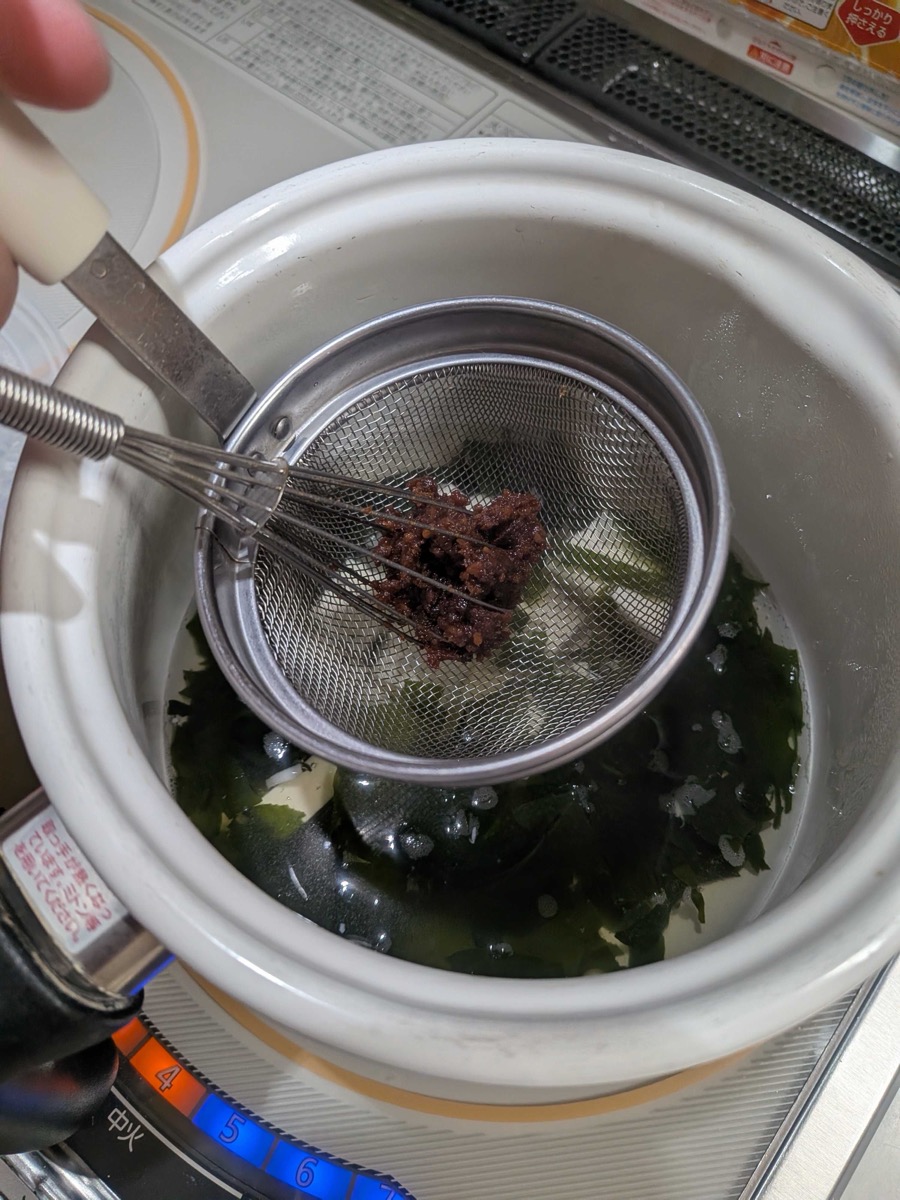
Turn off the heat. This is important — boiling miso kills its flavor and aroma.
Take a ladle or small strainer, scoop the miso paste into it, and dissolve it into the broth by stirring with chopsticks. This prevents clumps and gives you a smooth soup.
Taste and adjust. If it’s too mild, add a little more miso. If it’s too strong, add a splash of water.
 Save
SaveStep 4: Serve
Ladle into bowls and top with chopped green onion if you like.
That’s it. Real miso soup in about 10 minutes.

Tips from My Kitchen
- Don’t boil the miso. Turn off the heat before adding miso. This is the one rule every Japanese home cook follows.
- Rehydrate wakame in advance if you want. I usually just throw dried wakame directly into the pot, but soaking it in water for 5 minutes first gives you more control over the amount.
- Tofu doesn’t need to be perfect cubes. At home, I sometimes just tear it by hand. Nobody is judging your miso soup presentation.
- Adjust miso amount to your taste. Start with 1.5 tablespoons and add more if needed. Different brands have different saltiness levels.
- Use any dashi packet you have. Bonito-based, sardine-based, kombu-based — they all work for miso soup. That’s the beauty of it.
- Make a batch of dashi ahead. I sometimes make a larger batch and keep it in a glass jar in the fridge. It lasts 3–4 days and makes morning miso soup even faster.


Popular Miso Soup Variations
Once you’ve got the basic version down, try swapping the ingredients:
| Variation | Ingredients | Notes |
|---|---|---|
| Classic | Tofu + wakame | The one in this recipe |
| Hearty | Pork belly + vegetables (tonjiru) | Almost a main dish |
| Simple | Just green onion + tofu | My weekday go-to |
| Rich | Egg dropped into the broth | Crack an egg in at the end, cover and steam for 1 minute |
| Seasonal | Clams (asari) | Popular in spring |
| Filling | Potato + onion | Surprisingly good, very common in Japanese homes |
What Miso Should You Buy?
If you’re shopping outside Japan, look for these types:
- Awase miso (合わせ味噌) — A blend, mild and well-rounded. The safest choice for beginners.
- Shiro miso (白味噌) — White miso. Sweet, mellow, and light in color. Great for delicate soups.
- Aka miso (赤味噌) — Red miso. Stronger, saltier, deeper flavor. Good for hearty soups with pork or root vegetables.
Popular brands available on Amazon and at Asian grocery stores: Hikari Miso, Marukome, and Hanamaruki are all solid choices. You can browse Japanese miso paste on Amazon here.
Miso Soup Without Dashi?
You can make miso soup without dashi — some people just use plain water with miso paste. But honestly, the difference is night and day. Dashi adds that savory depth (umami) that makes miso soup taste like miso soup.
If you don’t have dashi packets, you can substitute with:
- A pinch of Hondashi powder (instant dashi)
- A small piece of kombu simmered in the water for 10 minutes
- Even a splash of soy sauce for a quick umami boost
But if you’re serious about Japanese cooking, I’d recommend keeping dashi packets in your pantry. They’re easy, affordable, and make everything taste better — once you have a pot of dashi ready, you can use the leftover broth for dashi tamagoyaki the next morning.
Where to Buy Japanese Ingredients
If you can’t find these at a local Asian grocery store, here’s what I use:
- Dashi granules — quick and reliable, what I use for everyday miso soup
- Japanese miso paste — awase or shiro miso is the easiest to start with
- Dried wakame seaweed — a little goes a long way and keeps for months
Disclosure: some links below are affiliate links. As an Amazon Associate I earn from qualifying purchases, at no extra cost to you.
Frequently Asked Questions
Can you make miso soup without dashi?
You can, but it won’t taste like miso soup — it’ll taste like salty water with miso in it. Dashi supplies the umami that the whole bowl rests on. If you’re out of dashi packets, a pinch of Hondashi granules, a strip of kombu steeped in the water, or even a little chicken stock will get you most of the way there.
Why shouldn’t you boil miso soup?
Boiling drives off the aroma of the miso and can make the texture grainy, since miso is a living fermented paste. Turn the heat off — or down to the barest simmer — before you dissolve the miso in, and never let it come back to a rolling boil.
Can you reheat miso soup?
Yes, gently. Warm it on low heat or in short bursts in the microwave until it’s hot but not bubbling. Reheated miso soup loses some aroma, so if you make it ahead, consider holding back a little miso and stirring it in fresh when you reheat.
How long does miso soup keep?
Two days in the fridge in a sealed container. Tofu gets slightly spongy and wakame softens further, but it’s still good. I wouldn’t freeze it — tofu turns rubbery and full of holes after thawing.
Can you eat miso soup every day?
Most Japanese households do, often at breakfast. It’s low in calories and the fermented miso is good for you. The one thing to watch is sodium: a bowl carries roughly 1–1.5 g of salt, so if you’re managing your intake, use a little less miso rather than dropping the soup.
Easy Miso Soup with Dashi Packets (Everyday Japanese Recipe)
Ingredients
Method
- Add 2 cups of water and 1 dashi packet to a small pot. Bring to a boil over medium heat, then reduce heat and simmer for 3–5 minutes. Remove the dashi packet and squeeze it gently with chopsticks.
- Cut the tofu into small cubes (about 1.5cm). Add the tofu and the dried wakame to the broth and simmer for 1–2 minutes until the wakame rehydrates.
- Turn off the heat. Dissolve the miso paste into the broth using a small strainer or by mashing it through chopsticks. Important: do not boil the miso — it kills the flavor and aroma.
- Ladle into bowls and top with chopped green onion if desired. Serve immediately.