Okonomiyaki: Japanese Savory Pancake Recipe
Japan’s Favorite “Whatever You Like” Pancake
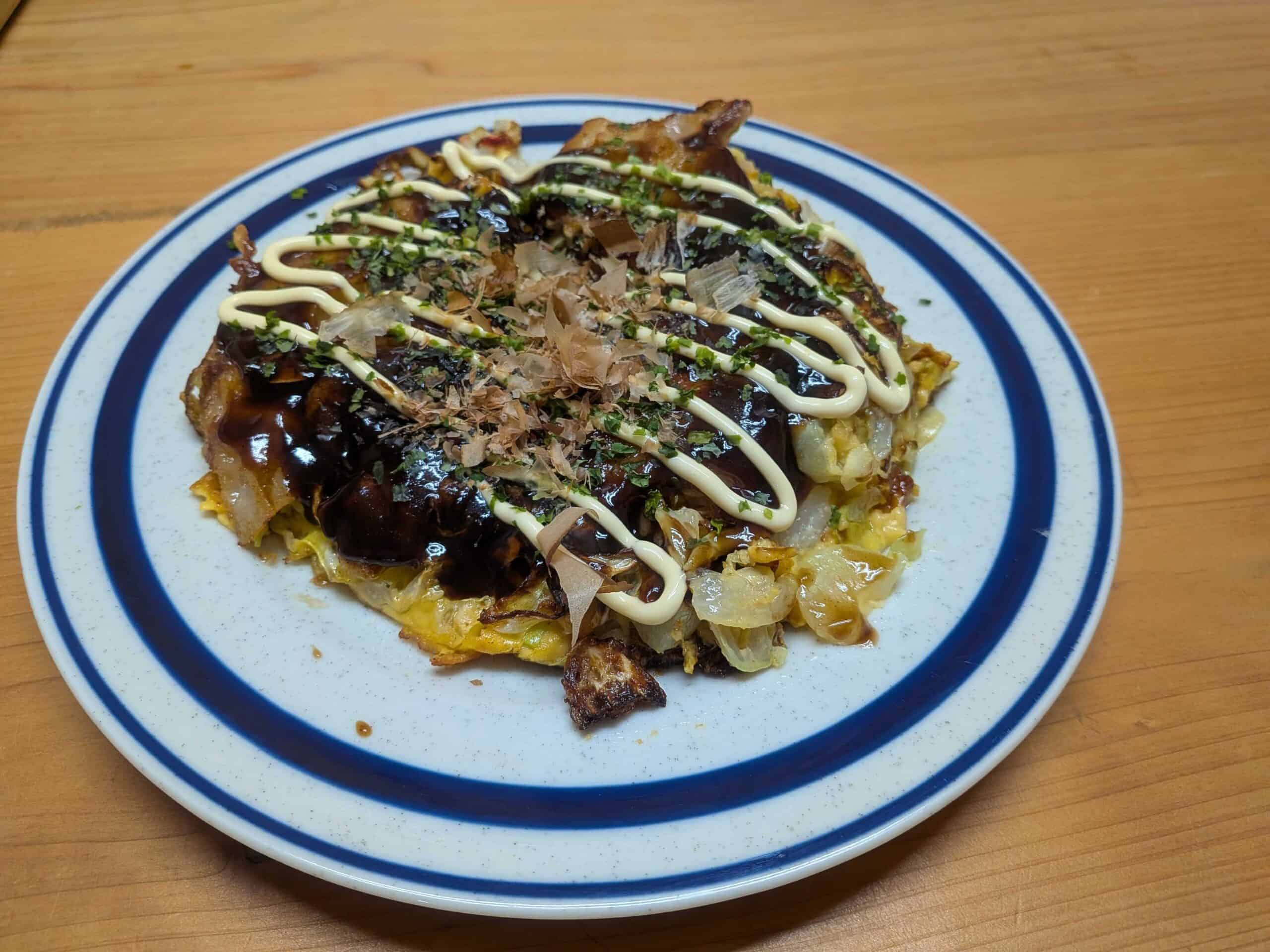
Okonomiyaki (お好み焼き) literally means “grilled as you like it,” and that’s exactly how we treat it at home — a savory cabbage pancake you build with whatever’s around, topped with pork belly and finished with sweet-savory sauce, mayo, bonito flakes, and aonori. It’s one of Japan’s most popular casual foods and one of the easiest to pull off in a home kitchen.
This is the Osaka-style (Kansai-style) version — everything gets mixed together into a batter and pan-fried. No special equipment needed, just a regular frying pan. For another beloved casual Japanese dish that’s great for a weekend lunch, try my napolitan recipe — Japan’s famous ketchup pasta.
Ingredients (Makes 2 pancakes)
Batter
- 100g all-purpose flour (about 50g per pancake)
- 120ml water (about 60ml per pancake)
- 1 teaspoon dashi powder (granulated dashi)
- 2 eggs
- 1/4 head cabbage, shredded
- A handful of tenkasu (tempura crumbs)
- A small amount of beni shoga (red pickled ginger)
Topping
- 4–6 slices pork belly (thinly sliced)
Sauce and Garnish
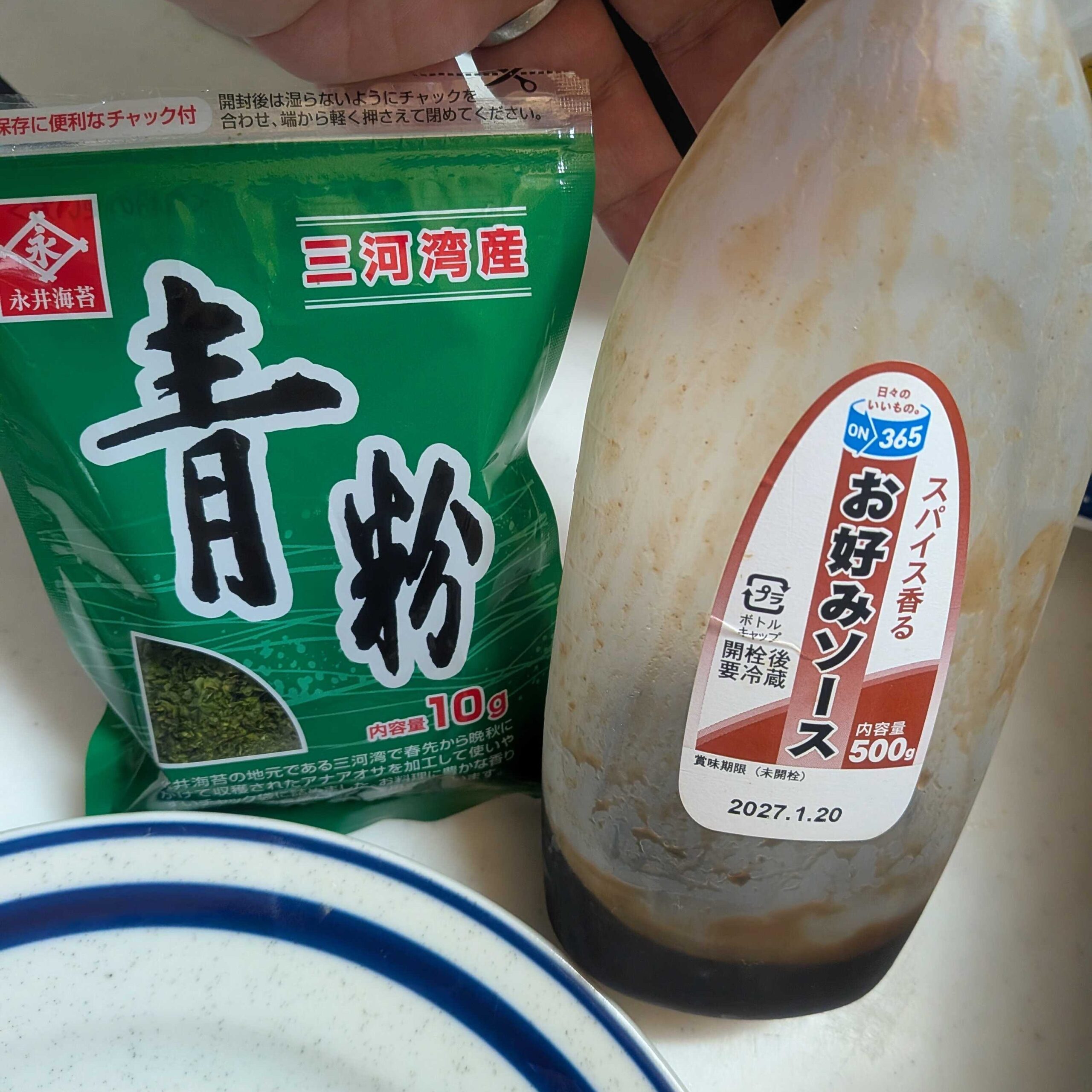
- Okonomiyaki sauce (or tonkatsu sauce as a substitute)
- Kewpie Japanese mayonnaise
- Katsuobushi (bonito flakes)
- Aonori (dried green seaweed powder)

How to Make It
Step 1: Make the Batter
Mix the flour, water, and dashi powder in a large bowl. Add the eggs and stir until combined — don’t overmix, a few lumps are fine.
Add the shredded cabbage, tenkasu, and beni shoga. Fold everything together gently. You want the cabbage coated in batter, not swimming in it.
Step 2: Cook the First Side
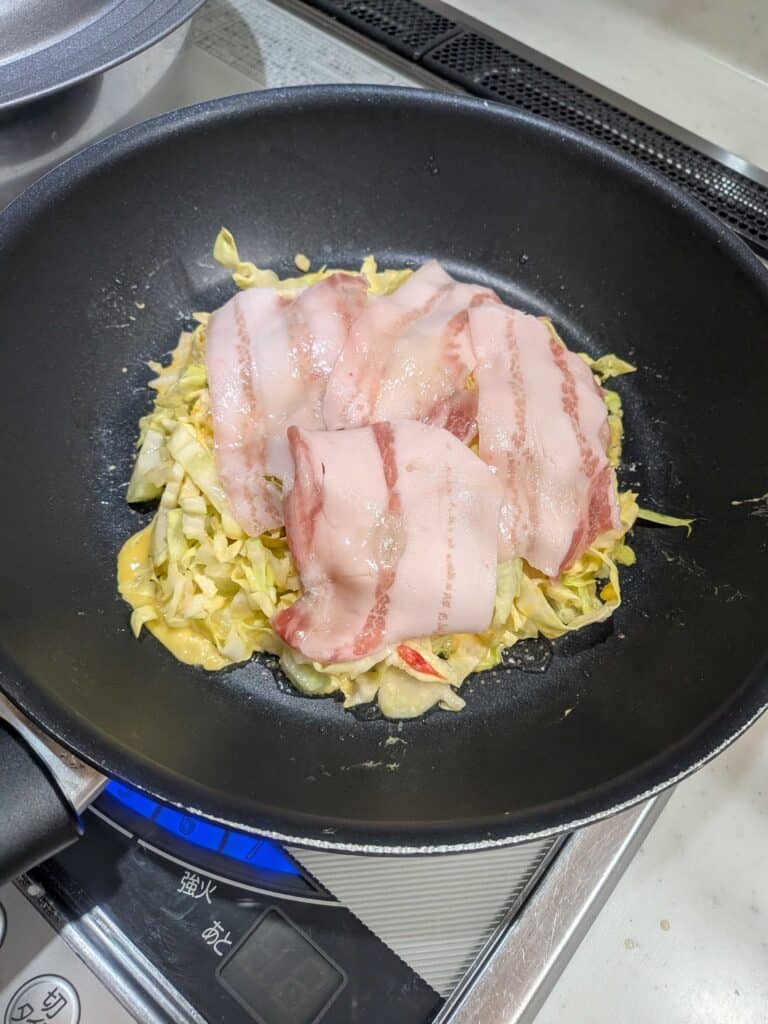
Heat a frying pan over medium heat with a little oil. Pour half the batter into the pan and shape it into a round, flat pancake — about 2cm thick.
Lay 2–3 slices of pork belly on top of the uncooked surface.
 Save
SaveCook for about 4–5 minutes until the bottom is golden brown and the edges start to set.
Step 3: Flip It
This is the scary part — but just go for it. Slide a spatula underneath, and flip the whole thing over in one confident motion. Don’t worry if it’s not perfect. Mine never is.

Cook the pork belly side for another 4–5 minutes until the pork is crispy and cooked through. Press down gently with the spatula to ensure even contact with the pan.
Step 4: Add the Toppings
Transfer to a plate. Now the fun part — layer on the toppings:
- Okonomiyaki sauce — drizzle generously in zigzag lines
- Japanese mayo — same zigzag pattern
- Katsuobushi — a handful of bonito flakes on top (they’ll dance from the heat)
- Aonori — sprinkle the green seaweed powder all over
 Save
Save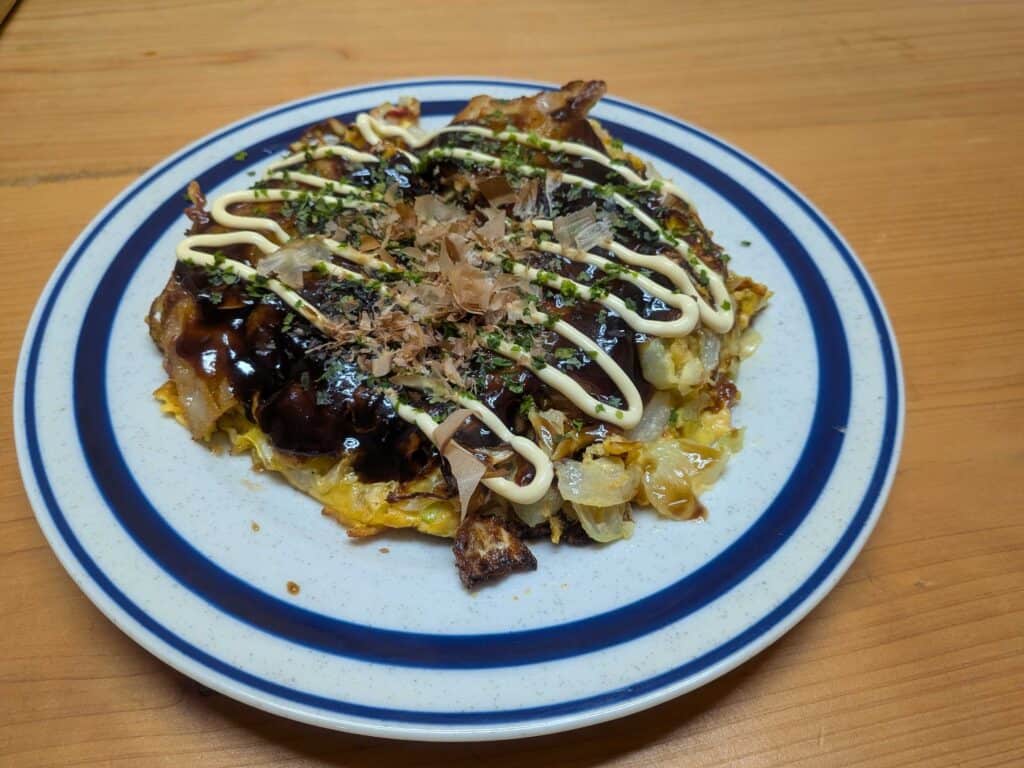 Save
SaveTips from My Kitchen
- Shred the cabbage thin. Thinner cabbage cooks faster and mixes into the batter more evenly. I use a knife, but a Japanese cabbage peeler (Cabepi Max) or a mandoline makes it fast and fine.
- Don’t skip the tenkasu. Those little tempura crumbs add a crispy texture inside the pancake that makes a big difference.
- Medium heat, be patient. Too high and the outside burns while the inside stays raw. Give it a full 4–5 minutes per side.
- The flip doesn’t need to be pretty. If it breaks a little, just press it back together. It all gets covered in sauce anyway.
- Dashi powder in the batter is key. It adds that savory umami depth. Just a teaspoon mixed into the batter makes the flavor noticeably more “Japanese.”
The Sauce Makes It
Okonomiyaki sauce is a thick, sweet, fruity sauce similar to Worcestershire but much thicker and sweeter. The most popular brand in Japan is Otafuku — and it’s easy to find on Amazon or at Asian grocery stores.
If you can’t find okonomiyaki sauce, tonkatsu sauce works as a substitute. In a pinch, you can even mix Worcestershire sauce with a little ketchup and a touch of sugar.
Japanese mayo (like Kewpie) is different from Western mayo — it’s richer, tangier, and comes in a squeeze bottle with a thin nozzle for those classic zigzag lines. Once you try it, you won’t go back.
Okonomiyaki Variations
| Style | How It's Different |
|---|---|
| Osaka/Kansai style | Everything mixed together (this recipe) |
| Hiroshima style | Layered — batter, cabbage, noodles, egg stacked separately |
| Negiyaki | Green onion-heavy version, thinner and crispier |
| Modan-yaki | Osaka style with yakisoba noodles mixed in |
This recipe is Osaka style — the most common and easiest to make at home.
What to Serve With It
Okonomiyaki is usually a meal by itself — it’s filling enough on its own. At our house, I sometimes serve it with:
- Rice — yes, carbs on carbs is totally normal in Japan
- Miso soup — for a complete meal
- Beer — the classic pairing
Disclosure: some links below are affiliate links. As an Amazon Associate I earn from qualifying purchases, at no extra cost to you.
Frequently Asked Questions
Can you make okonomiyaki without a special flour mix?
Yes. Plain all-purpose flour with dashi and egg works perfectly well — okonomiyaki flour just has dashi powder and a leavening agent already mixed in. A spoonful of grated nagaimo (mountain yam) in the batter is the real secret to a fluffy texture, more than the flour itself.
Can you keep okonomiyaki batter in the fridge?
Yes, for a day. Mix the flour, dashi, and egg and refrigerate it, but add the cabbage only right before cooking — salted cabbage sitting in batter releases water and the pancake goes soggy and won’t hold together.
Can you freeze okonomiyaki?
Yes, and it works well. Cook the pancakes fully, cool them completely, wrap individually, and freeze for up to a month, without the sauce and toppings. Reheat in a pan or toaster oven and dress it fresh.
Can you eat okonomiyaki cold?
It’s much better warm. Cold okonomiyaki turns dense and the cabbage loses its sweetness. If you’re packing it for lunch, a quick reheat makes a big difference.
What’s the difference between Osaka and Hiroshima okonomiyaki?
Osaka style — the one in this recipe — mixes everything into the batter and cooks it as one thick pancake. Hiroshima style layers it instead: a thin crepe, then a mountain of cabbage, then pork, then fried noodles and an egg, all stacked and pressed. Both are called okonomiyaki and each city insists theirs is the real one.
Okonomiyaki (Japanese Savoury Pancake, Osaka Style)
Ingredients
Method
- Mix the flour, water, and dashi powder in a large bowl. Add the eggs and stir until just combined — a few lumps are fine. Fold in the shredded cabbage, tenkasu, and beni shoga until evenly coated.
- Heat a frying pan over medium heat with a little oil. Pour half the batter and shape into a round, flat pancake about 2cm thick. Lay 2–3 slices of pork belly on top.
- Cook for 4–5 minutes until the bottom is golden and the edges look set. Slide a spatula underneath and flip the whole thing in one confident motion. Cook the other side for another 4–5 minutes.
- Transfer to a plate. Layer on okonomiyaki sauce, then Japanese mayo in a zigzag pattern. Sprinkle generously with katsuobushi and aonori. Serve immediately.