Juicy Tonkatsu Recipe with Sous Vide (Japanese Pork Cutlet)
In our house, tonkatsu is a Friday-night kind of dinner — the sort of meal that turns an ordinary evening into a small treat. It’s a thick piece of pork loin, coated in panko breadcrumbs, fried golden and served with a tall pile of shredded cabbage and tonkatsu sauce. One of Japan’s most beloved home meals — and the sous vide method I use makes it genuinely hard to get wrong.
My version has one twist: I cook the pork in a sous vide water bath at 63°C (145°F) for 90 minutes before breading and frying. The result is tonkatsu with the juiciest, most tender interior you’ve ever had — and a perfectly crispy panko crust on the outside. Once you try it this way, it’s hard to go back. (If you have leftovers, slice them over Japanese curry the next day for katsu curry — it’s incredible.)
Disclosure: some links below are affiliate links. As an Amazon Associate I earn from qualifying purchases, at no extra cost to you.

Why Sous Vide Tonkatsu?
The challenge with traditional tonkatsu is timing: you need the pork cooked through while keeping the panko from burning. With a thick cutlet (1.5cm or more), this means carefully managing oil temperature and cooking time — and it’s easy to end up with overcooked, dry meat.
Sous vide solves this completely. The pork is cooked to the perfect internal temperature before it ever touches the oil. The frying step becomes purely about the crust — 3 to 4 minutes at high heat, just enough to turn that panko golden and crispy. The meat inside stays tender and slightly rosy, exactly as it should be.
- Juicier meat — precise temperature control means no overcooking
- Crispier crust — shorter frying time means less oil absorption
- No guesswork — the pork is done when the timer says it’s done
- Great for thick cuts — sous vide handles thickness that intimidates traditional frying
Ingredients
Serves 2
| Ingredient | Amount |
| Pork loin cutlets | 2 pieces (about 150–180g each) |
| Salt | To taste |
| Black pepper | To taste |
| All-purpose flour | 3–4 tbsp |
| Egg, beaten | 1 large |
| Panko breadcrumbs | 1 cup |
| Oil for deep frying | Enough to submerge the cutlets (about 500ml) |
| Tonkatsu sauce | To serve |
| Cabbage, finely shredded | To serve |
A Note on Panko
Panko (パン粉) is Japanese-style breadcrumbs — larger, lighter, and flakier than Western breadcrumbs. They fry up dramatically crispier and stay crunchy longer. If you want authentic tonkatsu texture, panko is not optional. It’s available at most Asian grocery stores and many mainstream supermarkets.
👉 Japanese Panko Breadcrumbs — available on Amazon
How to Make Sous Vide Tonkatsu
Step 1: Score the Pork
Use a knife to score the fat and connective tissue along the edge of each cutlet — make small cuts every 2–3cm through the fat cap. This is called suji-kiri (筋切り) in Japanese, and it prevents the cutlet from curling up during cooking. Season both sides generously with salt and black pepper.

Step 2: Sous Vide at 63°C (145°F) for 90 Minutes
Place each seasoned cutlet in a zip-lock bag or vacuum seal bag, removing as much air as possible. Set your immersion circulator to 63°C (145°F) and submerge the bags in the water bath. Cook for 90 minutes.
At 63°C, pork is pasteurized and safe to eat with a slightly pink interior — this is the temperature most Japanese tonkatsu restaurants aim for. After cooking, remove the bags and season both sides with salt and black pepper. Pat completely dry with paper towels before breading.
👉 Immersion Circulator (Sous Vide) — available on Amazon

Step 3: Set Up the Breading Station
While the pork is in the water bath — or just after — set up your breading station with three trays in a row: flour, beaten egg, and panko. This assembly-line setup keeps things clean and efficient.

Step 4: Bread the Cutlets
Pat the sous-vide pork dry, then coat each piece in flour — shake off any excess. Dip into the beaten egg, letting the excess drip off. Finally, press firmly into the panko, turning and pressing so that every surface is evenly coated. Don’t be shy — press the panko in gently but firmly.


Step 5: Fry Until Golden
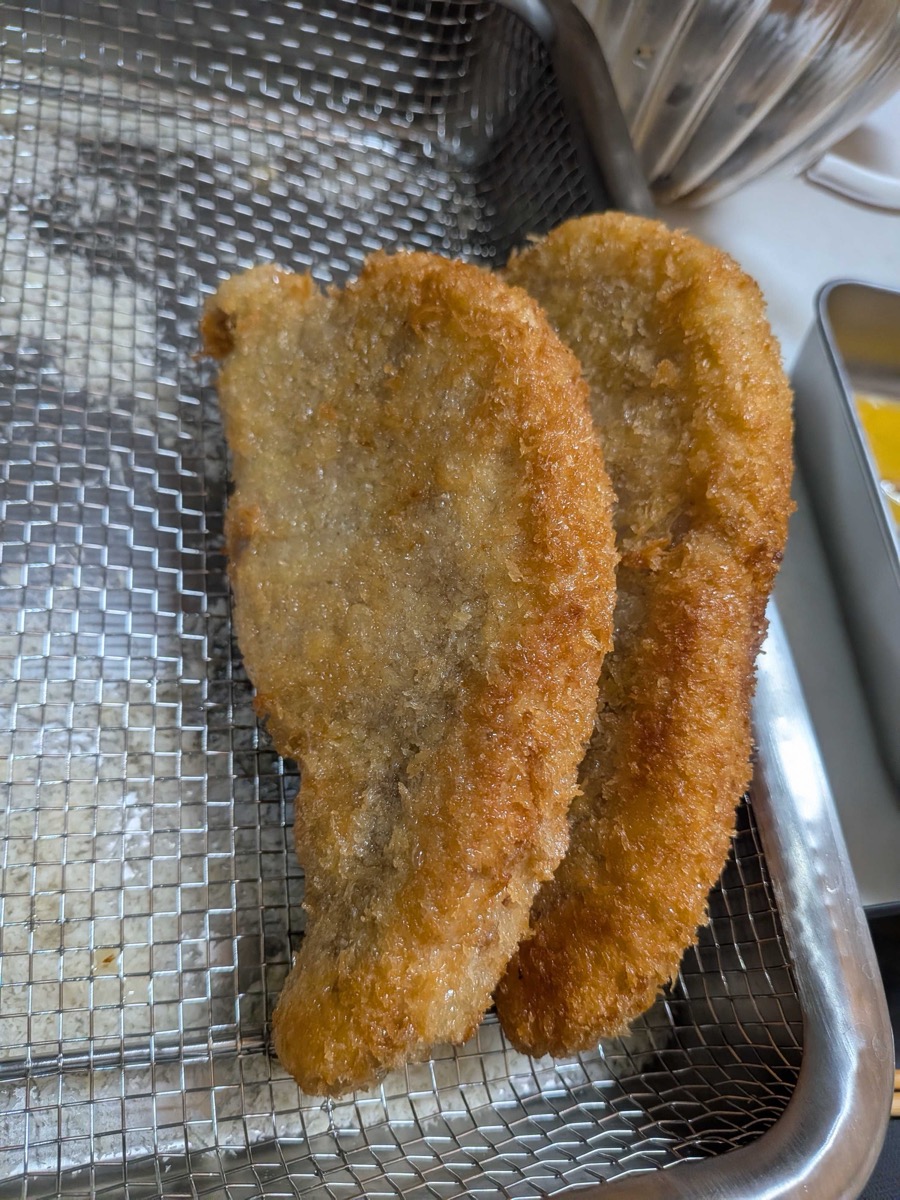
Heat oil in a deep frying pot to 180°C (356°F). Carefully lower the breaded cutlets into the oil. Since the pork is already cooked through, you only need to fry long enough to brown the panko — about 3–4 minutes per side, turning once. The crust should be a deep golden brown.
Remove and drain on a wire rack. Never drain tonkatsu on paper towels — the steam gets trapped and makes the bottom soggy. A rack lets air circulate underneath and keeps the crust crispy all the way around.

 Save
SaveStep 6: Slice and Serve
Let the tonkatsu rest for 2 minutes, then slice into strips about 2cm wide. Arrange on a plate alongside a generous mound of finely shredded cabbage — I use a Japanese cabbage peeler (Cabepi Max) to shave it into the light, fluffy strands you get at tonkatsu restaurants — and a wedge of tomato. Drizzle tonkatsu sauce over the top — or serve the sauce on the side for dipping.
Tips for Perfect Tonkatsu
- Score the fat edge before cooking. Those small cuts prevent the cutlet from curling and ensure it lies flat — important for even breading and frying.
- Pat the pork completely dry after sous vide. Moisture is the enemy of a crispy crust. Use paper towels and don’t rush this step.
- Press the panko in firmly. The more contact between the panko and the egg coating, the better it sticks and the crispier it fries up.
- Drain on a rack, not paper towels. Air circulation underneath keeps the bottom as crispy as the top.
- Oil temperature matters. Too cool and the panko absorbs oil and goes soggy. Too hot and it browns before the breading sets. 180°C (356°F) is the sweet spot, and a deep-fry thermometer is the easiest way to hold it.
What to Serve with Tonkatsu
The classic tonkatsu set (tonkatsu teishoku) includes:
- Steamed white rice — essential
- Shredded cabbage — always raw and finely sliced, dressed simply with a little dressing or just left plain
- Miso soup — a simple one with tofu and wakame works perfectly
- A simple side dish — kinpira gobo is the classic teishoku side that balances the richness of the fried pork
- Tonkatsu sauce — the thick, sweet-savory brown sauce that makes everything complete. Bull-Dog brand is the most widely available outside Japan. 👉 Tonkatsu Sauce on Amazon
Frequently Asked Questions
Can you make tonkatsu in an air fryer?
You can, and it’s a reasonable low-oil option: spray the breaded cutlets generously with oil and air fry at about 200°C (390°F) for 12–15 minutes, turning once. The crust is drier and less evenly golden than deep-fried, but it works. Toasting the panko first helps the color.
Can you bake tonkatsu?
Yes. Toast the panko in a dry pan until golden first, since the oven won’t brown it properly, then bake the breaded cutlets at 200°C (390°F) for around 20 minutes. You get a lighter result that isn’t quite tonkatsu, but it’s a decent weeknight version.
Do I need a sous vide machine?
No — this is my method for guaranteed juiciness, not a requirement. Traditional tonkatsu goes straight from breading into the oil, and pork loin cooked that way is excellent if you don’t overdo it. The sous vide step just removes the risk of a dry center.
What cut of pork is best?
Loin (rosu) for the fat cap and richer flavor, or tenderloin (hire) for a leaner, more tender cutlet. Both are standard in Japan and restaurants list them separately. Ask for cutlets about 1.5–2 cm thick.
Can you freeze tonkatsu?
Freeze it breaded but uncooked — lay the cutlets on a tray, freeze until firm, then bag them for up to a month and fry straight from frozen at a slightly lower temperature. Cooked tonkatsu can be frozen too, but the crust never fully recovers.
Why score the edges of the pork?
The band of connective tissue around the edge shrinks faster than the meat when it hits heat, which curls the cutlet into a bowl shape. A few cuts through that band every couple of centimeters keeps it flat.
Sous Vide Tonkatsu (Japanese Pork Cutlet)
Ingredients
Method
- Score the fat edge of each cutlet every 2–3cm. Season both sides with salt and pepper.
- Vacuum seal or bag each cutlet and cook in a 63°C (145°F) water bath for 90 minutes.
- Remove from bags and pat completely dry with paper towels.
- Coat each cutlet in flour, then egg, then press firmly into panko.
- Heat oil to 180°C (356°F). Fry cutlets for 3–4 minutes per side until deep golden brown.
- Drain on a wire rack for 2 minutes. Slice and serve with tonkatsu sauce and shredded cabbage.


