Soboro Ankake — Japanese Ground Pork and Potato in Thick Sauce
This is ground pork and potato cooked down in a thick, glossy soy sauce with strips of green pepper through it. In Japanese it’s a soboro ankake — soboro being crumbled seasoned meat, ankake being a sauce thickened with potato starch so it clings to everything instead of running to the bottom of the pan.
I made it as a weekday dinner and then packed the leftovers straight over rice for a lunch box the next morning, which is really what this dish is for. The thickened sauce doesn’t soak into the rice and turn it soggy the way a thin sauce would — it sits on top and stays put. That’s the practical reason ankake dishes turn up in Japanese bento so often.
Disclosure: some links below are affiliate links. As an Amazon Associate I earn from qualifying purchases, at no extra cost to you.

Why You’ll Love This Recipe
- One pan, about 15 minutes. Everything cooks in the same frying pan and the sauce is mixed in a bowl beforehand.
- Three ingredients you already have. Potato, ground pork, one green pepper.
- Built for bento. The thickened sauce clings instead of leaking, so it travels in a lunch box without making the rice wet.
- It eats like a full meal over rice. Potato and meat in one bowl — you don’t need much else.
What Are Soboro and Ankake?
Two words worth knowing, because they show up constantly on Japanese menus and neither has a clean English equivalent.
- Soboro (そぼろ) — ground meat cooked until it breaks into fine, separate crumbles and seasoned, usually with soy sauce and something sweet. It isn’t a sauce and it isn’t a patty; it’s loose seasoned meat, most famously served scattered over rice as soboro don.
- Ankake (あんかけ) — a sauce thickened with potato starch until it’s glossy and slightly syrupy. The same technique appears on sara udon, on ankake yakisoba, and over fried tofu. It’s what makes the sauce coat the food instead of pooling underneath.
Put together, soboro ankake means crumbled seasoned meat in a thickened sauce. Here the potato does the filling, the pepper adds bite and color, and the sauce holds it all together.
Ingredients (Serves 2)
| Ingredient | Amount | Notes |
|---|---|---|
| Potatoes | 4 small | Peeled, cut into bite-size chunks |
| Ground pork | 150 g / about 5 oz | Or a pork-beef blend |
| Green pepper | 2 | Cut into 1 cm strips |
| Sesame oil | For the pan | Toasted |
For the sauce (mix in a bowl before you start):
| Ingredient | Amount |
|---|---|
| Water | 5 tbsp |
| Oyster sauce | 1 tbsp |
| Soy sauce | 1 tbsp |
| Mirin | 1 tbsp |
| Sake | 1 tbsp |
| Potato starch (katakuriko) | 1 tbsp |
| Sugar | 2 tsp |
The one that isn’t optional is potato starch (katakuriko) — it’s what makes this an ankake rather than a watery stir-fry. Cornstarch works but sets slightly cloudier and softer. You’ll also want a real Japanese soy sauce, hon-mirin, and toasted sesame oil; all three are on my list of Japanese pantry essentials.

A Note on the Soy Sauce
The bottle in the photo is a Kyushu soy sauce, which is noticeably sweeter than the standard Kikkoman-style soy sauce most people outside Japan have. Soy sauce here in Kyushu is brewed sweet — it’s a regional thing, and it’s why my cooking tends to come out a little sweeter than recipes from Tokyo. If you’re using ordinary soy sauce, you may want a pinch more sugar. Taste the sauce in the bowl before it goes in; that’s easier than fixing it in the pan.
How to Make Soboro Ankake
Step 1: Cut the Potato and Pepper
Peel the potatoes and cut them into bite-size chunks, then leave them in cold water while you do everything else — it stops them browning and washes off surface starch. Cut the green pepper into strips about 1 cm wide.
Keep the potato pieces small and even. They’re cooked in a frying pan rather than simmered, so anything much bigger than a walnut will still be hard in the middle when the rest is done.


Step 2: Mix the Sauce First
Combine the water, oyster sauce, soy sauce, mirin, sake, potato starch, and sugar in a small bowl and stir until the starch has completely dissolved. Do this before you turn the stove on. The sauce goes in at the very end and thickens within seconds, so there’s no time to measure things out while the pan is hot.
Stir it again right before you pour — potato starch settles to the bottom of the bowl within a minute or two.
Step 3: Fry the Pork and Potato Together
Heat sesame oil in a frying pan over medium heat, then add the drained potato and the ground pork at the same time. Break the meat up as it cooks and turn the potato so it colors on the cut faces.


Keep going until the potato is cooked most of the way through — poke a piece with a chopstick and it should give with a little resistance left. This takes longer than you’d expect, around 8 to 10 minutes. It’s the only slow part of the recipe.
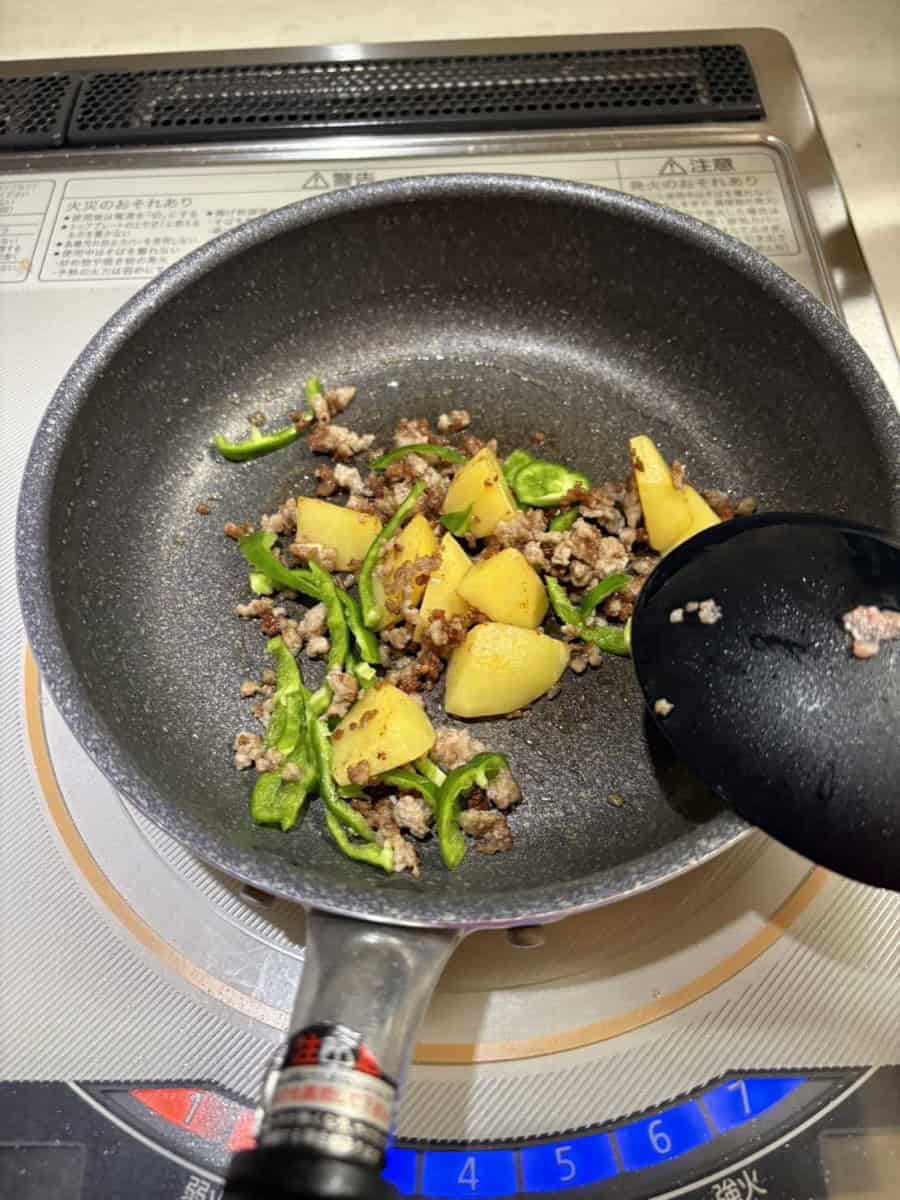
Step 4: Add the Green Pepper
Turn the heat down slightly, add the pepper strips, and cook for about a minute — no more. Green pepper loses its color fast and goes from bright green to a dull olive if you leave it in. You want it just softened, still vivid.
 Save
SaveStep 5: Blot the Fat, Then Add the Sauce Off the Heat
Wipe the excess fat out of the pan with a folded paper towel. Ground pork releases a surprising amount, and if you leave it the sauce turns greasy and won’t cling properly.
Then turn the heat off, pour in the sauce, and stir it through. Adding starch to a hot pan makes it seize into lumps before you’ve had a chance to distribute it — taking the pan off the heat first is the difference between a smooth glaze and a bowl of gluey clumps.

Step 6: Back On Low Until It Thickens
Put the pan back on a low heat and stir constantly. The sauce goes from thin to glossy almost instantly — a matter of seconds, not minutes. The moment it coats the potato and leaves a clear trail when you drag the spoon through it, take it off.
Cook it past that point and the starch breaks down and the sauce thins out again, which is frustrating and can’t be fixed without adding more starch.

Making It Into a Bento
This is what I actually did with it. Pack rice into the bottom of the box, spoon the soboro ankake over roughly half of it, and fill the rest of the box with whatever else is in the fridge — in this one there’s a carrot and komatsuna namul, some tamagoyaki, and a bit of chicken.

Two things that matter for packing it:
- Let it cool completely first. Warm food in a closed box creates condensation, and condensation is how bento go wrong. This is the single most important rule of Japanese lunch boxes.
- The thickened sauce is the whole point. A thin sauce would soak into the rice by lunchtime and leave you with a wet box. Ankake sits on top. If your sauce came out thin, don’t pack it — eat it that night instead.

Tips and Variations
- Mix the sauce before you start cooking. There is genuinely no time to do it later.
- Off the heat before the sauce goes in. The most common way to ruin this is dumping starch into a hot pan.
- Cut the potato small. A frying pan cooks potato much more slowly than a simmering pot does.
- Ground chicken works too and makes it lighter. Ground beef makes it richer. Any of them are normal.
- Add grated ginger to the sauce for something sharper, or a little chili for heat.
- No oyster sauce? Use an extra half tablespoon of soy sauce and a pinch more sugar. It won’t have the same depth but it works.
What to Serve It With
It’s a main dish, and because there’s potato in it you don’t need another starchy side.
- Rice and miso soup. The standard frame.
- Something sharp and cold to cut the richness — namul or kiriboshi daikon, both of which keep for days and are useful bento fillers too.
- Spooned straight over a bowl of hot rice, which is how the leftovers usually get eaten here.
Storing and Reheating
It keeps in the fridge for two or three days in an airtight container. The sauce firms up considerably when cold — that’s the starch, and it’s normal. It loosens again as soon as it warms.
Reheat in a pan over low heat with a splash of water, or in the microwave. Don’t freeze it. Potato goes grainy and mealy after freezing, and starch-thickened sauces separate when they thaw — you’d end up with watery sauce and unpleasant potato.
Frequently Asked Questions
What does soboro mean?
Soboro (そぼろ) is ground meat cooked until it separates into fine crumbles and seasoned, usually with soy sauce, sugar, and sake. It’s the loose, scattered texture that defines it rather than any one seasoning. Chicken soboro over rice, often alongside scrambled egg, is the most familiar version.
What is ankake sauce?
A Japanese sauce thickened with potato starch until it’s glossy and clings to whatever it’s poured over. It’s used on noodles, fried tofu, rice bowls, and vegetables. The technique is always the same: mix starch into the cold liquid, add it off the heat, then warm it gently until it thickens.
Why did my sauce go lumpy?
The starch hit a hot pan before it was distributed. Always take the pan off the heat, pour the sauce in, stir it through completely, and only then put it back on a low heat. Also stir the sauce right before pouring — starch settles to the bottom of the bowl within a couple of minutes.
Why did my sauce turn thin again after thickening?
It was cooked too long. Potato starch thickens fast and then breaks down if you keep heating it, which thins the sauce back out. Take the pan off the moment the sauce turns glossy and coats a spoon — that’s usually within about 30 seconds.
Can I use cornstarch instead of potato starch?
Yes. Use the same amount. Potato starch sets clearer and with a slightly bouncier texture, which is why it’s standard in Japan, but cornstarch will thicken the sauce perfectly well. It’s a bit more forgiving of overcooking, too.
Is this good for a bento box?
It’s one of the better dishes for it, because the thickened sauce stays on top of the rice instead of soaking in. Cool it completely before you close the lid — packing warm food creates condensation, which is the usual cause of a soggy bento.
Soboro Ankake (Japanese Ground Pork and Potato in Thick Sauce)
Ingredients
Method
- Peel the potatoes, cut them into bite-size chunks, and leave them in cold water. Cut the green peppers into 1 cm strips. Keep the potato pieces small and even – a frying pan cooks potato much more slowly than a simmering pot.
- Mix the water, oyster sauce, soy sauce, mirin, sake, potato starch, and sugar in a small bowl until the starch has completely dissolved. Do this before you turn on the stove – the sauce thickens within seconds at the end and there is no time to measure later.
- Heat sesame oil in a frying pan over medium heat. Add the drained potato and the ground pork at the same time. Break up the meat and turn the potato until it colors, 8 to 10 minutes, until the potato gives with a little resistance left.
- Lower the heat slightly, add the green pepper, and cook for about 1 minute only – any longer and it loses its bright color.
- Wipe the excess fat out of the pan with a folded paper towel, then turn the heat off completely. Stir the sauce again and pour it in, stirring it through. Adding starch to a hot pan makes it seize into lumps.
- Return the pan to a low heat and stir constantly. The sauce turns glossy within about 30 seconds. Take it off as soon as it coats the potato – cooking it longer breaks the starch down and thins the sauce again.
- Serve over hot rice. To pack it in a bento, let it cool completely first so condensation does not form in the box.


