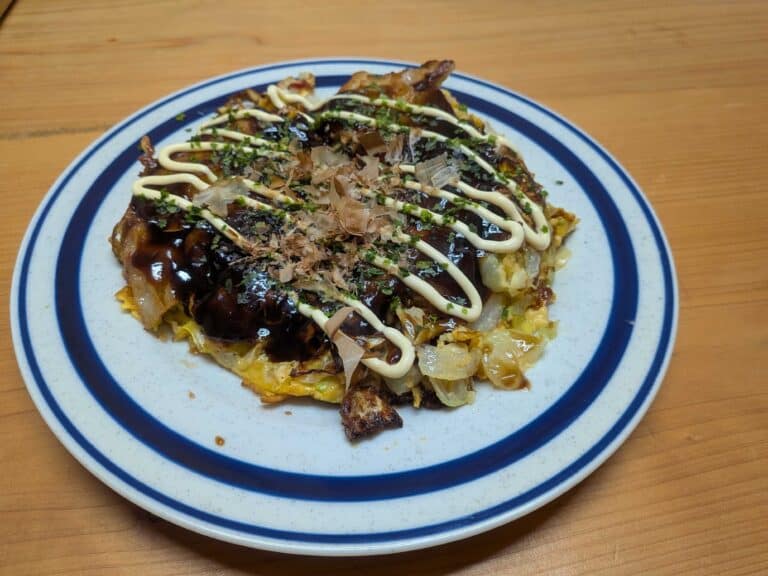
Japanese Mapo Tofu (Mild Home-Style Mabo Dofu)
Mapo tofu (麻婆豆腐, mābō dōfu in Japanese) came from Sichuan, but in Japan it became a completely different everyday dish: soft tofu and ground pork in a glossy, savory sauce that’s only gently spicy and a little sweet. It’s one of the most common weeknight dinners in Japanese homes, usually spooned over rice. Kids eat it too, which is why the Japanese version is so mild compared to the fiery original.
This is how we make it at home. I followed a popular recipe on Cookpad, Japan’s biggest recipe site, and kept everything the same except the chili bean paste, where I used the lower amount so it’s mild. We skipped the garlic this time and used grated ginger from the freezer. Plenty of Japanese families make it from a sauce packet, but from scratch it only takes about 20 minutes.
Disclosure: some links below are affiliate links. As an Amazon Associate I earn from qualifying purchases, at no extra cost to you.
 Save
The Short Answer
If you just want the method:
- What it is: Japanese mapo tofu is a milder, slightly sweeter version of Sichuan mapo tofu — tofu and ground pork in a thick sauce, eaten over rice.
- The sauce, for 2–3 servings: 2 tbsp sake, 1 tbsp sweet bean sauce (tianmianjiang), 1 tbsp soy sauce, ½ tbsp chicken stock powder, ½ tbsp sugar, and 250 ml water, with 1–2 tsp chili bean paste (doubanjiang).
- The method: fry green onion and ginger, add 150g ground pork and the chili bean paste, pour in the sauce, add a block of tofu, then thicken with potato starch and finish with sesame oil.
- How it differs from Chinese mapo tofu: Japanese homes use less chili, add sweet bean sauce and sugar, and usually skip Sichuan peppercorns, so it’s savory rather than numbing and hot.
Why You’ll Love This Recipe
- You control the heat. 1 tsp of chili bean paste makes it mild enough for everyone; 2 tsp gives it a real kick.
- One frying pan, about 20 minutes. A real weeknight dinner.
- Cheap and filling. A block of tofu and a little ground pork feed two or three people over rice.
- No packet needed. The sauce is just a few bottles you’ll use again and again.
What is Japanese Mapo Tofu?
Mapo tofu was brought to Japan in the 1950s and 60s by Chinese chef Chen Kenmin, who toned it down for Japanese tastes. It caught on so well that it’s now considered a home-cooking classic, alongside curry and hamburg steak. Supermarkets sell mapo tofu sauce packets in every aisle, and it’s a regular in school lunches and set-meal restaurants.
Japanese vs. Chinese Mapo Tofu
| Japanese (home style) | Chinese (Sichuan) | |
|---|---|---|
| Heat | Mild to medium | Hot |
| Sichuan peppercorns | Usually none | Plenty — a numbing tingle |
| Flavor | Savory and a little sweet | Spicy, oily, and deeply savory |
| Key sauce | Sweet bean sauce, soy sauce, chicken stock | Chili bean paste, fermented black beans, chili oil |
| How it’s eaten | Over or next to rice, often by kids | As one dish among many |
Ingredients (Serves 2–3)
| Ingredient | Amount | Notes |
|---|---|---|
| Tofu | 1 block (about 300–400g) | Cut into cubes; silken or medium-firm |
| Ground pork | 150g (about 5 oz) | |
| Japanese long green onion (negi) | ½ | Finely chopped |
| Ginger | A little, grated | We used frozen grated ginger |
| Garlic | 1 clove, minced | Optional — we skipped it |
| Chili bean paste (doubanjiang) | 1–2 tsp | We used 1 tsp for a mild version |
| Sake | 2 tbsp | Or Shaoxing wine |
| Sweet bean sauce (tianmianjiang) | 1 tbsp | |
| Soy sauce | 1 tbsp | |
| Chicken stock powder | ½ tbsp | |
| Sugar | ½ tbsp | |
| Water | 250 ml (about 1 cup) | |
| Potato starch + water | About 1 tbsp + 2 tbsp | Mix before adding |
| Vegetable oil | For frying | |
| Toasted sesame oil | ½ tbsp | To finish |
| Green onion | To garnish | Chopped |
The sauce is thickened with potato starch (katakuriko), the standard thickener in Japanese kitchens. Cornstarch also works. A few drops of toasted sesame oil at the end give it that Chinese-restaurant aroma. Chili bean paste and sweet bean sauce are both at Asian supermarkets. Our chili bean paste came in a squeeze bottle, which makes it easy to add a little at a time.
 Save
How to Make Japanese Mapo Tofu
Step 1: Chop the Green Onion and Warm the Ginger
Finely chop the green onion. I used a pull-cord vegetable chopper, which turns half a negi into small pieces in a few seconds. Heat a little oil in a frying pan and add the ginger (and garlic, if using).
 Save
 Save
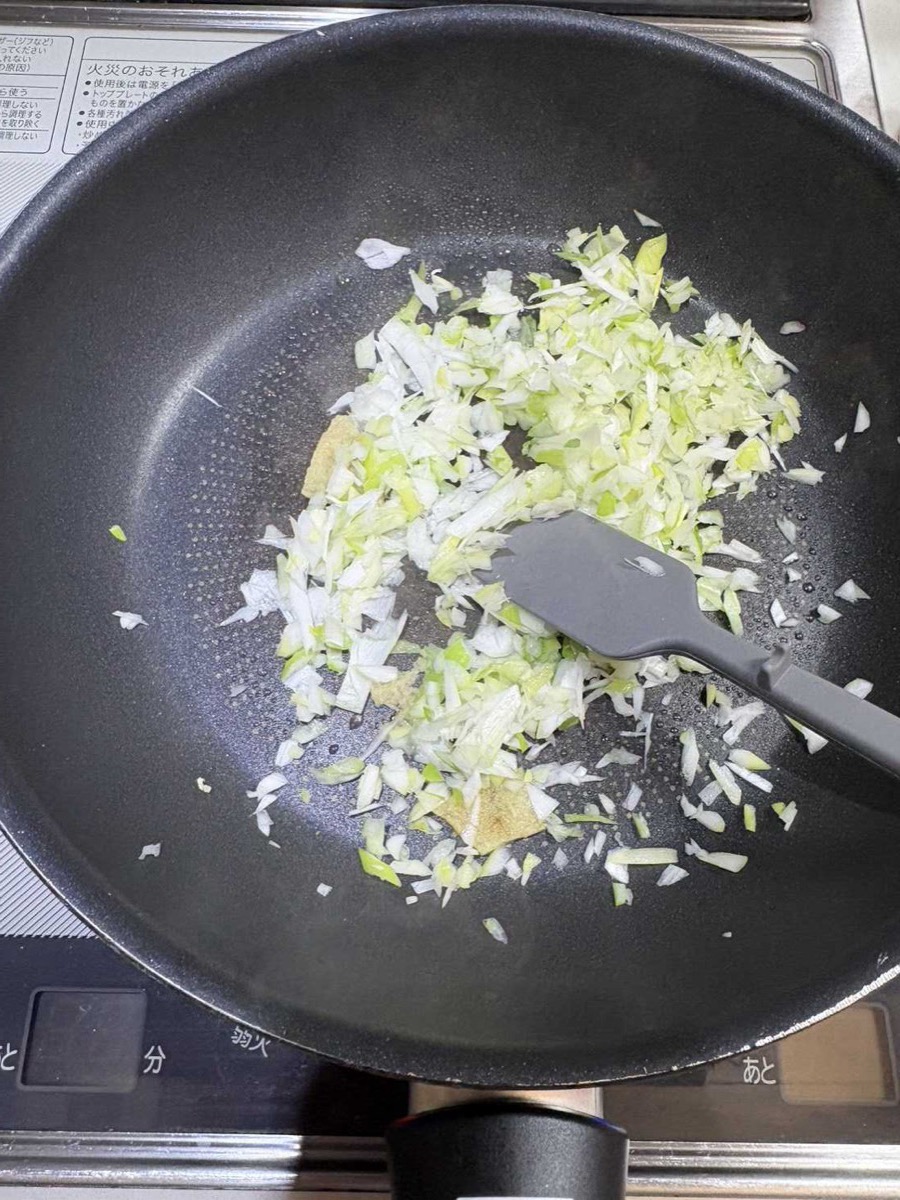
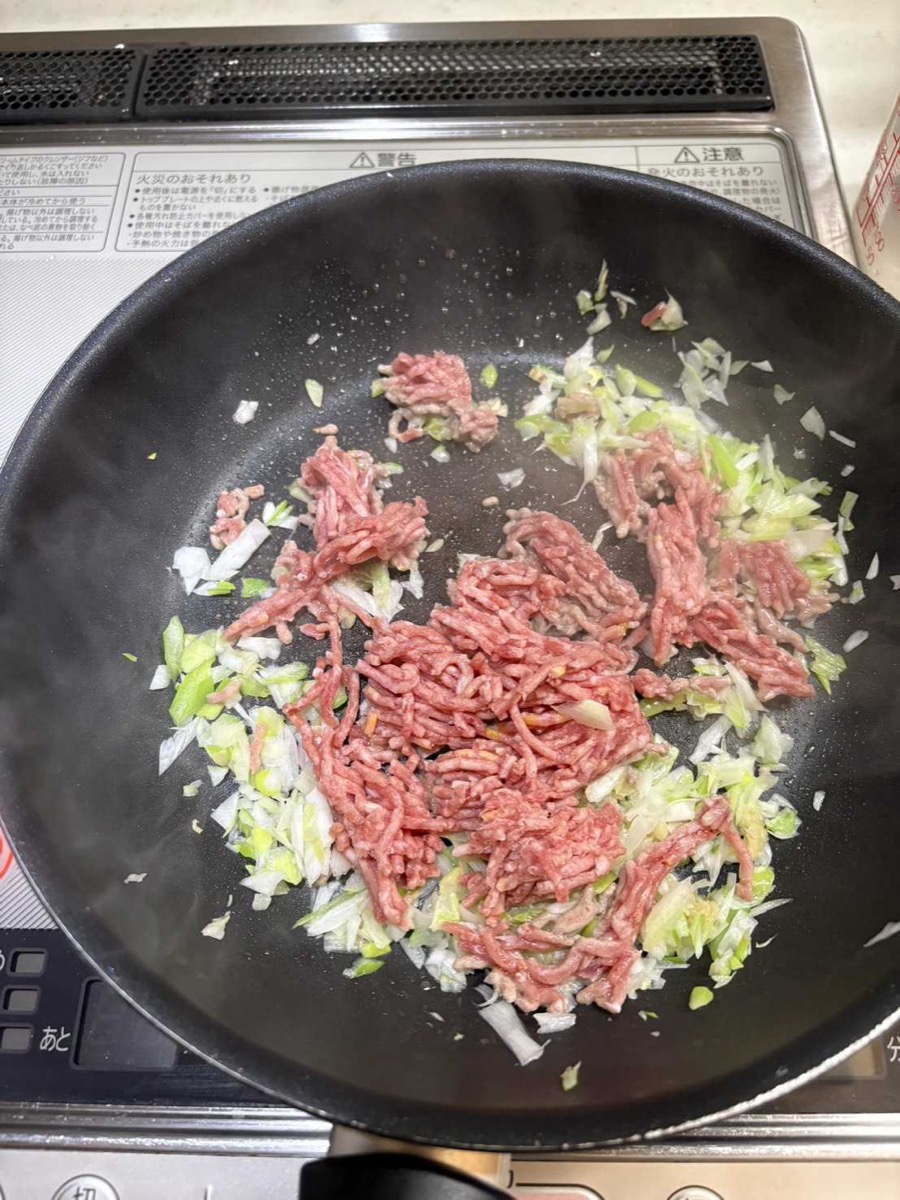
Step 2: Fry the Green Onion and Pork
Add the green onion and stir-fry until it softens, then add the ground pork and fry, breaking it up, until it’s no longer pink.
 Save
 Save
Step 3: Add the Chili Bean Paste
Add the chili bean paste and stir-fry for a few seconds to bring out its aroma. Start with 1 tsp — you can’t take it out once it’s in.
 Save
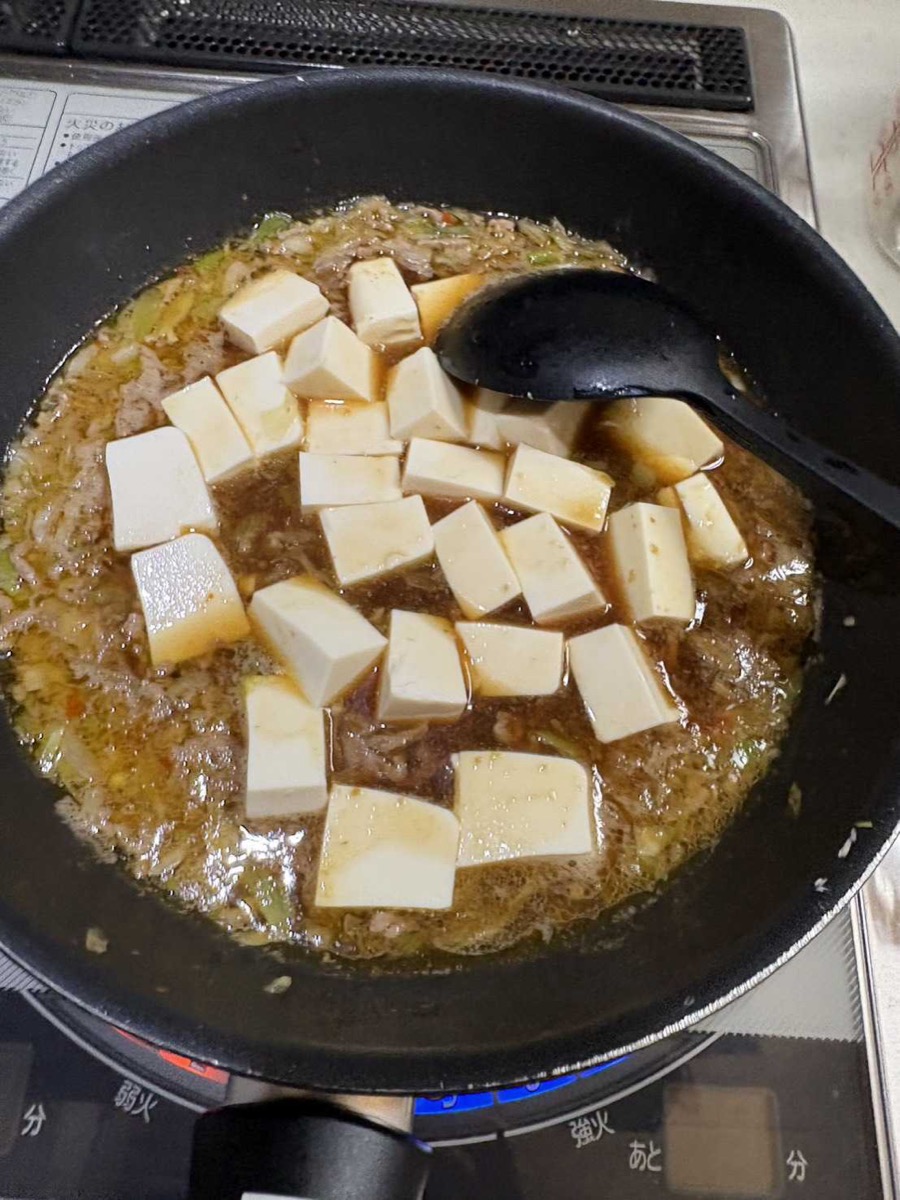
Step 4: Add the Sauce and Tofu
Add the sake, sweet bean sauce, soy sauce, chicken stock powder, sugar, and water and bring to a boil. Add the cubed tofu and simmer for a few minutes, stirring gently from the bottom so the tofu doesn’t break up.
 Save
 Save
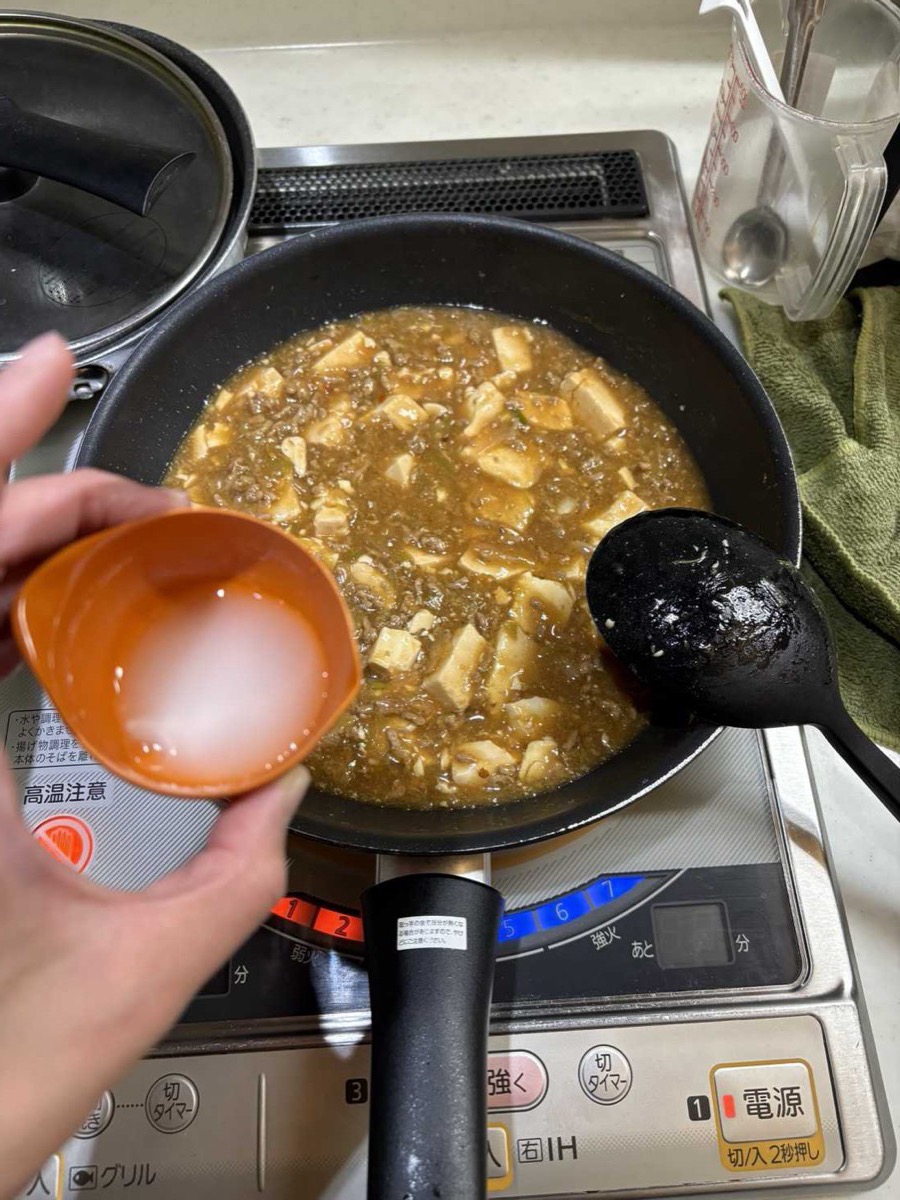
Step 5: Thicken and Finish
Turn the heat down to low and pour in the potato starch slurry, stirring well. Turn the heat back up and cook until the sauce is thick and glossy. Drizzle with sesame oil, transfer to a plate, and top with green onion.
 Save
 Save
Tips and Variations
- Turn the heat down before adding starch. Adding it to a rolling boil makes lumps. Low heat, stir, then turn it back up.
- Non-spicy version for kids. Skip the chili bean paste and add a little more sweet bean sauce or miso.
- Ground beef works too. Ground pork is standard in Japan, but beef or a pork and beef mix is fine.
- Frozen ginger is fine. I used grated ginger I’d frozen earlier, and it works just as well as fresh. Tube ginger works too.
What to Serve It With
- Rice and a simple soup. That’s how we ate it.
- Another Chinese-style Japanese home dish, like nira buta (pork and garlic chives).
- Fried rice instead of plain rice, such as takana chahan.
Storing and Reheating
Keep leftovers in the fridge for up to 2 days and reheat in a pan or the microwave. The sauce thickens as it cools, so add a splash of water when reheating. Tofu gets spongy once frozen, so mapo tofu is best eaten fresh rather than frozen.
Frequently Asked Questions
What is the difference between Japanese and Chinese mapo tofu?
Japanese mapo tofu is milder and slightly sweet, made with sweet bean sauce, soy sauce, and chicken stock, and usually without Sichuan peppercorns. Chinese (Sichuan) mapo tofu is much spicier and has the numbing heat of Sichuan pepper.
Can I make mapo tofu not spicy?
Yes. Use 1 tsp of chili bean paste for a mild version, or leave it out completely. Japanese families often make it with very little chili so kids can eat it.
Can you make mapo tofu with ground beef?
Yes. Ground pork is the most common choice in Japan, but ground beef or a mix of the two works the same way.
Can you freeze mapo tofu?
It’s not ideal. Tofu turns spongy and chewy after freezing. Keep it in the fridge and eat it within 2 days.
Japanese Mapo Tofu (Mabo Dofu)
Ingredients
Method
- Finely chop the long green onion and cut the tofu into cubes.
- Heat a little oil in a frying pan and add the ginger (and garlic, if using). Add the green onion and stir-fry until soft, then add the ground pork and fry until no longer pink.
- Add the chili bean paste and stir-fry briefly.
- Add the sake, sweet bean sauce, soy sauce, chicken stock powder, sugar, and water and bring to a boil. Add the tofu and simmer for a few minutes, stirring gently.
- Turn the heat to low, stir in the potato starch slurry, then turn the heat back up and cook until thick and glossy.
- Drizzle with sesame oil and serve topped with chopped green onion.