Hayashi Rice (Japanese Beef Stew Over Rice, Made with Roux)
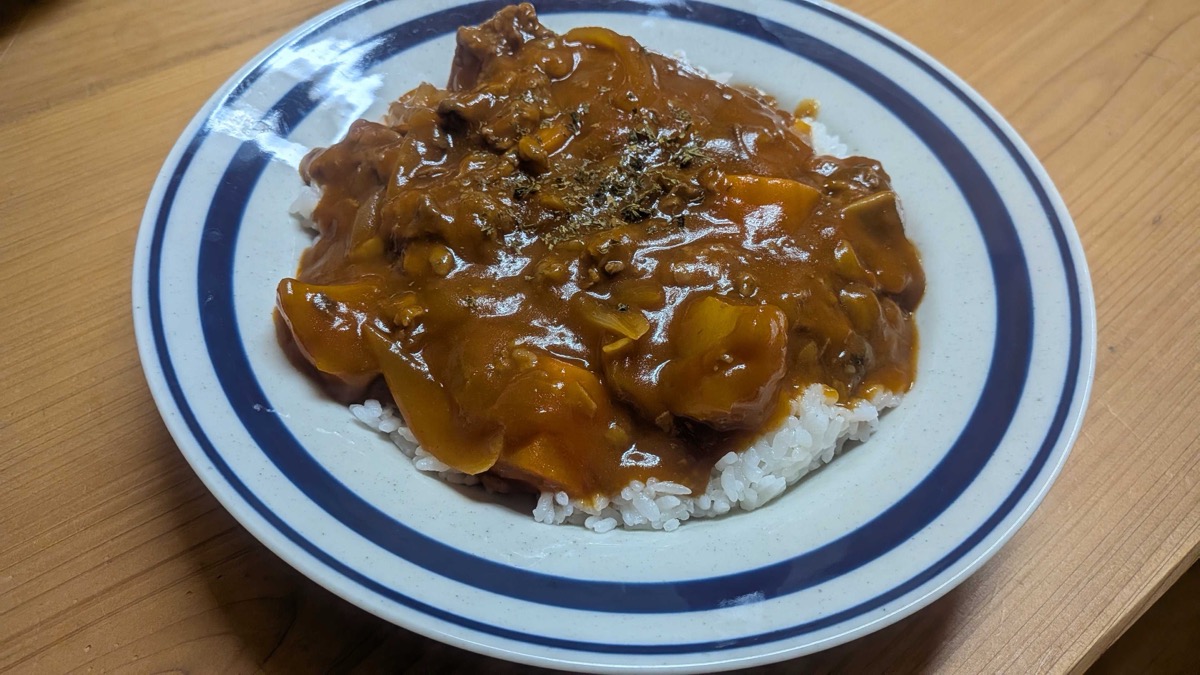
Hayashi rice (ハヤシライス) is Japanese beef and onion stew in a rich, slightly sweet tomato and demi-glace sauce, served over rice. It looks a lot like Japanese curry, and it’s made the same way, from a box of roux, but there’s no curry spice at all. It tastes more like a beef stew with a gentle tomato tang. It’s one of the classic yoshoku (Western-style) dishes that Japanese families make at home.
This is exactly how we made it at home: a box of hayashi rice roux from the supermarket, thin-sliced beef, onions and mushrooms like the box says — plus a carrot and a couple of potatoes, just because they were left over in the fridge. I gave them a quick spin in the microwave first so they’d cook faster. It’s not traditional, but it’s very much how real Japanese home cooking works.
Disclosure: some links below are affiliate links. As an Amazon Associate I earn from qualifying purchases, at no extra cost to you.
 Save
The Short Answer
If you just want the method:
- What it is: hayashi rice is Japanese beef and onion stew in a tomato and demi-glace sauce, served over rice — like Japanese curry, but with no curry spice.
- How Japanese homes make it: almost always with a box of hayashi rice roux. For 5 servings: half a box of roux, 550 ml water, 200g thinly sliced beef, 1½ onions, and 4 mushrooms.
- The method: fry the beef and vegetables, add water and simmer for about 5 minutes, then turn off the heat, melt in the roux, and simmer for another 5 minutes until thick.
- Don’t skip: turning off the heat before adding the roux, so it melts smoothly without lumps.
Why You’ll Love This Recipe
- About 20 minutes. The roux does the seasoning for you, so it’s a true weeknight dinner.
- Kid-friendly. No curry spice and no heat — just rich, slightly sweet tomato and beef.
- Uses up vegetables. Onions and mushrooms are standard, but leftover carrots and potatoes work fine, as you can see.
- Even better the next day. Like curry, leftovers taste deeper after a night in the fridge.
What is Hayashi Rice?
Hayashi rice is a Japanese take on beef stew that dates back to the late 1800s, when Western food was first becoming popular in Japan. Thin slices of beef and lots of onion are simmered in a brown sauce made from demi-glace and tomato, then served over white rice. Nobody is completely sure where the name comes from. One popular theory is that it comes from “hashed beef,” and another is that it was named after a man named Hayashi.
Hayashi Rice vs. Japanese Curry
They look similar on the plate, and both are made from a block of roux, but they taste quite different:
| Hayashi rice | Japanese curry | |
|---|---|---|
| Flavor | Tomato and demi-glace, slightly sweet and tangy | Curry spices, savory, mild to hot |
| Classic meat | Thinly sliced beef | Beef, pork, or chicken in chunks |
| Classic vegetables | Onions and mushrooms | Onions, carrots, and potatoes |
| Spice heat | None | Mild, medium, or hot |
So the carrots and potatoes in our version are really a curry habit. If you want classic hayashi rice, stick to beef, onions, and mushrooms. If you like Japanese curry too, see my pressure cooker Japanese curry.
Ingredients (Serves 5)
| Ingredient | Amount | Notes |
|---|---|---|
| Hayashi rice roux | ½ box (1 of the 2 blocks) | We used House Foods’ ripe-tomato hayashi rice sauce |
| Thinly sliced beef | 200g (about 7 oz) | Any thin-sliced cut, such as round or chuck |
| Onions | 1½ medium | Sliced |
| Mushrooms | 4 | White button mushrooms, sliced |
| Vegetable oil | 1 tbsp | |
| Water | 550 ml (about 2⅓ cups) | Add a little more if you add extra vegetables |
| Carrot and potatoes | Optional | Not traditional — we added leftovers |
| Cooked Japanese rice | 5 servings | To serve |
| Dried parsley | A pinch | Optional garnish |
The amounts are from House Foods’ own recipe for this roux, plus our extra vegetables. We used House Foods’ ripe-tomato hayashi rice sauce (完熟トマトのハヤシライスソース), a common one in Japanese supermarkets. In the US, this hayashi rice sauce mix on Amazon is easier to find. It’s a different brand from ours, but it’s the same kind of roux and works the same way. Follow the water amount on whichever box you buy.
 Save
How to Make Hayashi Rice
Step 1: Fry the Beef
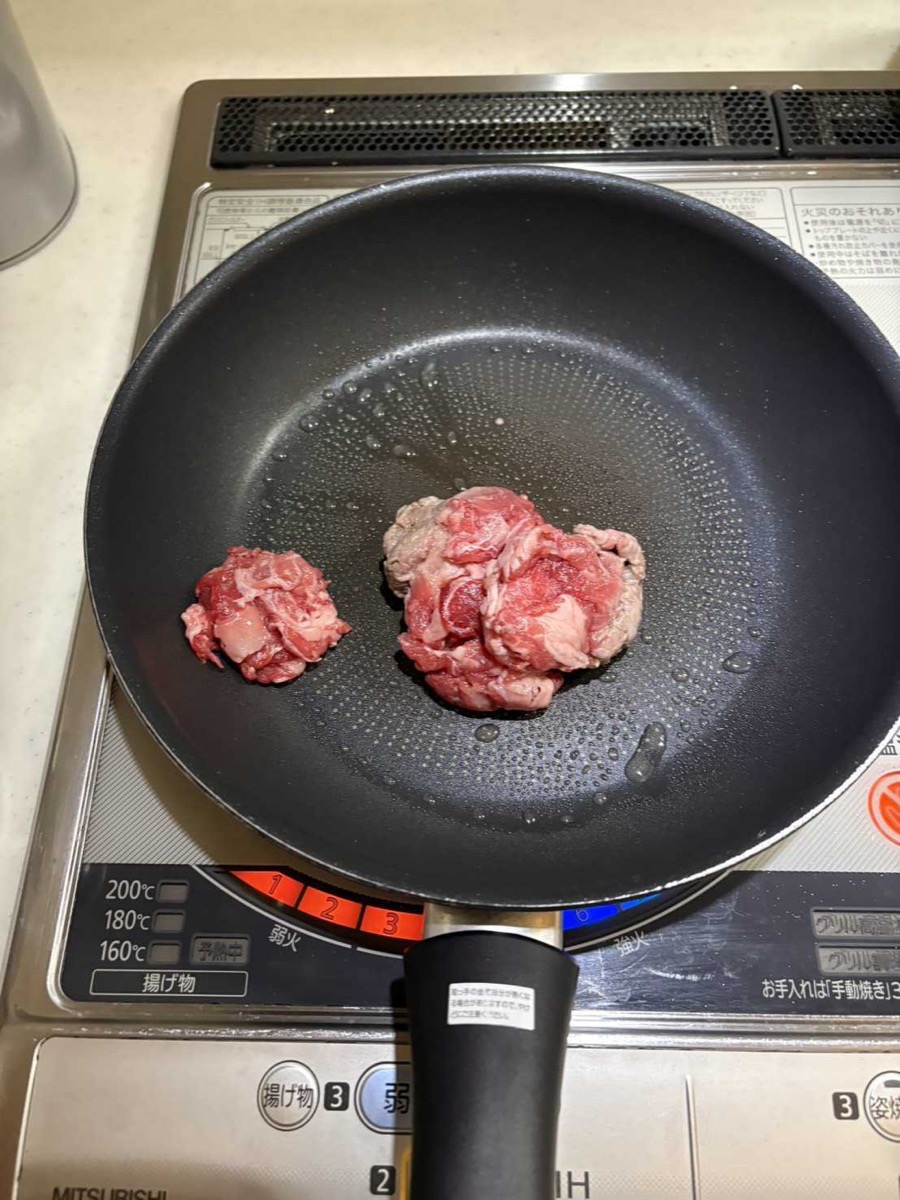
Heat the oil in a large frying pan or pot and fry the beef, breaking it apart, until it’s no longer pink. Cut any large slices into 3–4 cm (1½ in) pieces first.
 Save
Step 2: Add the Vegetables
Add the sliced onions (and carrot, if using) and fry until the onions turn soft and translucent. If you’re adding potatoes and carrots, a couple of minutes in the microwave first helps them cook in time. Then add the potatoes and the sliced mushrooms and stir everything together.
 Save
 Save
Step 3: Add Water and Simmer
Pour in the water and bring it to a boil. Skim off any foam, then simmer over low to medium heat for about 5 minutes, until the vegetables are tender.
 Save
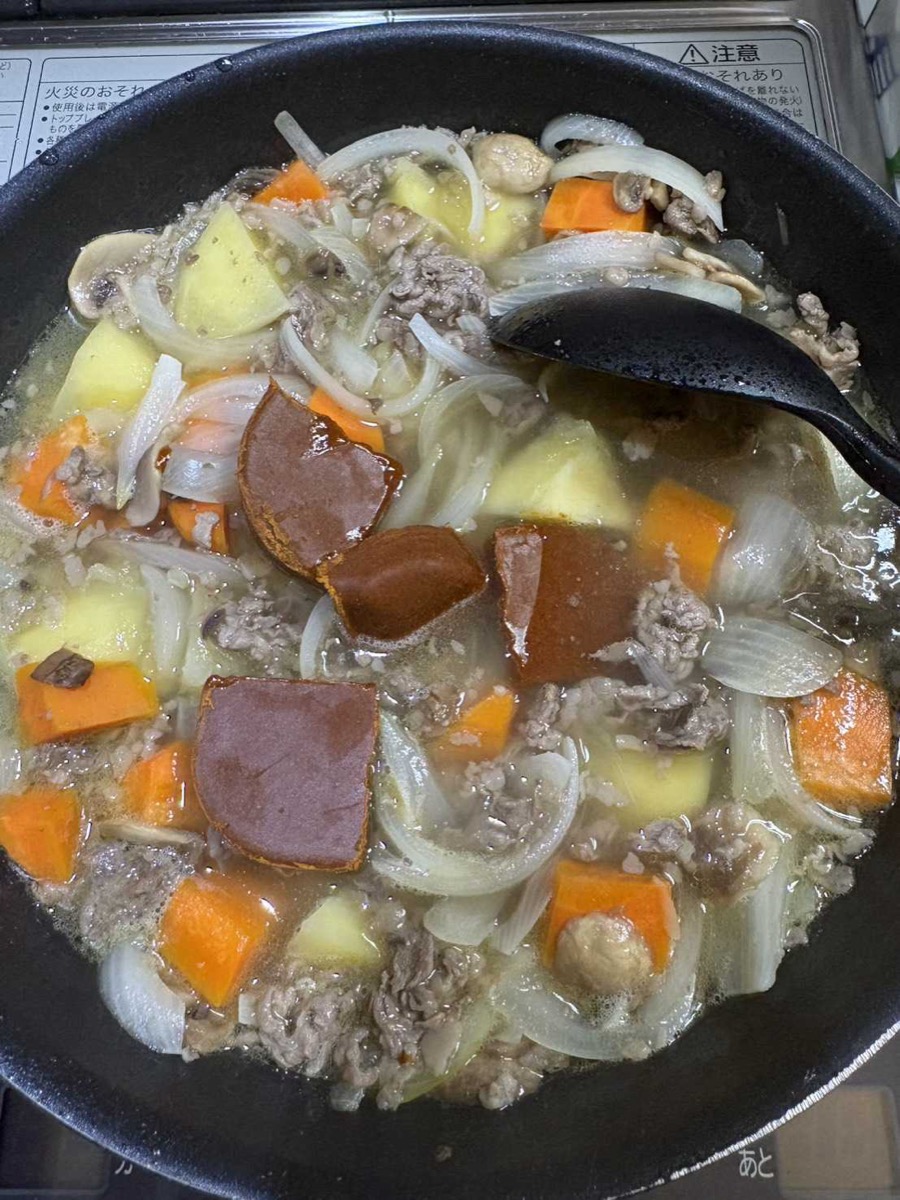
Step 4: Turn Off the Heat and Add the Roux
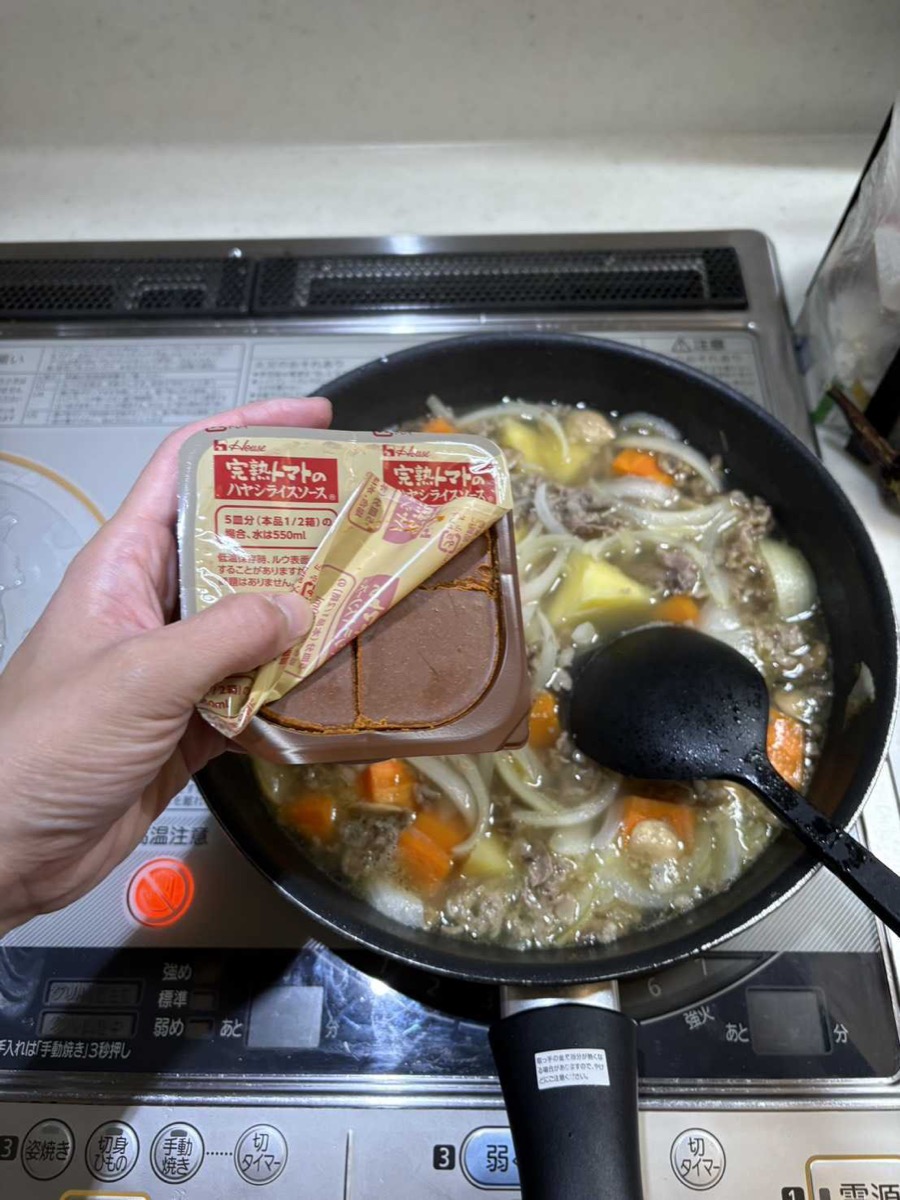
Turn off the heat. Break the roux into pieces, drop them in, and stir until they melt completely. Adding roux to boiling liquid is how you get lumps, so this pause matters.
 Save
 Save
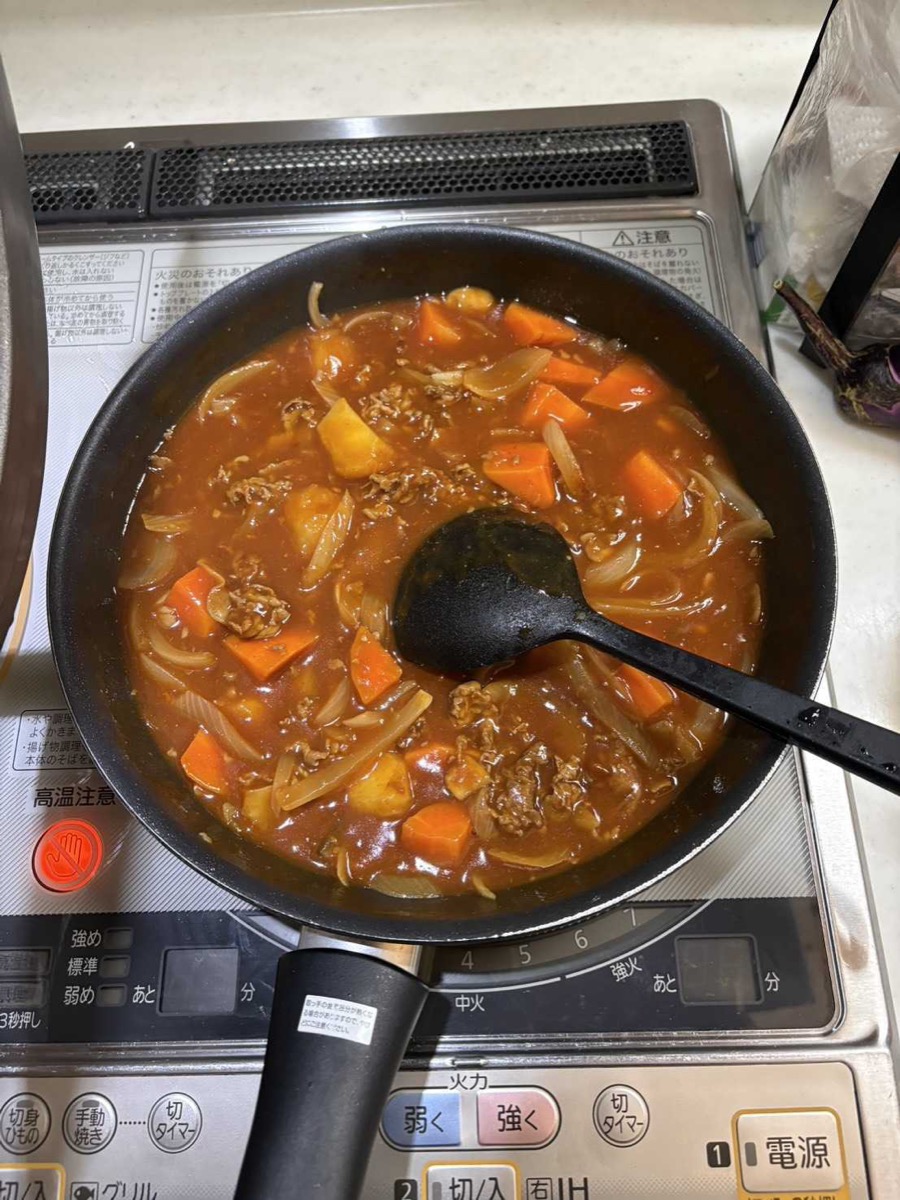
Step 5: Simmer Until Thick
Turn the heat back on to low and simmer for about 5 minutes, stirring now and then so it doesn’t stick, until the sauce turns glossy and thick.
 Save
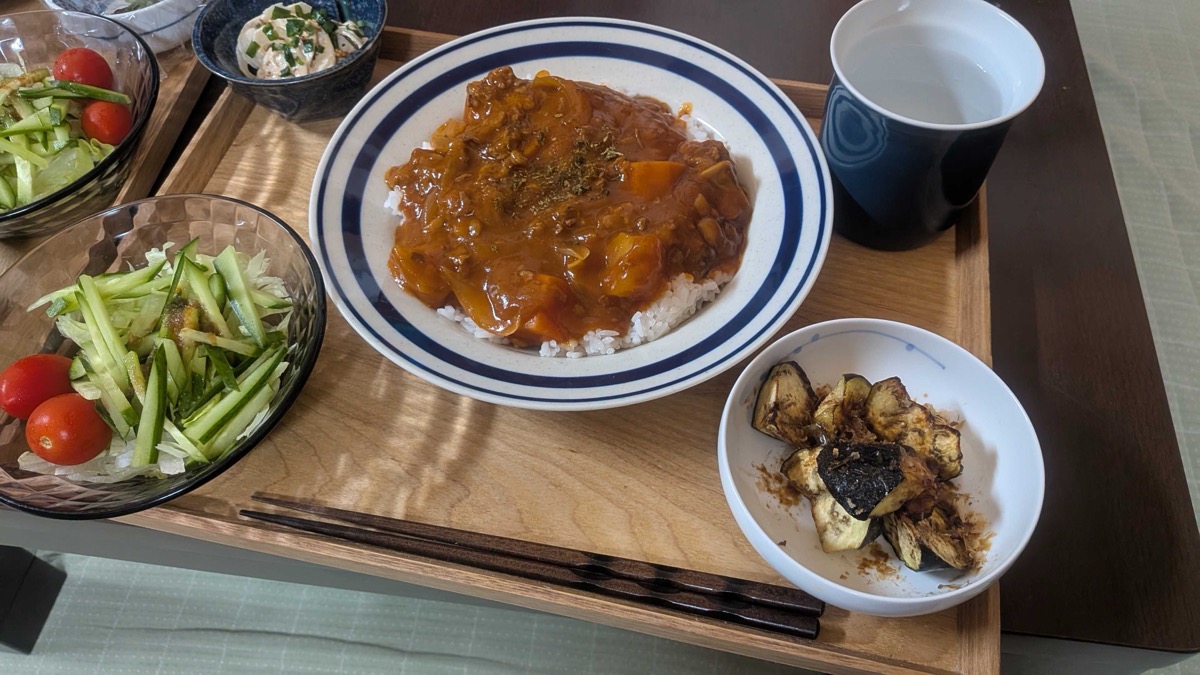
Step 6: Serve Over Rice
Put rice on one side of a wide plate and ladle the hayashi sauce over it. We sprinkled a little dried parsley on top.
 Save
Tips and Variations
- Best meat for hayashi rice: thinly sliced beef is classic, because it stays tender in the short simmer. Pork works too and makes it a little lighter. Ground beef also works.
- Cook the onions well. The longer you fry them, the sweeter the sauce gets.
- Extra vegetables, extra water. If you add carrots and potatoes like we did, add a little more water so the sauce doesn’t get too thick.
- Make it richer. A splash of red wine or ketchup, or a pat of butter at the end, are common homemade upgrades.
- Top it with an omelet. Hayashi sauce over omurice is a favorite at Japanese cafés.
What to Serve It With
- A fresh salad. We had cucumber and cherry tomatoes on the side.
- A small vegetable side, like yaki nasu (grilled eggplant with bonito flakes).
- More yoshoku: Japanese hamburg steak is another Western-style classic Japanese families make at home.
Storing and Reheating
Keep leftovers in the fridge for up to 2 days and reheat in a pan over low heat, stirring and adding a splash of water if it’s too thick. You can freeze the sauce, but potatoes turn grainy after freezing, so take them out first if you added them.
Frequently Asked Questions
What is the difference between hayashi rice and curry?
Hayashi rice has a tomato and demi-glace sauce with no curry spices, so it tastes like a slightly sweet beef stew. Japanese curry uses curry spices. Both are made from boxed roux and served over rice.
What is the best meat for hayashi rice?
Thinly sliced beef is the classic choice. It cooks quickly and stays tender. You can also make hayashi rice with pork or ground beef.
Can you make hayashi rice from scratch?
Yes, with demi-glace sauce, tomato paste, ketchup, and butter, but most Japanese families use a box of roux. It’s quick, consistent, and how the dish is usually made at home.
Can you freeze hayashi rice?
Yes, the sauce freezes well for about a month. Remove any potatoes first, since they turn grainy, and thaw it in the fridge before reheating gently.
Hayashi Rice (Japanese Beef Stew Over Rice)
Ingredients
Method
- Cut the beef into 3-4 cm (1 1/2 in) pieces. Slice the onions and mushrooms. If using carrot and potatoes, cut them into chunks and microwave for a couple of minutes.
- Heat the oil in a large frying pan and fry the beef until no longer pink.
- Add the onions (and carrot) and fry until soft and translucent, then add the potatoes and mushrooms and stir.
- Add the water and bring to a boil. Skim off the foam and simmer over low to medium heat for about 5 minutes, until the vegetables are tender.
- Turn off the heat. Break the roux into pieces, add it, and stir until completely melted.
- Simmer over low heat for about 5 minutes, stirring occasionally, until thick and glossy. Serve over rice with dried parsley.