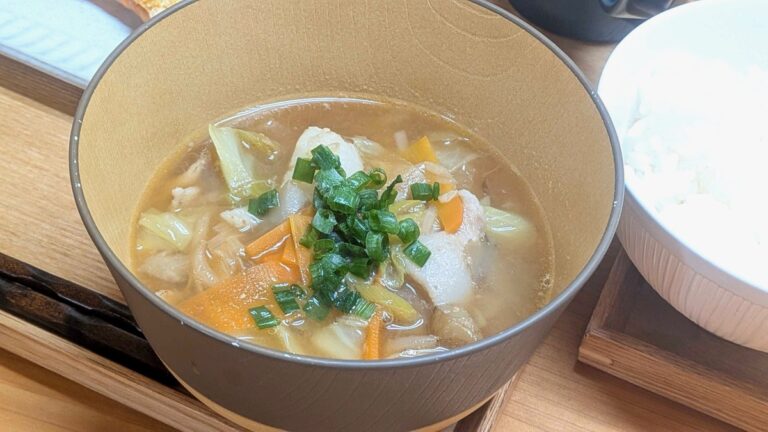
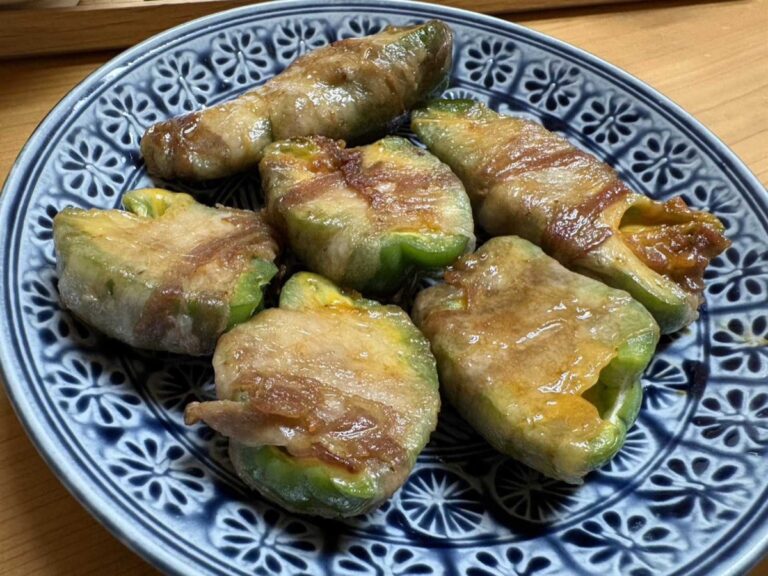
Pressure Cooker Oden (Japanese Fish Cake Stew, No Pre-Boiling)
Oden (おでん) is Japanese one-pot winter stew: daikon radish, boiled eggs, fish cakes, fried tofu, and whatever else you like, simmered for a long time in a light soy and dashi broth. If you’ve been to Japan in winter, you’ve probably seen it simmering in a tray by the register at 7-Eleven, Lawson, or FamilyMart — convenience store oden is one of the most famous winter foods in Japan. But it’s also one of the most common things families make at home once it gets cold.
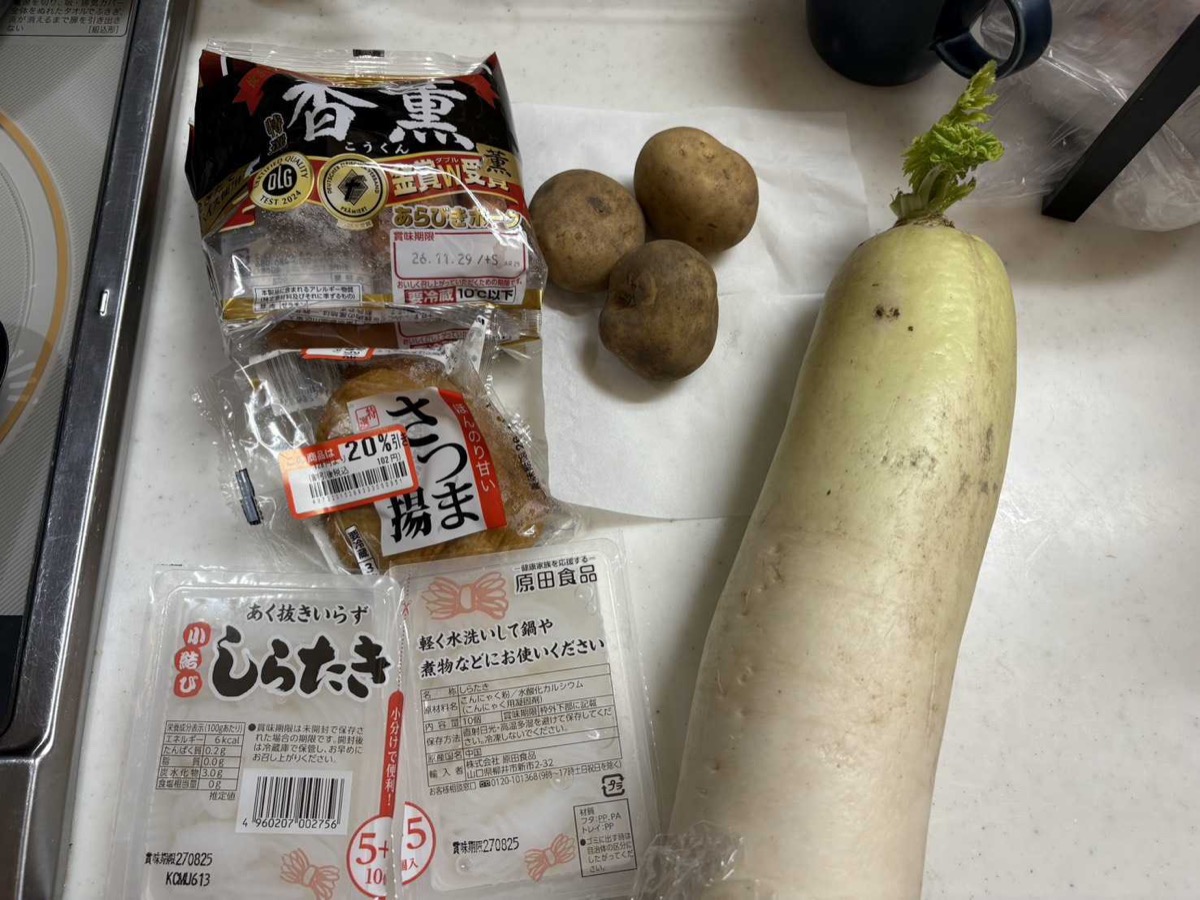
This is our lazy home version. Traditional oden has a lot of prep: pre-boiling the daikon, blanching the fish cakes, simmering for hours. I skipped all of it. Everything went into our electric pressure cooker at once — whichever supermarket fish cakes were marked down that day (the 20%-off stickers are still on them), sausages, potatoes, eggs, and daikon — and 30 minutes at pressure later, the daikon was soft all the way through. It’s not fancy, but this is honestly how a lot of Japanese homes make oden now.
Disclosure: some links below are affiliate links. As an Amazon Associate I earn from qualifying purchases, at no extra cost to you.
 Save
The Short Answer
If you just want the method:
- What it is: oden is a Japanese stew of daikon, eggs, fish cakes, and other ingredients slowly simmered in a light dashi and soy sauce broth — the same dish sold at Japanese convenience stores in winter.
- The broth: for 4 servings, 750 ml water, 1 dashi packet (or 3 tsp dashi granules), 3 tbsp sake, 1½ tbsp mirin, 2 tbsp soy sauce, and a pinch of salt — adjust by tasting.
- The method: put everything into an electric pressure cooker at once, with no pre-boiling, and cook for 30 minutes at high pressure. Let the pressure release naturally.
- The ingredients: daikon and boiled eggs are essential. After that, most Japanese homes just buy a few packs of fish cakes and add whatever they like — potatoes and sausages included.
Why You’ll Love This Recipe
- No pre-boiling. Everything goes in raw (except the boiled eggs), and the pressure cooker does the work.
- Daikon that tastes like it simmered all day. Under pressure, the radish turns soft and soaks up the broth in about 30 minutes.
- Use what the store has. There’s no fixed ingredient list. Pick a few packs of fish cakes and whatever you like.
- Better the next day. Oden is a make-a-big-pot dish, and the leftovers taste even better.
What is Oden?
Oden is a winter dish of many separate ingredients simmered together in one pot of broth. Each piece keeps its shape, and you pick out what you want and eat it with some of the broth. The broth is light in color, made from dashi, soy sauce, mirin, and sake, and everything in the pot slowly flavors it.
The most important oden ingredient is nerimono — Japanese fish cakes made from ground white fish. There are many kinds, and in Japan they’re sold in “oden sets” or individual packs at every supermarket. Daikon and boiled eggs are the other two classics; after that, every family and every region has its own favorites. I don’t plan which fish cakes to use: I just buy whatever is on sale at the supermarket that day.
Convenience Store Oden vs. Homemade Oden
From around autumn, Japanese convenience stores keep a tray of oden simmering next to the register. You choose the pieces you want, and they go into a cup with some of the broth. It’s cheap, warm, and a very Japanese winter snack, which is why so many visitors try it.
Homemade oden is the same dish, just freer. Each convenience store chain has its own broth and lineup, but at home you put in whatever you like — in our case potatoes and sausages along with the classics — and make a big pot that lasts until the next day. If you liked convenience store oden in Japan, it’s easy to make at home.
Common Oden Ingredients
- Satsuma-age: deep-fried fish cake, chewy and slightly sweet. Kyushu is satsuma-age country.
- Chikuwa: a tube-shaped grilled fish cake.
- Hanpen: a soft, fluffy white fish cake made with yam.
- Kamaboko: steamed fish cake. We used a colorful pink-and-green one.
- Atsuage: thick fried tofu, which soaks up the broth like a sponge.
- Konnyaku or shirataki: chewy konjac, in blocks or noodles.
 Save
Ingredients (Serves 4)
| Ingredient | Amount | Notes |
|---|---|---|
| Daikon radish | About 8–10 cm (3–4 in) | Peeled, cut into thick rounds |
| Boiled eggs | 4 | Peeled |
| Small potatoes | 3 | Peeled, left whole; optional |
| Fish cakes | A few packs | We used satsuma-age, chikuwa, hanpen, and kamaboko |
| Atsuage (thick fried tofu) | 1 pack | Optional |
| Shirataki | 1 pack | Rinsed and drained; or a block of konnyaku |
| Small sausages | 4–6 | Optional |
| Water | 750 ml (about 3 cups) | |
| Dashi packet | 1 | Or 3 tsp instant dashi granules |
| Sake | 3 tbsp | |
| Mirin | 1½ tbsp | |
| Soy sauce | 2 tbsp | Adjust to taste |
| Salt | A pinch | Adjust to taste |
The broth amounts are from the oden recipe that came with our pressure cooker, with a dashi packet in place of the granules. Our soy sauce is a sweet Kyushu one, so yours may taste a little saltier — start with a bit less and adjust after cooking. Our cooker is an Iris Ohyama, which isn’t sold in the US; any electric pressure cooker like the Instant Pot works the same way. I haven’t tested this in an Instant Pot myself, so check the daikon at the end and give it a few more minutes if needed.
Where to Find Fish Cakes Outside Japan
Japanese fish cakes are hard to find at regular supermarkets in the US, but here are your options:
- Japanese grocery stores (Mitsuwa, Tokyo Central, Nijiya, and others) usually carry chikuwa, satsuma-age, kamaboko, and frozen “oden sets” in the refrigerated or freezer section.
- Korean and other Asian supermarkets like H Mart sell Korean fish cakes (eomuk or odeng), in sheets or sticks. They work very well in oden.
- Regular supermarkets: imitation crab sticks are also made from fish paste. They fall apart if cooked too long, so add them at the end and just warm them through.
- No fish cakes at all? You can still make oden with daikon, boiled eggs, fried tofu, konjac, potatoes, and sausages. That’s half of what was in our pot anyway.
How to Make Pressure Cooker Oden
Step 1: Cut the Daikon and Prep the Rest
Peel the daikon and cut it into thick rounds, about 2–3 cm (1 in). Peel the potatoes and boiled eggs. Cut any large fish cakes into bite-sized pieces, and rinse and drain the shirataki. That’s all the prep — no pre-boiling the daikon and no blanching the fish cakes.
 Save
 Save
Step 2: Make the Broth in the Pot
Put the water, dashi packet, sake, mirin, soy sauce, and a pinch of salt into the inner pot of the pressure cooker.
 Save
Step 3: Add Everything at Once
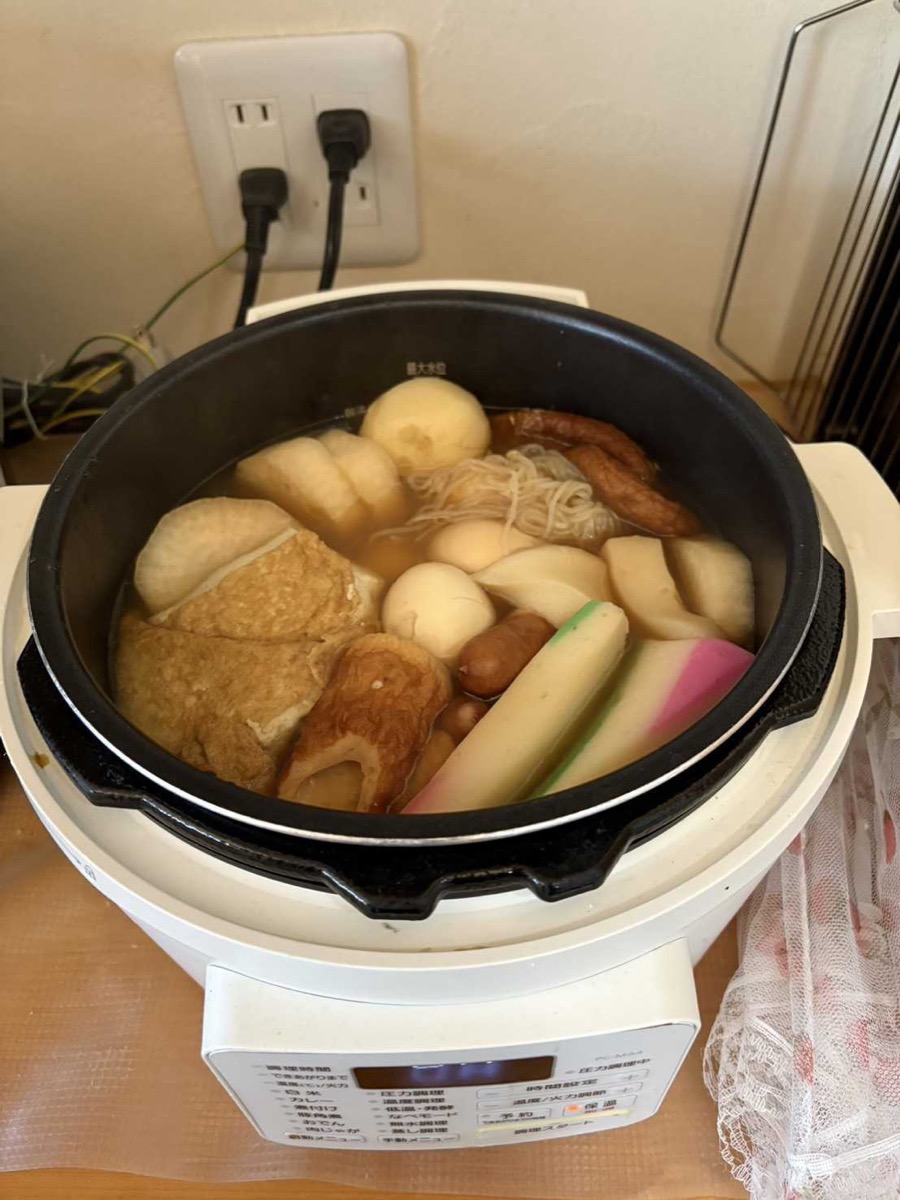
Pack all the ingredients into the pot: daikon, potatoes, eggs, fish cakes, fried tofu, shirataki, and sausages. They don’t need to be fully covered by the broth; they’ll shrink a little and release liquid as they cook. Don’t fill the pot above its max line.
 Save
Step 4: Pressure Cook for 30 Minutes
Close the lid, set the valve to sealing, and cook at high pressure for 30 minutes. Let the pressure release naturally. I used my cooker’s built-in oden program, which takes about 1 hour 15 minutes in total: 15 minutes to come up to pressure, 30 minutes at pressure, and 30 minutes to release.
 Save
Step 5: Open, Taste, and Serve
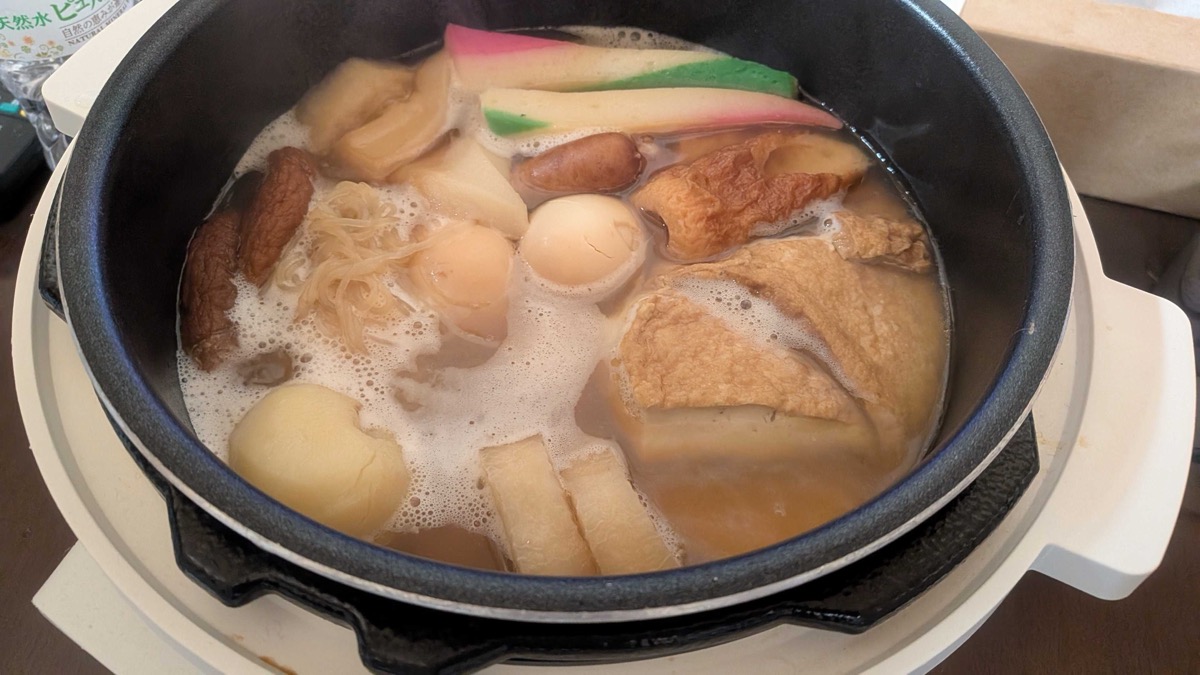
When the pin drops, open the lid. There will be some foam on top; skim it off if you like. Poke the daikon with a chopstick — it should go straight through. Taste the broth and add a little soy sauce or salt if needed. The fish cakes puff up a little under pressure and shrink back as they cool, which is normal.
 Save
Serve a few pieces of each in a shallow bowl with some of the broth.
 Save
Tips and Variations
- Season by tasting. Soy sauce and fish cakes vary a lot in saltiness, so taste the broth after cooking and adjust.
- Dashi packet or granules? A dashi packet gives oden a cleaner, more natural flavor, but granules work too. Most Japanese dashi packets and granules both contain some salt, so add the soy sauce a little at a time and taste.
- Want firmer fish cakes? Add them after pressure cooking and simmer for 10 minutes instead. I just put everything in at once.
- No pressure cooker? Simmer everything in a pot on low heat for about an hour, until the daikon is tender. If you have time, pre-boil the daikon first so it cooks faster.
- Add mustard. Japanese karashi mustard is the classic oden condiment. We didn’t use it this time, but many people can’t eat oden without it.
- Add beef tendon. In western Japan and Kyushu, skewered beef tendon (gyusuji) is a popular oden ingredient. It’s also great in gyusuji nikomi.
What to Serve It With
- A bowl of rice. Oden is filling enough to be dinner on its own.
- More winter food: tonjiru (pork miso soup) or furofuki daikon, another pressure-cooker daikon dish.
- Onigiri — oden and rice balls are a classic convenience store lunch in Japan.
Storing and Reheating
Keep leftovers in the broth in the fridge for 2–3 days, and reheat gently in a pot until hot. The daikon and eggs soak up more flavor overnight, so many Japanese families think day-two oden is the best oden. We don’t freeze it: the daikon, potatoes, eggs, and konjac all change texture badly once frozen.
Frequently Asked Questions
How do you cook an oden set?
Many oden sets come with a packet of soup base. Dilute it with the amount of water on the package, add daikon and boiled eggs, then the fish cakes, and simmer gently. If your set has no soup base, use the broth in this recipe. In a pressure cooker, everything can go in at once.
Do you need to pre-boil the daikon for oden?
Not in a pressure cooker. Traditional recipes pre-boil the daikon to soften it and remove bitterness before the long simmer, but 30 minutes under pressure makes it tender all the way through without that step.
Is this like 7-Eleven oden in Japan?
It’s the same dish. Convenience store oden uses each chain’s own broth and a fixed lineup, while homemade oden is seasoned to your taste with whatever ingredients you like. Daikon, boiled eggs, and fish cakes are the favorites in both.
Where can I buy fish cakes for oden?
Outside Japan, look at Japanese or Korean grocery stores. Japanese stores sell chikuwa, satsuma-age, and frozen oden sets, and Korean stores sell fish cakes (eomuk) that work just as well. If you can’t find any, make oden with daikon, eggs, fried tofu, potatoes, and sausages.
Can you drink oden broth?
Yes. Oden broth is light and full of flavor from the fish cakes and daikon, and many people sip it from the bowl. Leftover broth is also good for cooking rice or udon the next day.
Can you freeze oden?
It’s not recommended. Daikon, potatoes, boiled eggs, and konjac all get a spongy or rubbery texture after freezing. Keep oden in the fridge and eat it within 2–3 days.
Pressure Cooker Oden (Japanese Oden Stew)
Ingredients
Method
- Peel the daikon and cut it into 2-3 cm (1 in) rounds. Peel the potatoes and boiled eggs. Cut large fish cakes into bite-sized pieces. Rinse and drain the shirataki. No pre-boiling needed.
- Put the water, dashi packet, sake, mirin, soy sauce, and salt in the inner pot of an electric pressure cooker.
- Add all the ingredients at once. Do not fill above the max line.
- Close the lid, set to sealing, and cook at high pressure for 30 minutes. Let the pressure release naturally.
- Open the lid, skim off any foam, and check that the daikon is tender. Taste the broth and adjust with soy sauce or salt. Serve in shallow bowls with some broth.