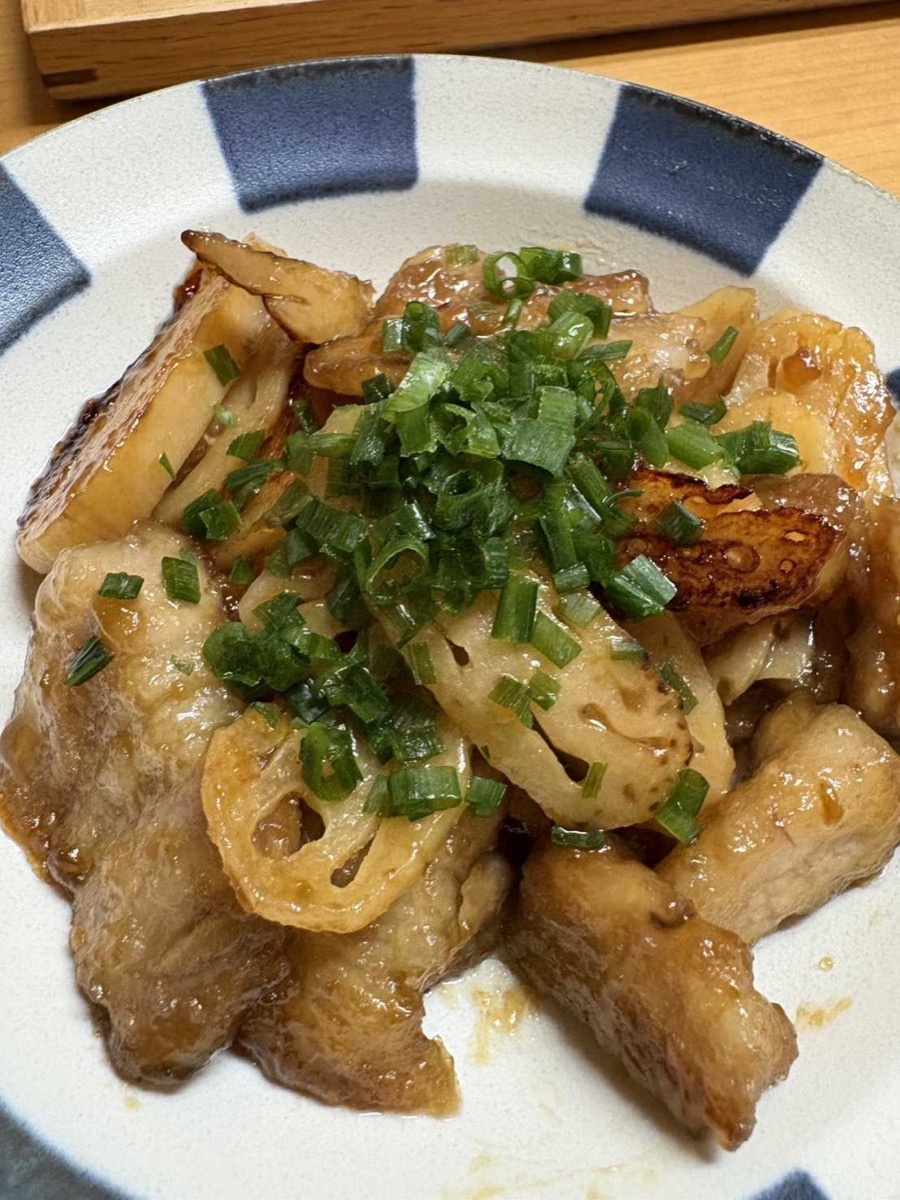
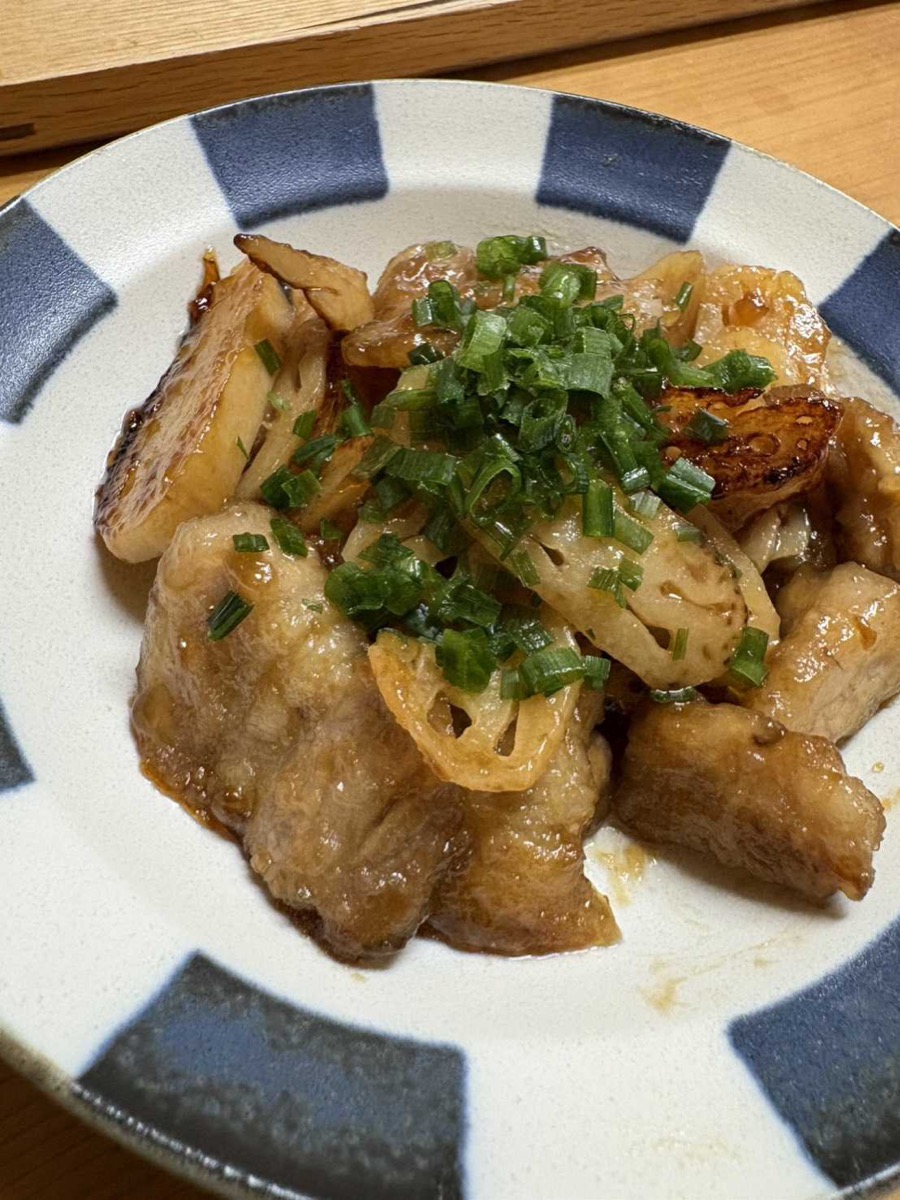
Japanese Lotus Root Stir Fry with Pork Belly (Sweet and Sour Renkon)
Pork belly and lotus root, stir-fried in a little sesame oil and glazed with a sweet-sour sauce of soy sauce, sugar, sake, mirin, and vinegar. In Japanese it’s butabara to renkon no amazu itame. The pork is coated in potato starch, so the sauce clings to it, and the lotus root stays crunchy. It’s the kind of sweet, salty, tangy dish that makes you eat more rice than you planned.
I made it as the main dish for an ordinary dinner with rice. The recipe is from Cookpad, Japan’s biggest home-recipe site, and I used pretty much the same amounts. My only changes: I topped it with chopped green onion instead of shichimi chili pepper, and I wiped out some of the pork fat partway through, as the recipe says. Everything here came from a normal Japanese supermarket, including a store-brand bottle of sesame oil.
Disclosure: some links below are affiliate links. As an Amazon Associate I earn from qualifying purchases, at no extra cost to you.
 Save
The Short Answer
If you just want the method:
- What it is: a Japanese home-style stir fry of pork belly and lotus root in a sweet and sour soy sauce glaze.
- For 2 servings: 200g pork belly, 150g lotus root, 2 tbsp sake and potato starch for the pork, and a sauce of 2 tbsp each soy sauce, sugar, sake, mirin, and vinegar.
- The method: soak the lotus root in vinegar water, coat the pork in sake and potato starch, fry the pork in sesame oil, add the lotus root, then pour in the sauce and toss until glossy.
- The trick: wipe out some of the fat the pork belly releases before adding the sauce, so the glaze doesn’t turn greasy.
Why You’ll Love This Recipe
- Easy-to-remember sauce. Five seasonings, 2 tbsp each.
- Two textures. Tender, glazed pork and crunchy lotus root.
- One frying pan. No deep-frying. The starch coating does the work.
- Made for rice. Sweet, salty, and a little sour, so it goes perfectly with a bowl of plain rice.
What is Butabara to Renkon no Amazu Itame?
Butabara is pork belly, renkon is lotus root, amazu means sweet vinegar, and itame means stir-fried. Put together, it’s a pork belly and lotus root stir fry with a sweet and sour sauce. Lotus root is in season in Japan from fall through winter, and it shows up in home cooking all the time, often stir-fried like this or in kinpira renkon.
The Japanese idea of “sweet and sour” is lighter than the Chinese-restaurant version. There’s no ketchup and no thick red sauce, just soy sauce, sugar, and vinegar. If you like that style, my Japanese sweet and sour pork and vegetable stir-fry uses a similar sauce with different vegetables.
 Save
Ingredients (Serves 2)
| Ingredient | Amount | Notes |
|---|---|---|
| Pork belly | 200g (about 7 oz) | Cut into about 5 cm (2-inch) pieces |
| Lotus root (renkon) | 150g (about 5 oz) | Peeled |
| Sake | 2 tbsp | For the pork |
| Potato starch (katakuriko) | As needed | For coating the pork |
| Sesame oil | As needed | For frying |
| Vinegar | Splash | For the soaking water |
| Sauce | ||
| Soy sauce | 2 tbsp | |
| Sugar | 2 tbsp | |
| Sake | 2 tbsp | |
| Mirin | 2 tbsp | |
| Vinegar | 2 tbsp | Rice or grain vinegar |
| Green onion | To taste | Chopped, for topping |
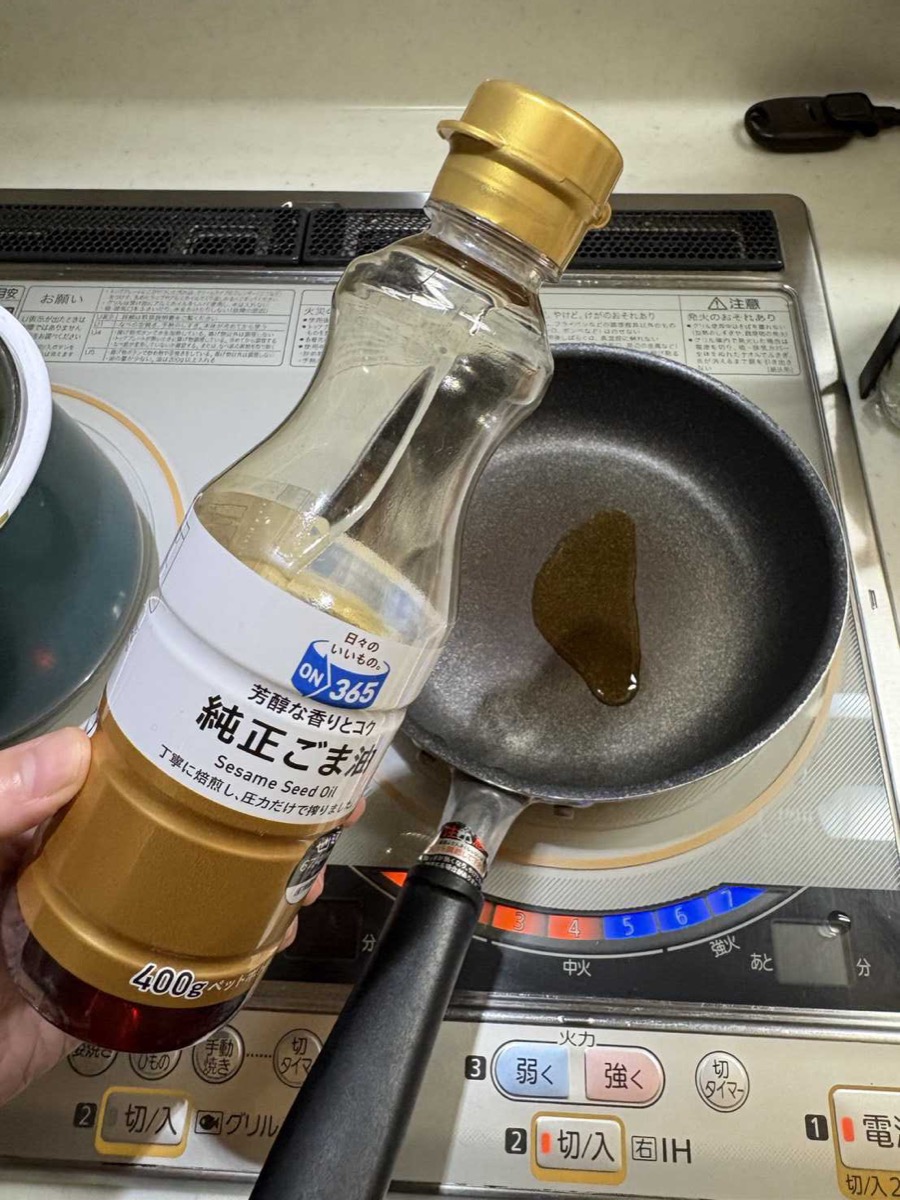
Toasted sesame oil is what gives this stir fry its nutty smell. I used a store brand from my local supermarket. The potato starch coating is what lets the sauce cling to the pork. In the US, fresh lotus root is sold at most Asian supermarkets, usually in the produce section near the daikon.
How to Make Lotus Root Stir Fry with Pork
Step 1: Soak the Lotus Root in Vinegar Water
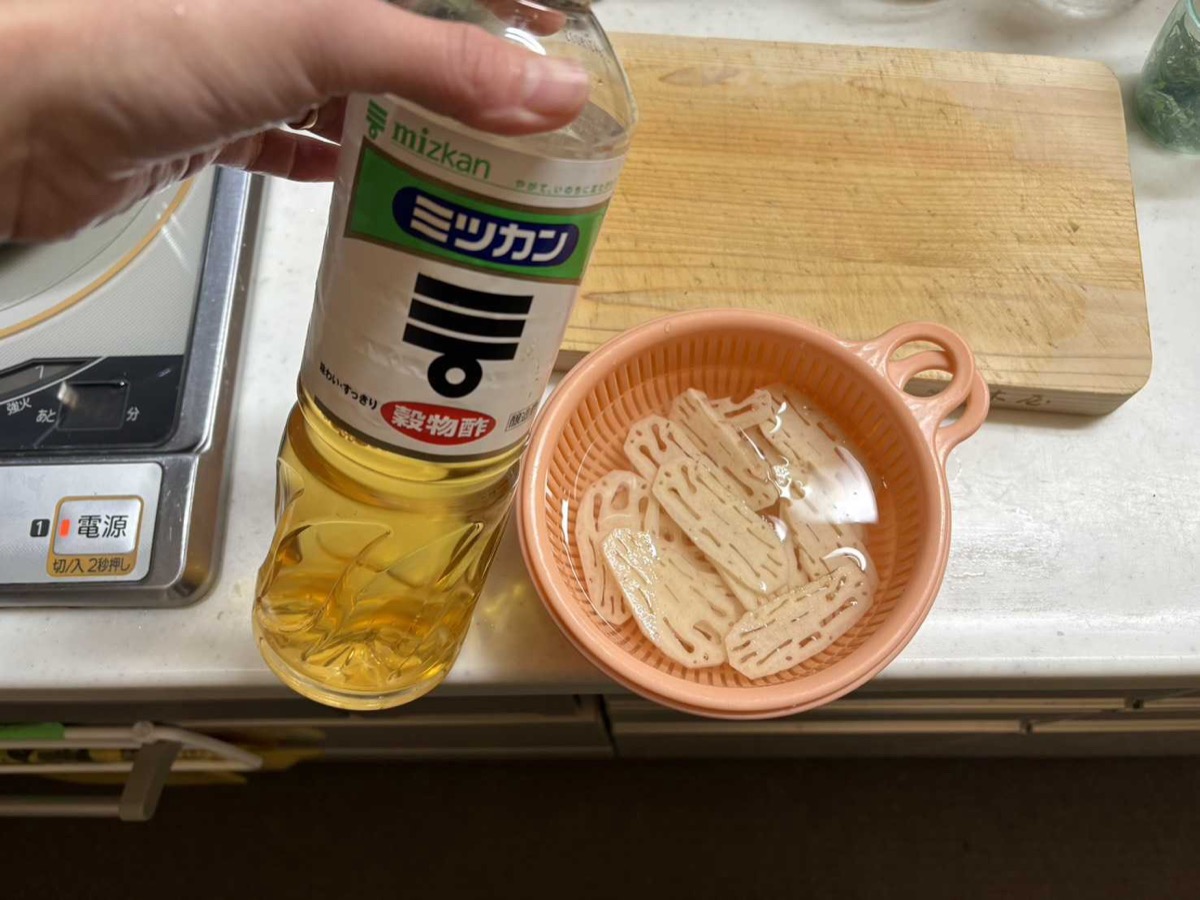
Peel the lotus root, cut it into quarters lengthwise, and slice it 7–8 mm (about ⅓ inch) thick. Soak it in water with a splash of vinegar. The recipe says about 10 minutes. This keeps the lotus root white and removes some of the harshness.
 Save
Step 2: Season and Coat the Pork
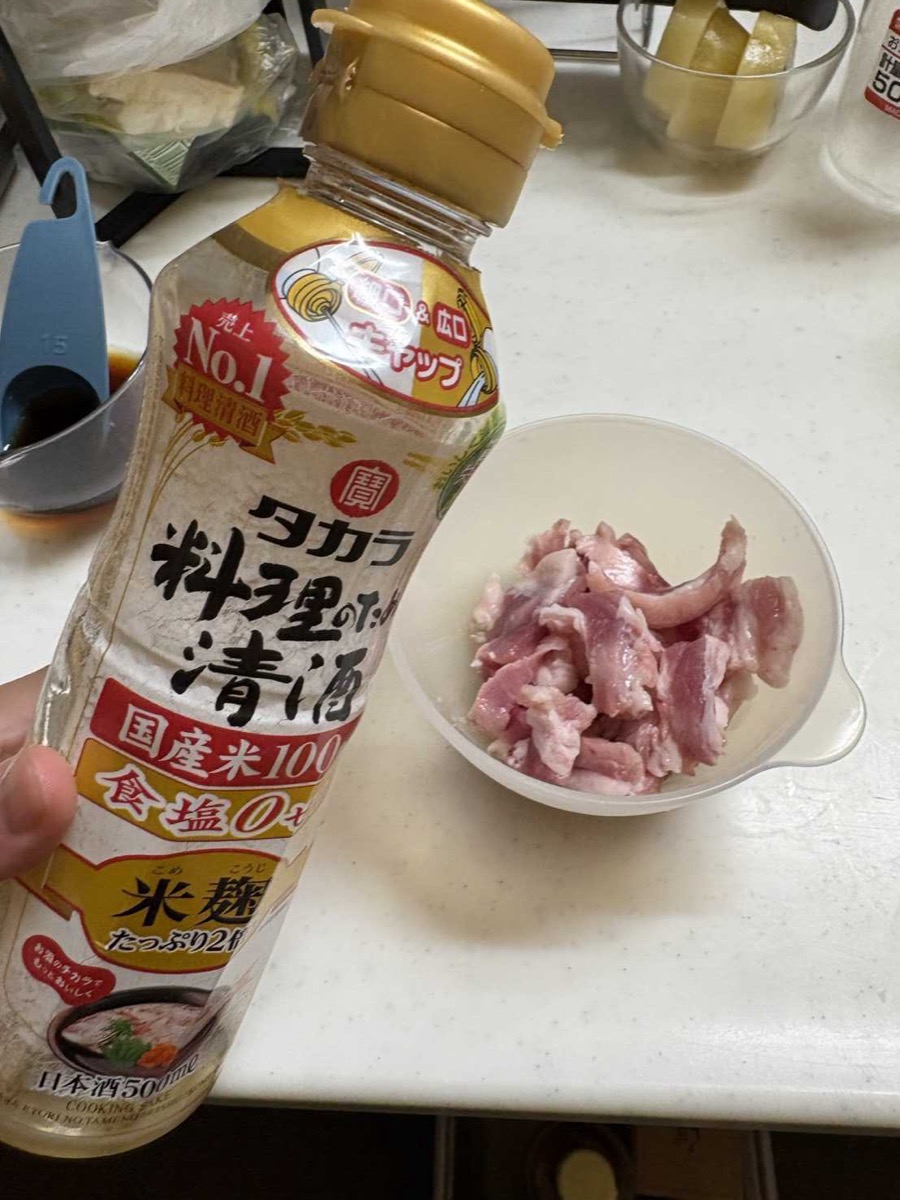
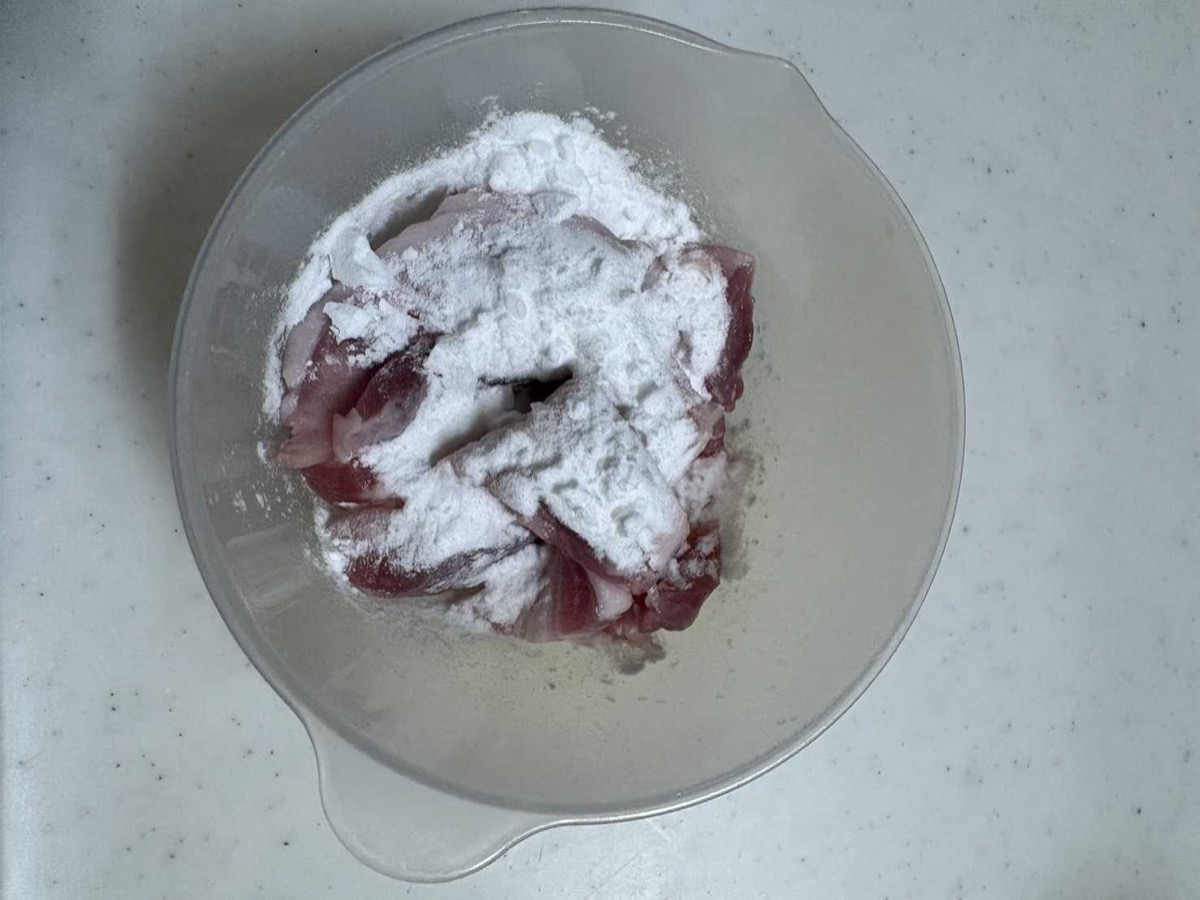
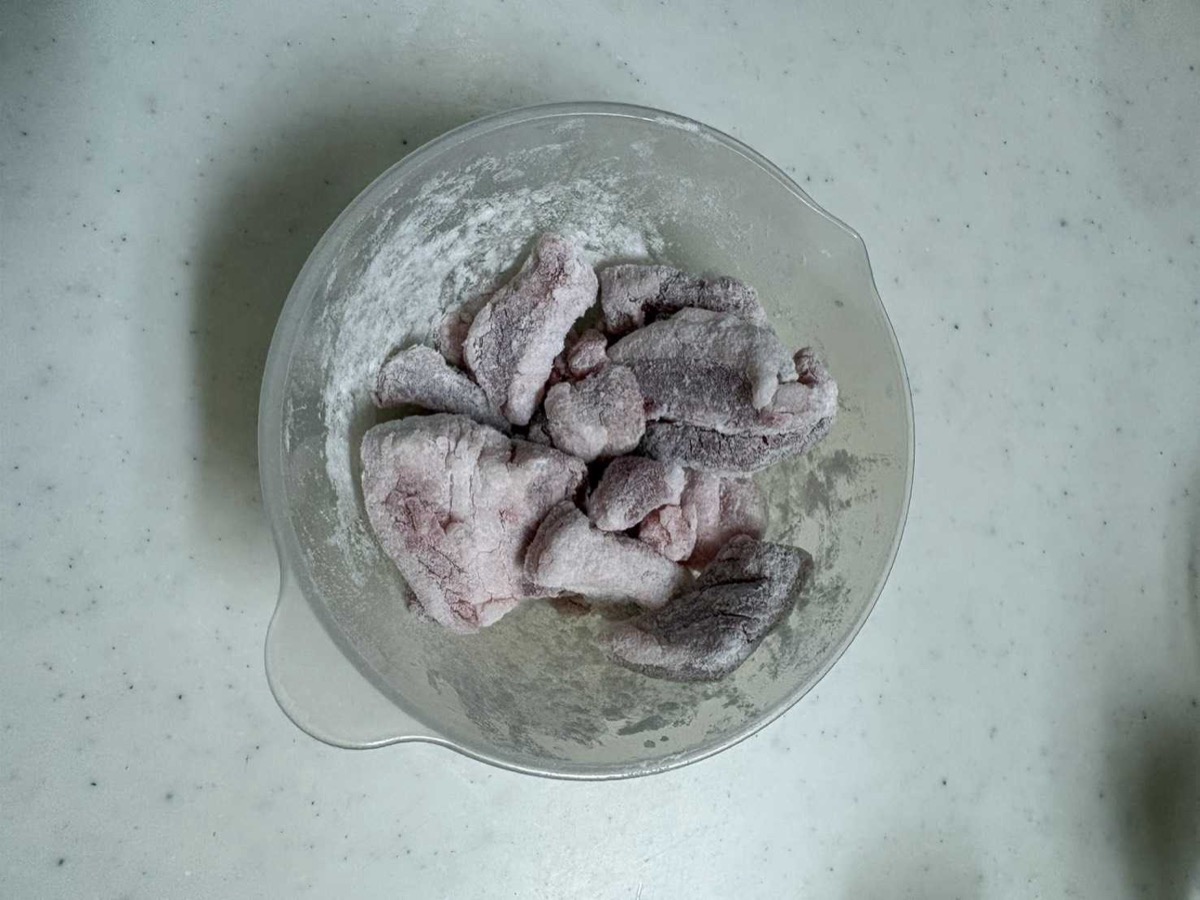
Cut the pork belly into pieces about 5 cm (2 inches) long. Rub in the 2 tbsp sake, then coat the pork all over with potato starch. The recipe uses a plastic bag. I just did it in a bowl.
 Save
 Save
 Save
Step 3: Mix the Sauce and Drain the Lotus Root
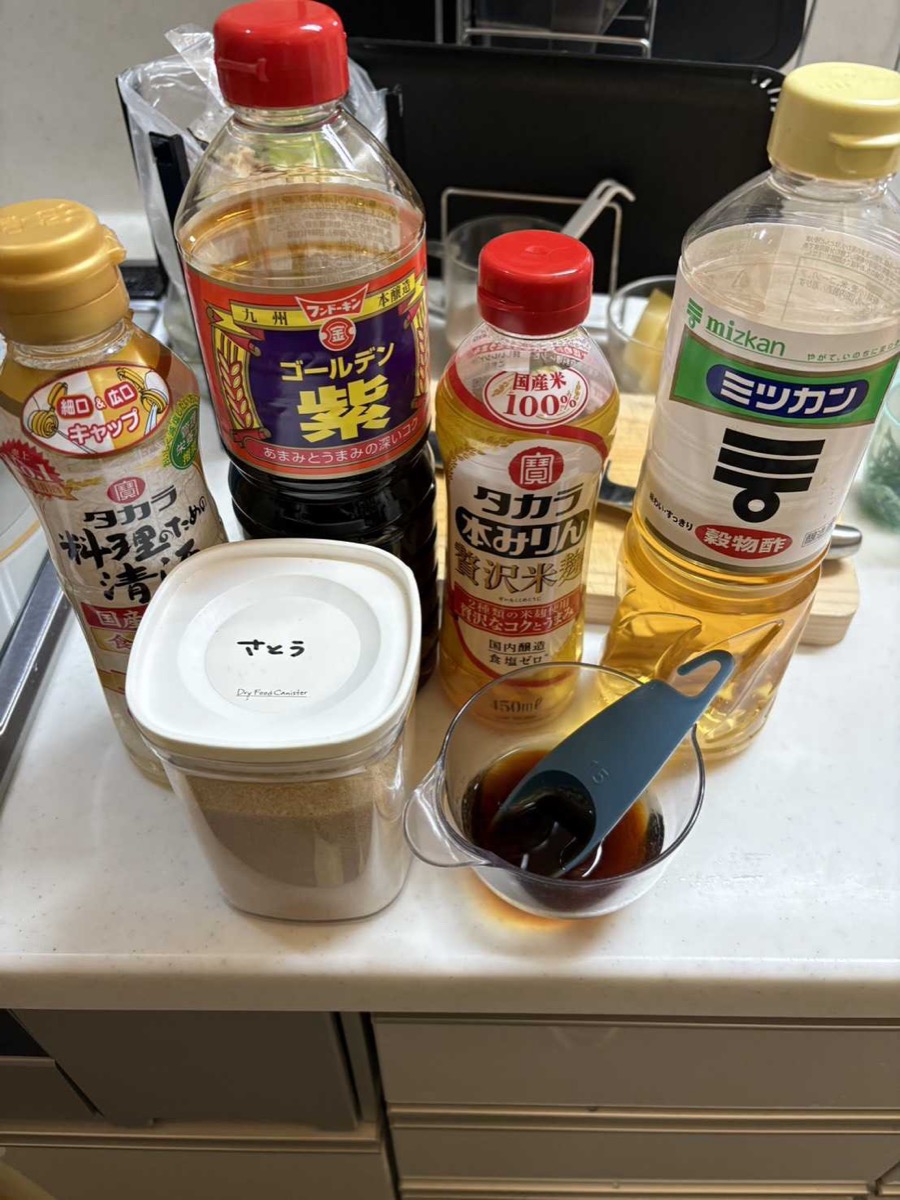
Mix the soy sauce, sugar, sake, mirin, and vinegar, 2 tbsp each. Rinse the lotus root lightly and pat it dry.
 Save
Step 4: Fry the Pork in Sesame Oil
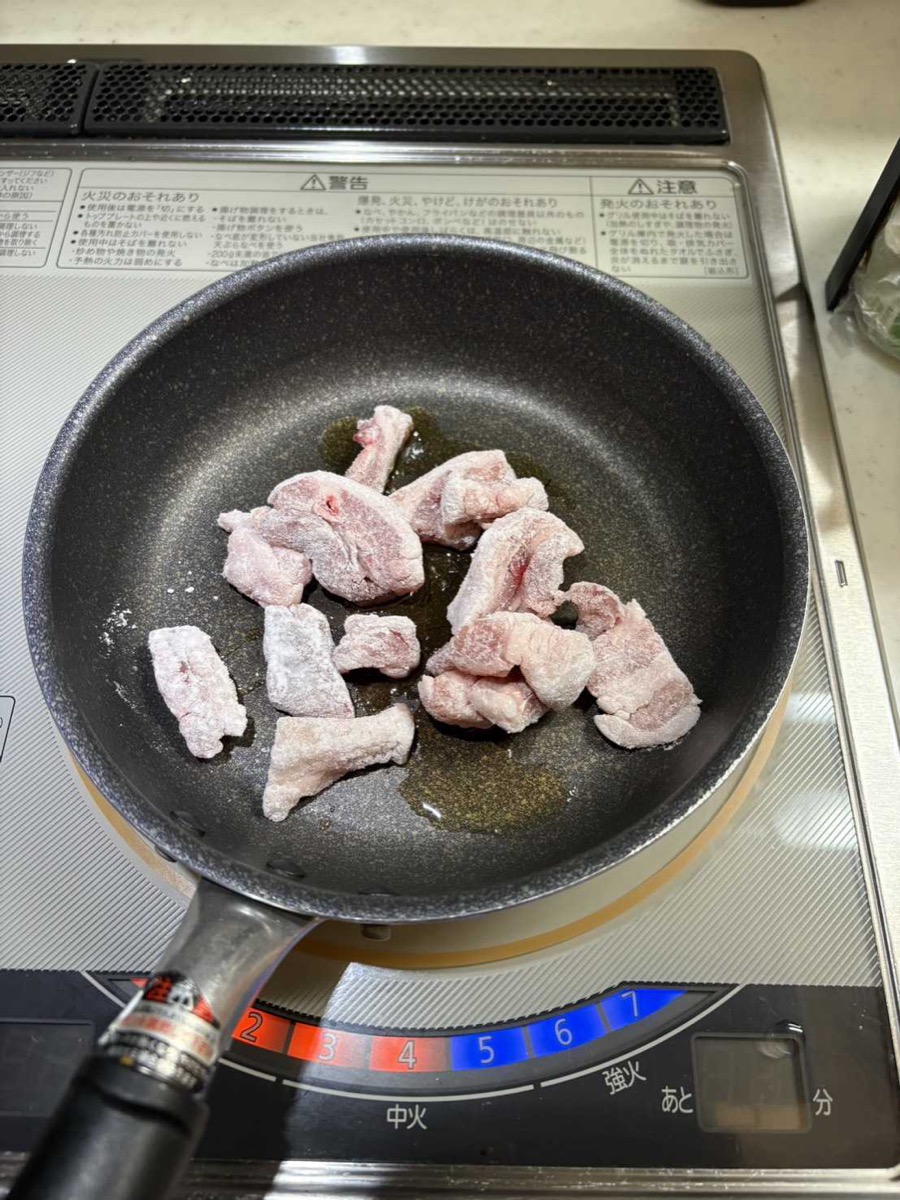
Heat the sesame oil in a frying pan over medium heat (level 4 of 7 on my IH stove) and add the pork. Pork belly releases a lot of fat, so wipe out about half of it with a paper towel as it cooks.
 Save
 Save
Step 5: Add the Lotus Root
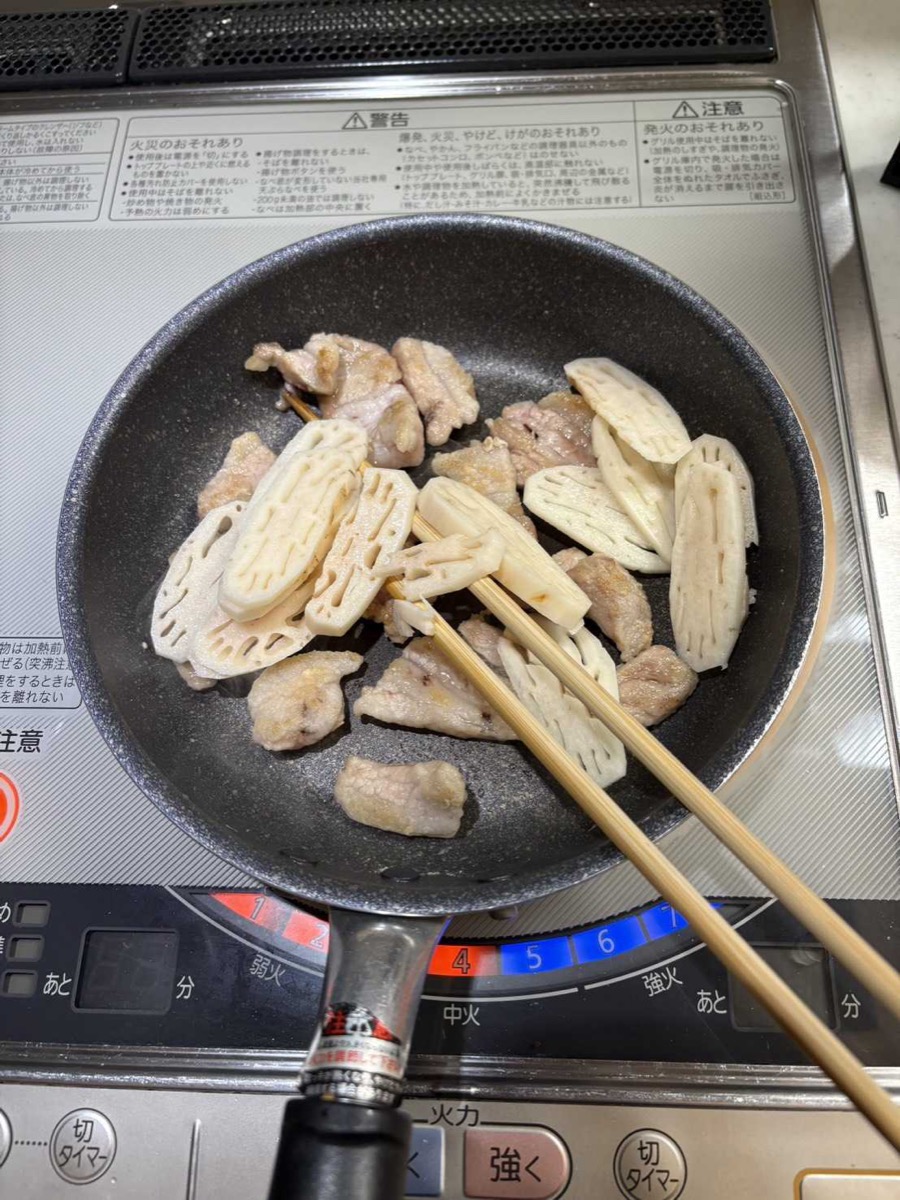
When the pork is cooked through, add the lotus root and stir-fry until it’s lightly cooked. You want it to keep some crunch.
 Save
Step 6: Pour In the Sauce and Toss
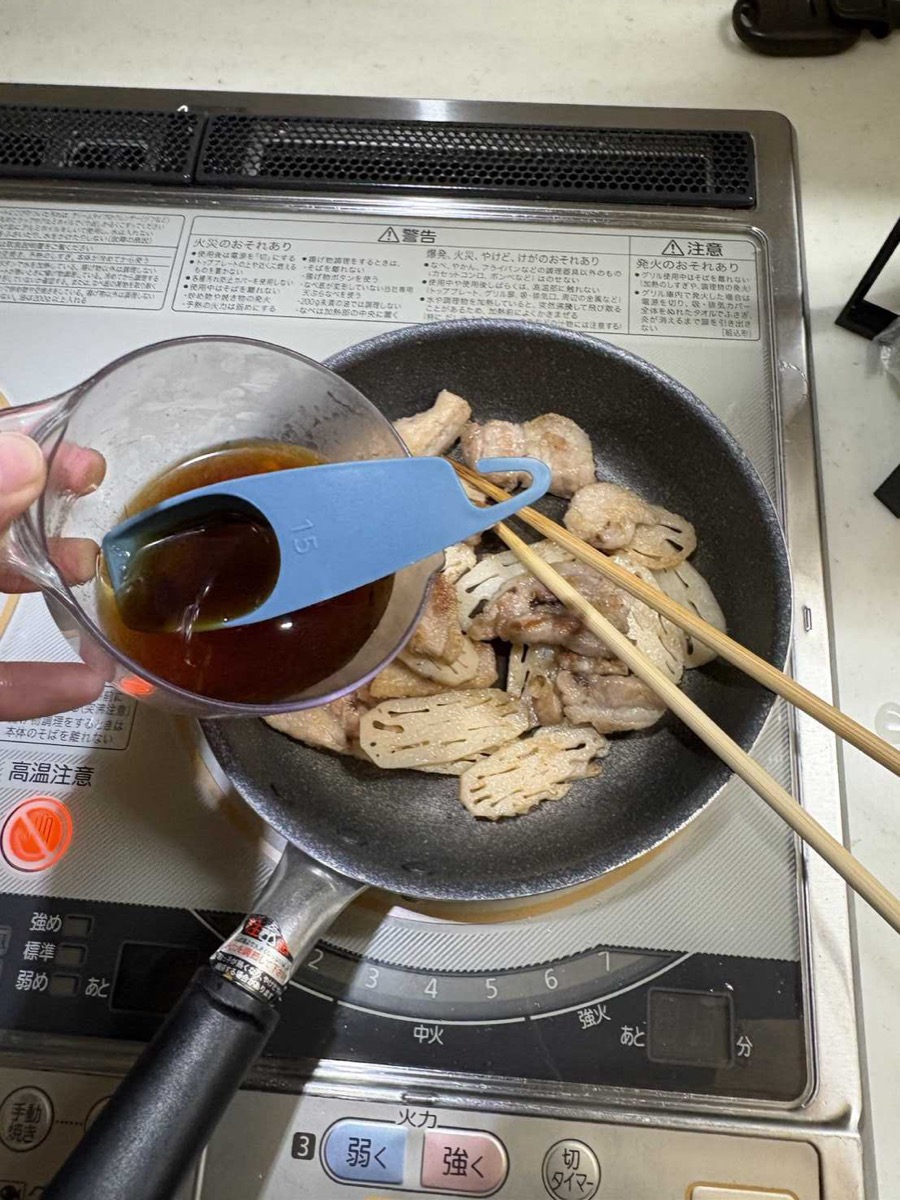
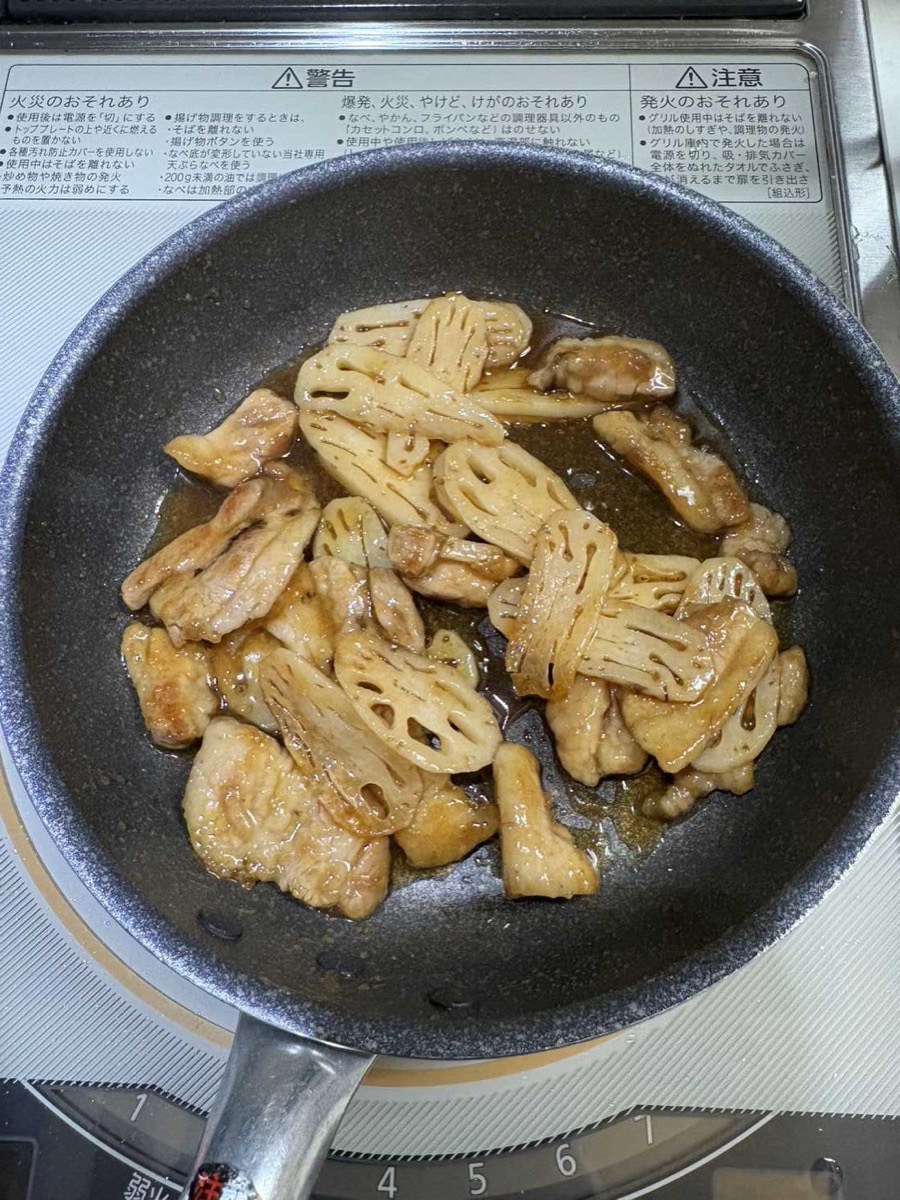
Pour in the sauce and toss everything until the sauce thickens slightly and coats the pork and lotus root. The potato starch on the pork thickens it, so it turns glossy quickly.
 Save
 Save
Step 7: Plate and Top with Green Onion
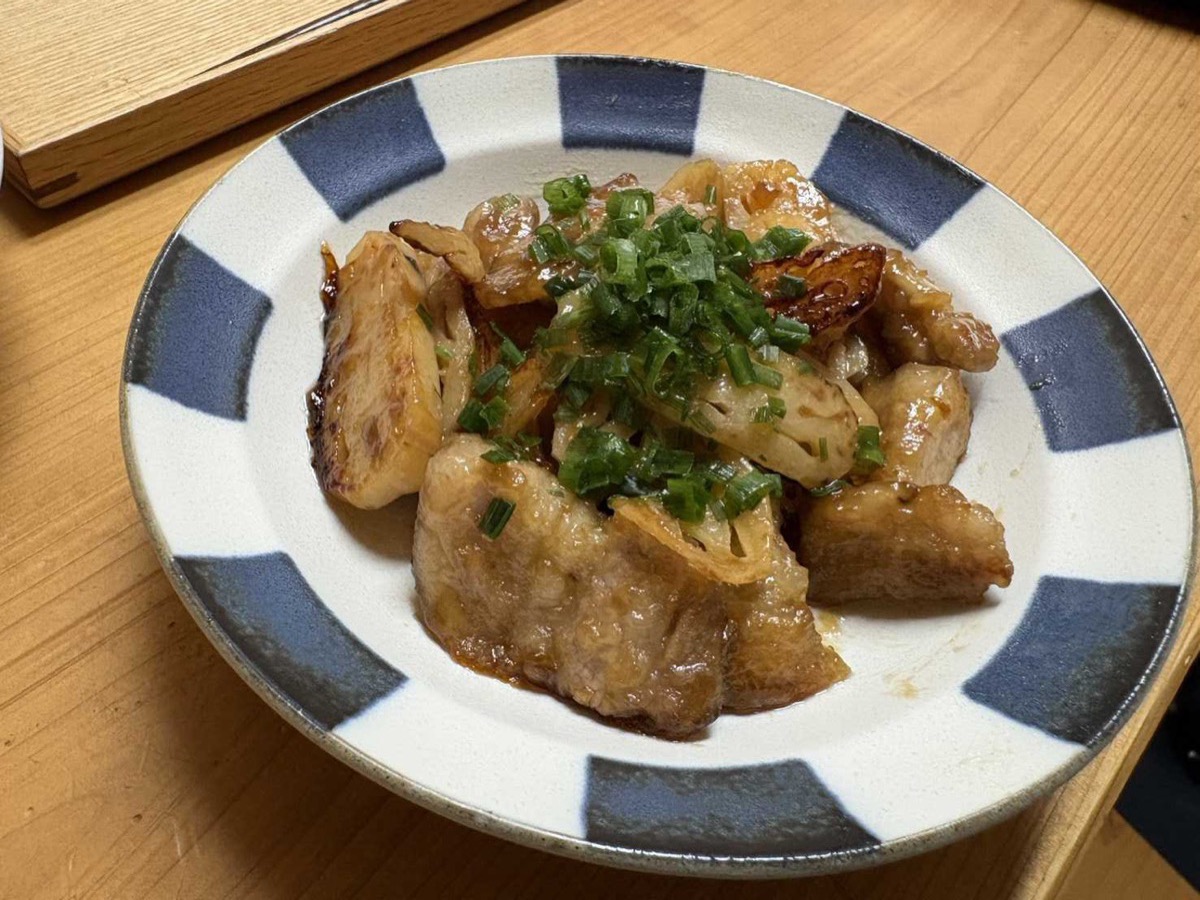
Transfer to a plate and scatter chopped green onion on top. The original recipe uses shichimi chili pepper. Use that if you want some heat.
 Save
Tips and Variations
- Dry the lotus root. Wet lotus root splatters and waters down the sauce.
- Don’t skip wiping the fat. Pork belly gives off a lot, and too much makes the glaze slide off.
- Add heat. Shichimi chili pepper, as the original recipe suggests, either sprinkled on at the end or mixed in.
- Swap the vegetable. The recipe author also makes it with maitake mushrooms or Japanese long onion instead of lotus root. I haven’t tried those yet.
What to Serve It With
- Plain steamed rice. We ate it as the main dish of a regular dinner with rice.
- A bowl of tonjiru or simple miso soup.
- A light, fresh side to balance the sweet glaze, like lotus root salad if you have lotus root left over.
Storing
Keep leftovers covered in the fridge and eat them by the next day. Reheat in a frying pan or the microwave. I haven’t tried freezing this one.
Frequently Asked Questions
Can you eat lotus root skin?
Yes, it’s edible, and some Japanese recipes leave it on. For this recipe I peeled it, as the original says, which gives a cleaner look and texture.
Why soak lotus root in vinegar water?
Lotus root turns gray-brown quickly once it’s cut. A short soak in water with a little vinegar keeps it white and takes away some of its harshness. Rinse it lightly afterward so the stir fry doesn’t taste of raw vinegar.
Can I use a different cut of pork?
Pork belly is what makes it rich, but I’d expect thinly sliced pork shoulder to work too. I’ve only made it with pork belly.
Is this Chinese sweet and sour pork?
No. It’s a Japanese home-style amazu (sweet vinegar) stir fry. The sauce is just soy sauce, sugar, sake, mirin, and vinegar, with no ketchup or pineapple, so it’s darker and more soy-forward than the Chinese-restaurant dish.
Japanese Lotus Root Stir Fry with Pork Belly (Sweet and Sour Renkon)
Ingredients
Method
- Cut the lotus root into quarters lengthwise and slice 7-8 mm (1/3 inch) thick. Soak in vinegar water for about 10 minutes.
- Cut the pork belly into 5 cm (2-inch) pieces, rub with 2 tbsp sake, and coat with potato starch.
- Mix the soy sauce, sugar, sake, mirin, and vinegar. Rinse the lotus root lightly and pat dry.
- Heat sesame oil in a frying pan over medium heat and fry the pork. Wipe out about half of the fat that comes out.
- When the pork is cooked through, add the lotus root and stir-fry until lightly cooked.
- Pour in the sauce and toss until glossy. Plate and top with chopped green onion.