Japanese Sake Steamed Clams with Butter (Asari no Butter Mushi)
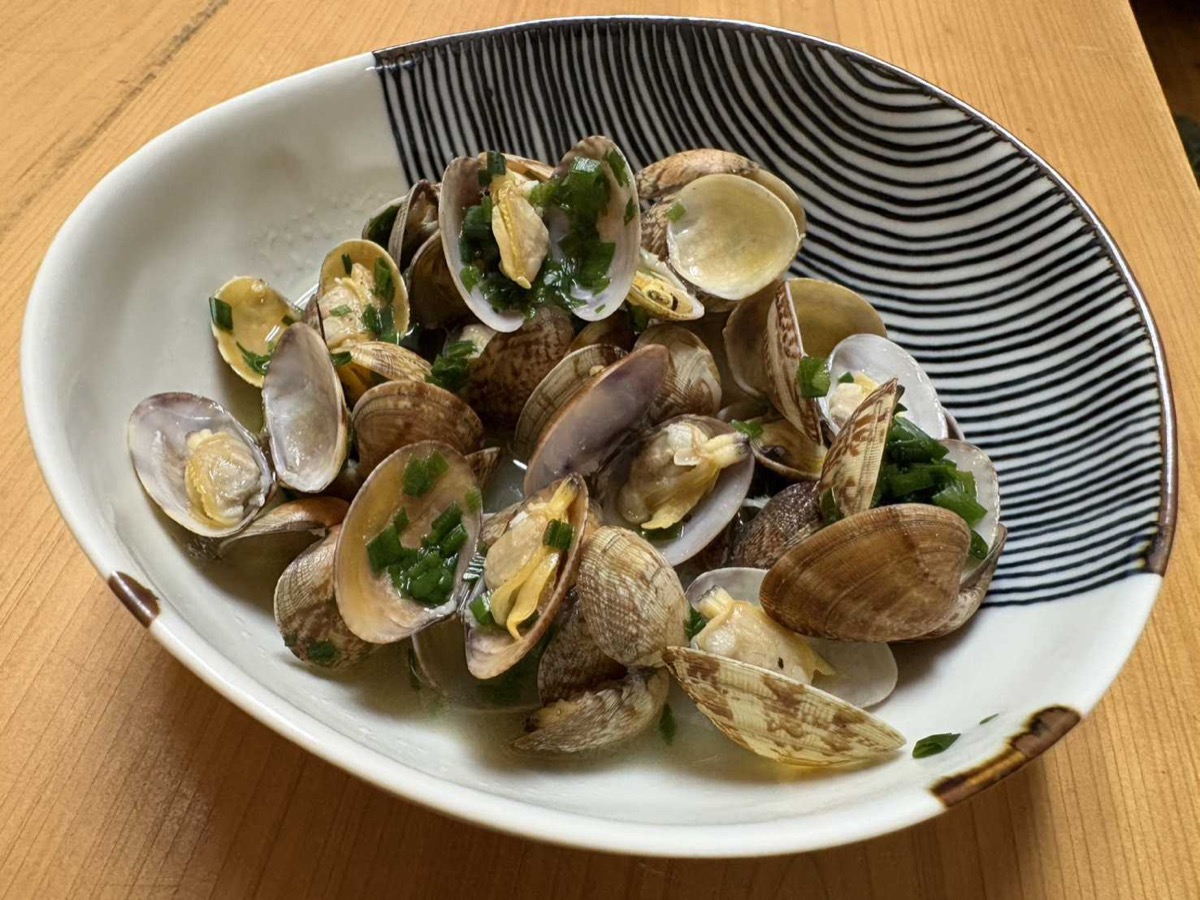
Clams steamed in butter, finished with a splash of sake and mirin and a pile of chopped green onion. In Japan this is asari no butter mushi (butter-steamed clams), and it’s one of those dishes that sits right on the line between dinner side dish and something to eat with a drink. It takes about 10 minutes, and most of that is the lid being on.
I made it as a snack to go with drinks at home. I followed a recipe from Kurashiru, a big Japanese recipe site, with pretty much the same amounts. The clams were sold already purged of sand, which is normal at Japanese supermarkets, so all I did was scrub them under the tap. Butter, a frying pan with a glass lid, and an IH stove: nothing special.
Disclosure: some links below are affiliate links. As an Amazon Associate I earn from qualifying purchases, at no extra cost to you.
 Save
The Short Answer
If you just want the method:
- What it is: Japanese butter-steamed clams (asari no butter mushi), seasoned with sake, mirin, salt, and pepper, and topped with green onion.
- For 2 servings: 300g clams, 20g salted butter, 3 tbsp sake, 1 tbsp mirin, and ¼ tsp salt and pepper.
- How long to steam: covered over medium heat for 3–4 minutes until the shells open, then 1 more minute covered after the sake goes in.
- The order: salt goes in after the clams open, not before. Clams release salty juice of their own, so taste first.
Why You’ll Love This Recipe
- About 10 minutes, one pan. Rinse, steam, season, done.
- Five seasonings, all basic. Butter, sake, mirin, salt, and pepper.
- The broth is the best part. The clam juice and butter make a savory sauce at the bottom of the bowl.
- It goes with a drink. We had it as a snack with drinks, and that’s how a lot of Japanese households eat it.
What is Asari no Butter Mushi?
Asari (アサリ) are small clams that Japanese supermarkets sell year-round, often already purged of sand. In English they’re called Manila clams. Mushi means steamed, so butter mushi is simply “butter-steamed.” The best-known Japanese clam dish is probably asari no sakamushi, clams steamed in sake. The butter version is its richer cousin, and you’ll see it on izakaya menus and at home.
Butter with Japanese seasonings is a very common combination here. If you like it, try my squid with butter and soy sauce, which is another one-pan dish that works with rice or with a drink.
 Save
Ingredients (Serves 2)
| Ingredient | Amount | Notes |
|---|---|---|
| Clams (asari) | 300g (about ⅔ lb) | Manila clams, sand already purged |
| Salted butter | 20g (about 1½ tbsp) | |
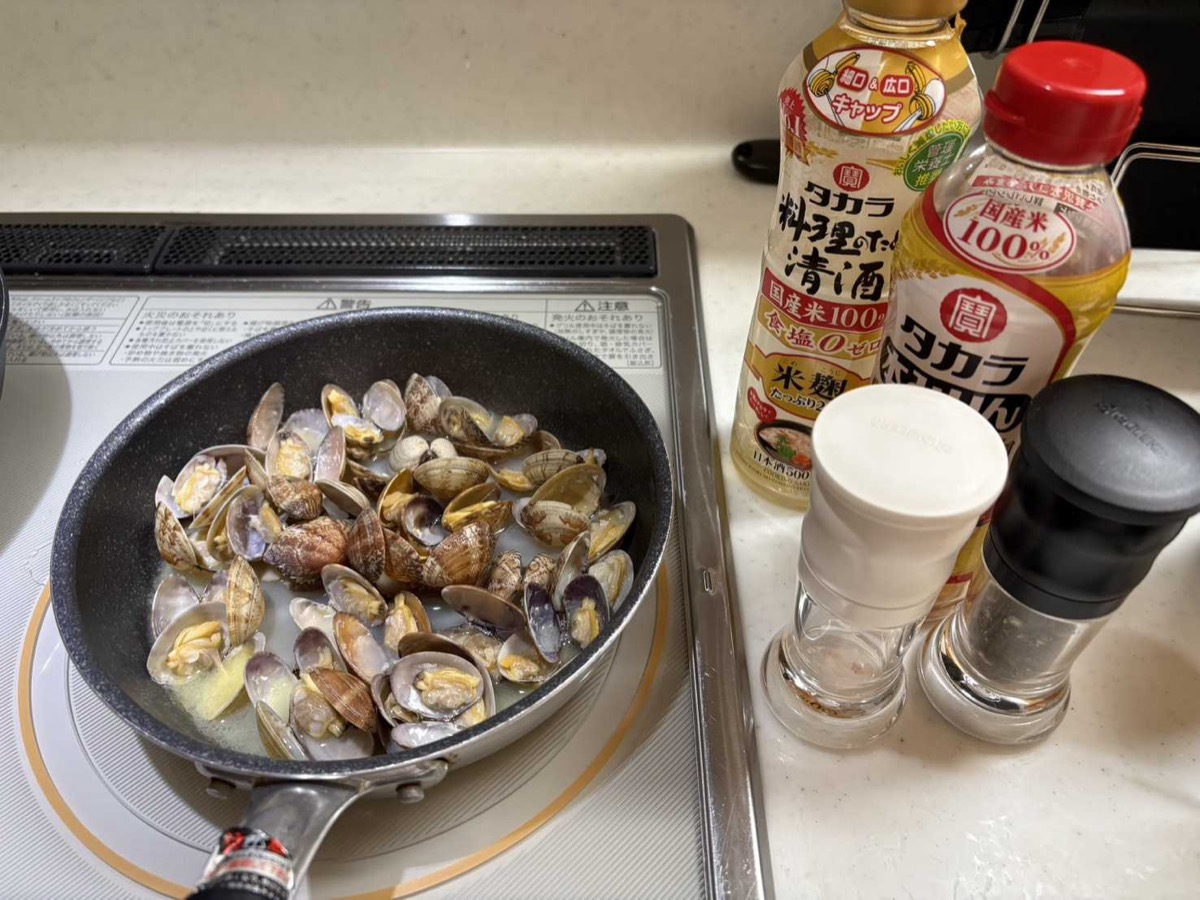
| Sake | 3 tbsp | I used salt-free cooking sake |
| Mirin | 1 tbsp | Hon-mirin |
| Salt and pepper | ¼ tsp | Adjust to taste |
| Green onion | To taste | Finely chopped |
The mirin adds a little sweetness that rounds out the salty clam juice. I use Takara hon-mirin. In the US, look for mirin that says “hon-mirin” rather than “aji-mirin” (mirin-style seasoning), which is mostly corn syrup. For sake, any inexpensive drinking sake or Japanese cooking sake works.
How to Make Butter Steamed Clams
Step 1: Scrub the Clams
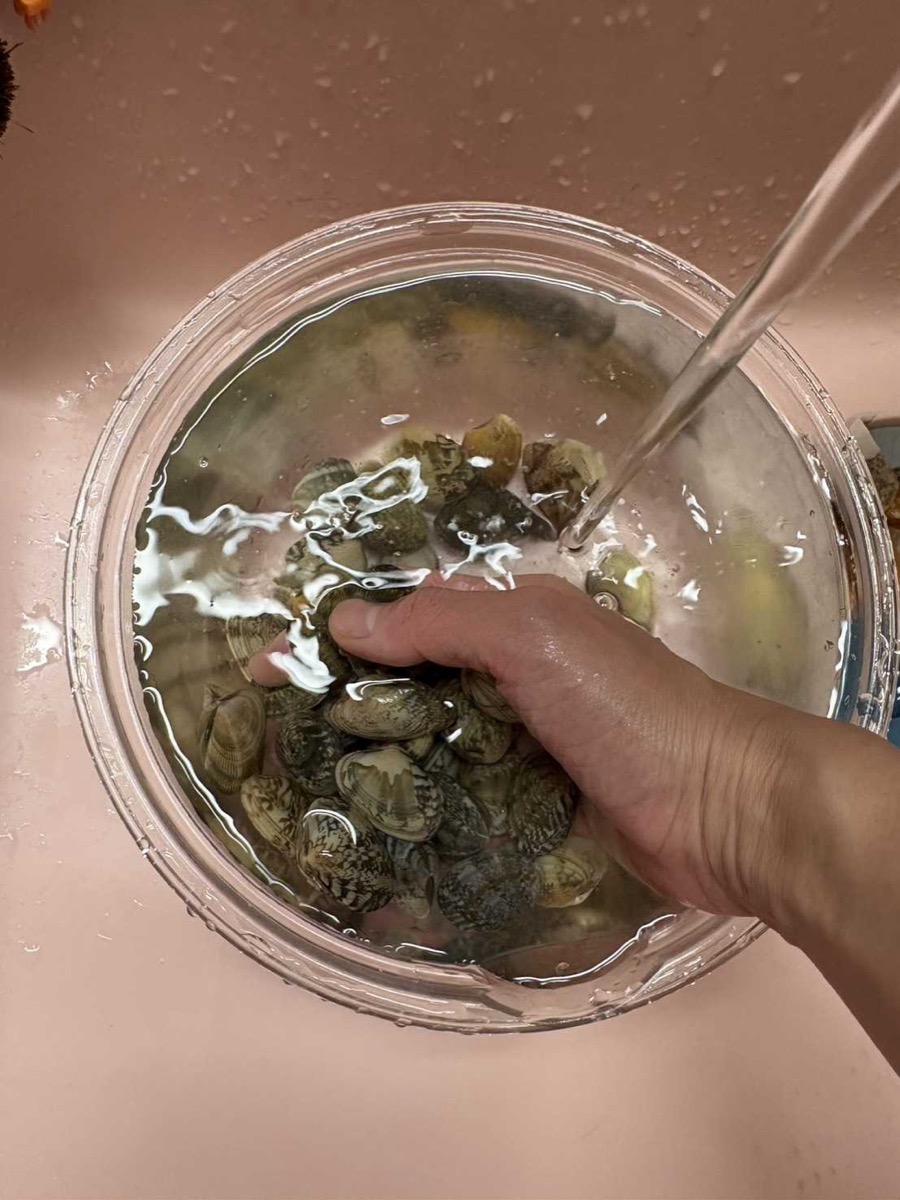
Put the clams in a bowl under running water and rub the shells against each other with your hand. This takes off the dirt and slime on the outside. Mine were already purged of sand, so this was all they needed. If yours aren’t purged, see the FAQ below first.
 Save
 Save
Step 2: Add the Clams and Butter to the Pan
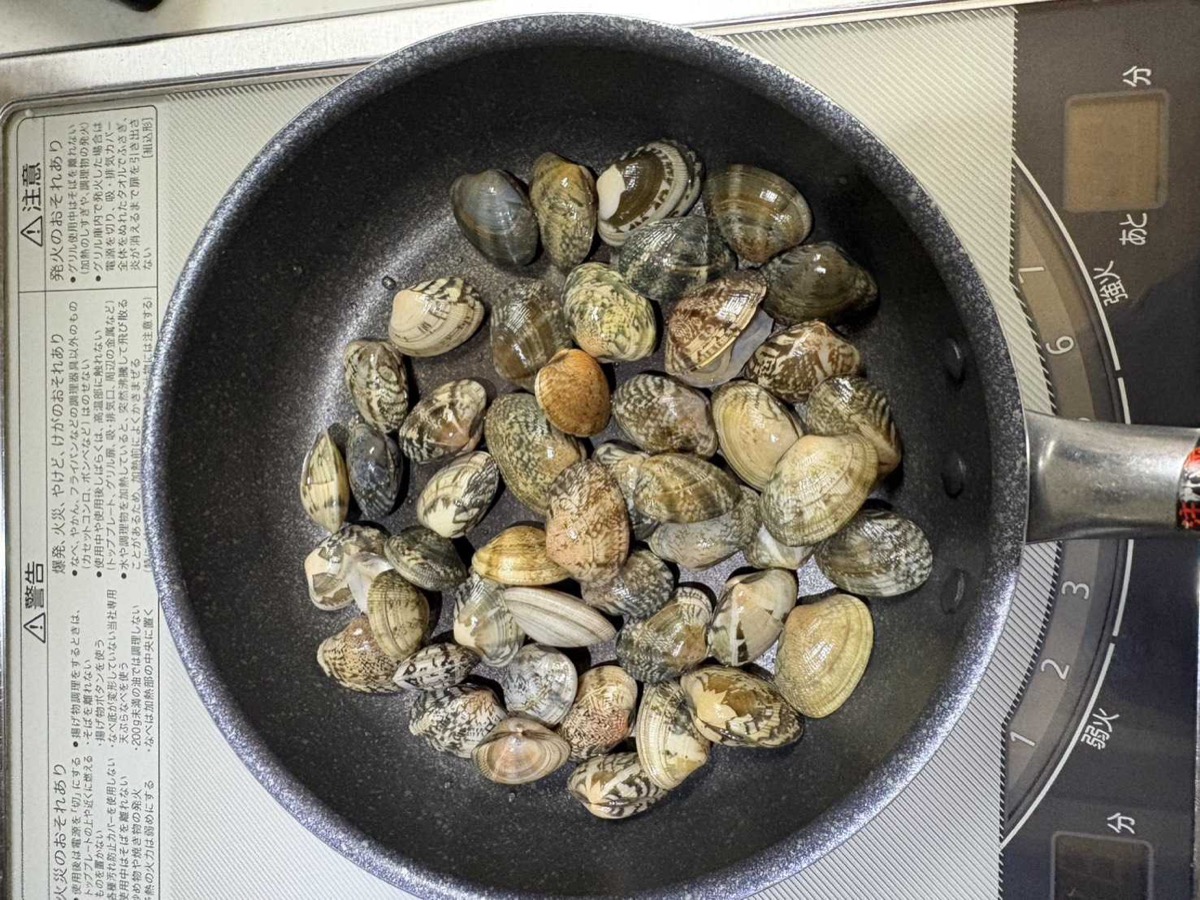
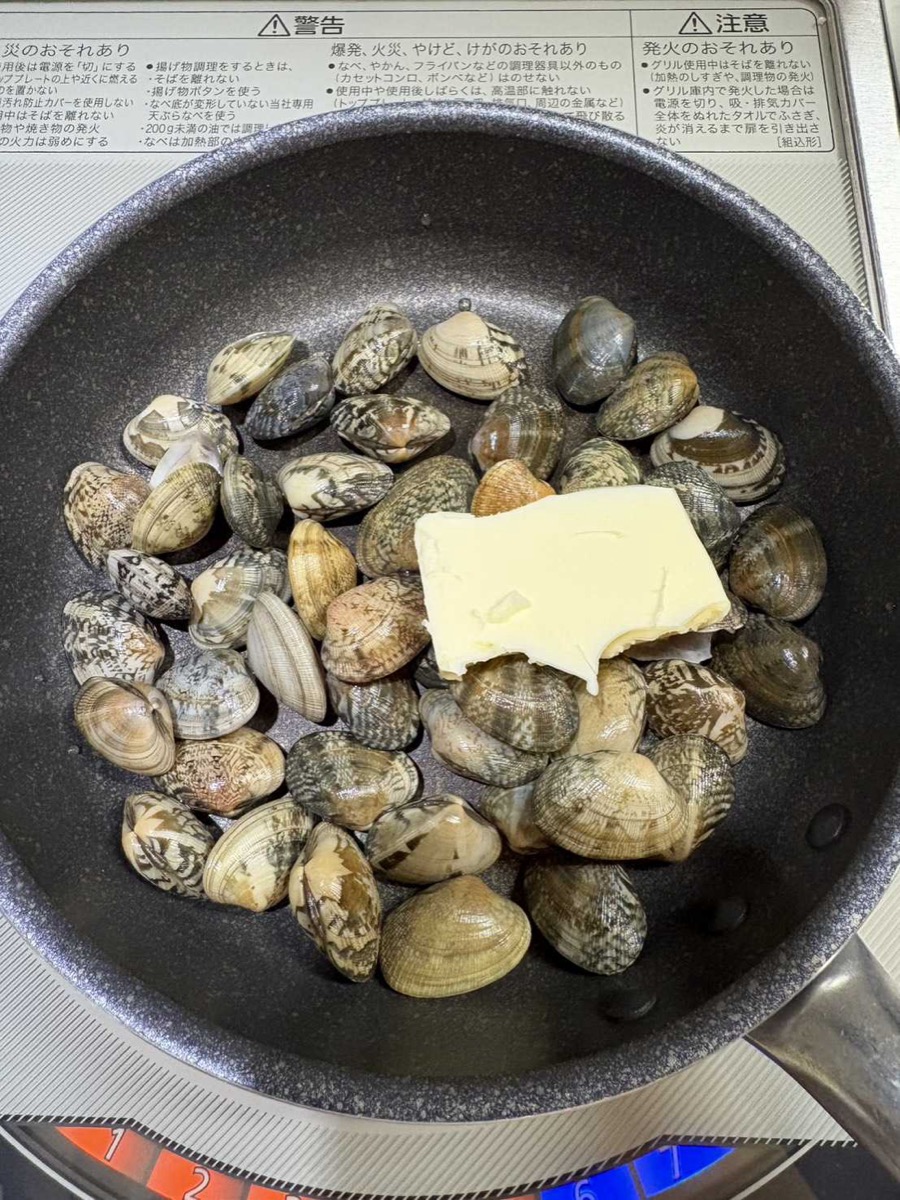
Drain the clams and spread them out in a frying pan in a single layer. Add the butter.
 Save
 Save
Step 3: Steam Until the Shells Open
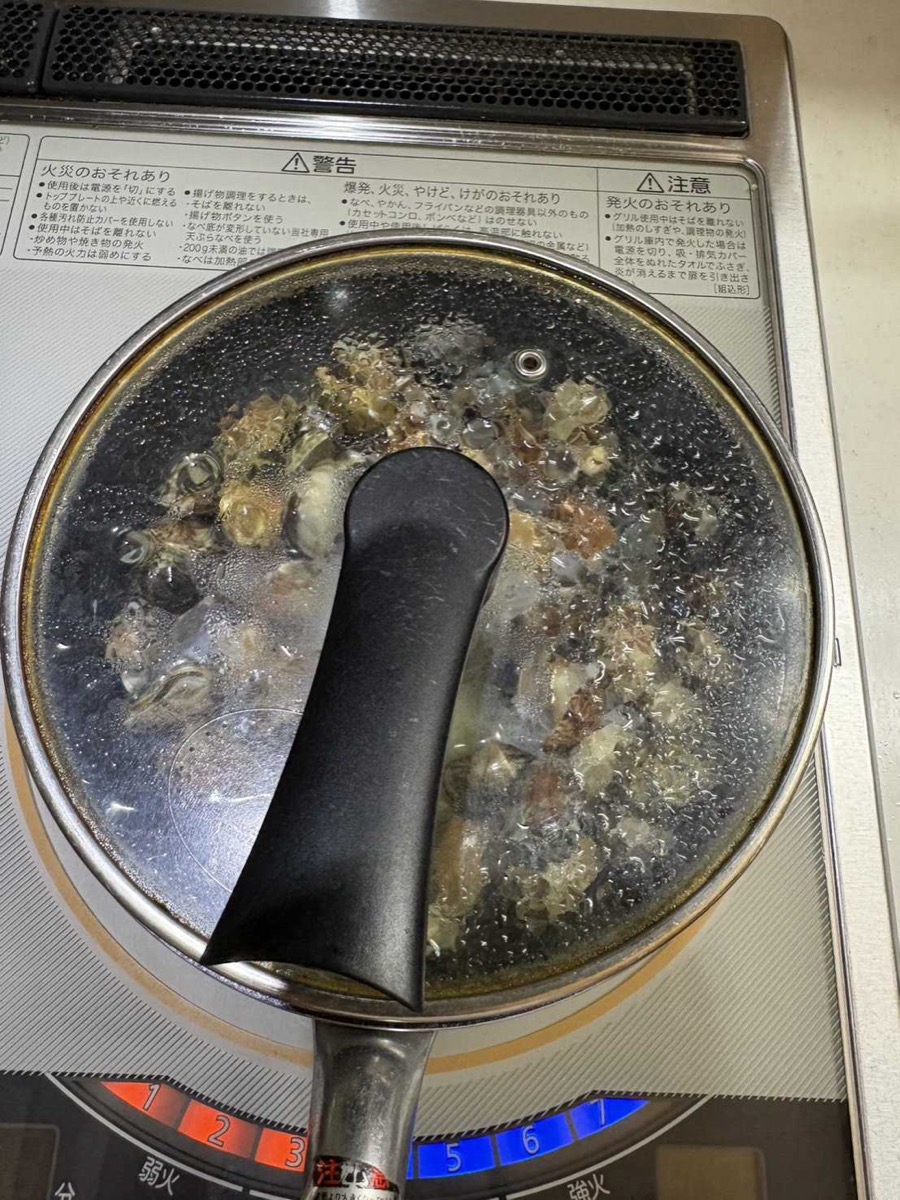
Put the lid on and cook over medium heat. On my IH stove that’s level 4 out of 7. It took about 3–4 minutes, but I didn’t use a timer. I just waited until the shells opened. A glass lid helps, because you can see when they open without letting the steam out. The clams release their own juice, and it mixes with the butter.
 Save
Step 4: Add the Sake, Mirin, Salt, and Pepper
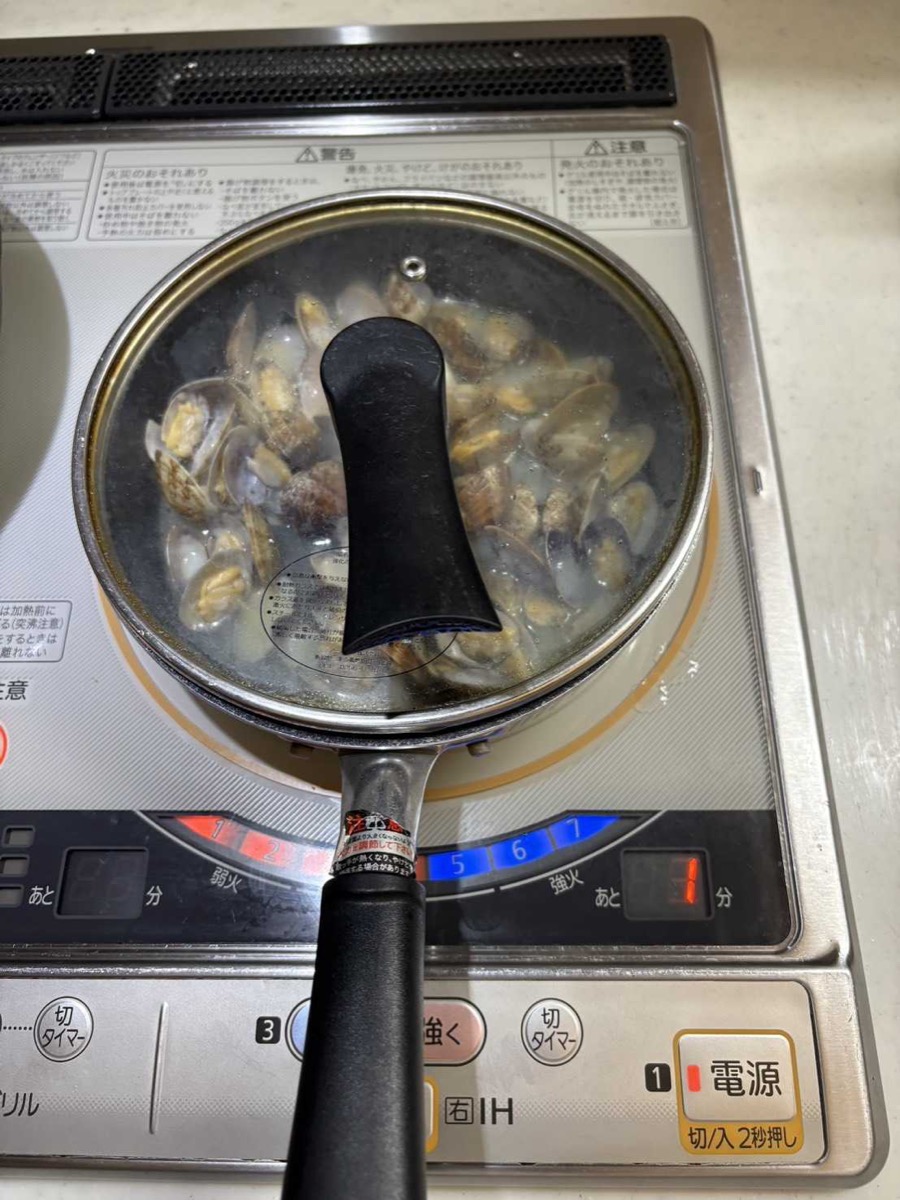
Once the clams have opened, add the sake, mirin, and salt and pepper. Put the lid back on and cook over medium heat for 1 more minute, then turn off the heat. I salted only at this point, after the clams opened, because the clam juice is already salty.
 Save
 Save
Step 5: Add Green Onion and Serve
Scatter the chopped green onion over the clams, then tip everything into a bowl, broth included.
 Save
 Save
Tips and Variations
- Taste before you salt. How salty the clam juice is depends on the clams. Start with less salt and add more if needed.
- Don’t overcook. Clams get tough if they cook too long after opening. One minute after the sake goes in is enough.
- Use a pan with a lid. The clams steam in their own juice, so you need the lid on to trap the steam.
- White wine instead of sake. The original recipe says white wine works too. I haven’t tried it, but it would make it closer to an Italian-style clam dish.
- Don’t throw out the broth. Spoon it over rice, or dip bread in it.
What to Serve It With
- A cold beer or sake, with other small snacks like Japanese-style edamame. That’s how we ate it.
- As a side dish with rice and miso soup for dinner.
- Another butter dish for an izakaya-style spread, like squid with butter and soy sauce.
Storing
This is best eaten right after cooking, because the clams get tougher when reheated. If you have leftovers, keep them covered in the fridge and eat them by the next day, which is what the original recipe recommends. I don’t freeze it.
Frequently Asked Questions
How long should clams be steamed?
For small Manila clams like these, 3–4 minutes covered over medium heat until the shells open, then 1 more minute after adding the sake. Larger clams like littlenecks will take longer. Go by the shells opening, not the clock.
What clams can I use in the US?
Japanese asari are Manila clams, which are sold at many US fish counters and Asian supermarkets. Littlenecks should also work, though I haven’t tried them. They’re bigger, so give them more time.
Do I need to purge the clams?
If the package says they’re already purged, just scrub and rinse them like I did. If not, the usual Japanese method is to soak them in salted water about as salty as seawater (around 3%), in a dark place, for an hour or more so they spit out the sand. I didn’t need to do that this time.
What if some clams don’t open?
Standard advice is to throw away any clams that stay shut after cooking, rather than forcing them open.
Does the alcohol cook off?
Not completely. The sake and mirin only cook for about a minute, so some alcohol stays in the broth. Keep that in mind if you’re serving it to kids or anyone avoiding alcohol.
Japanese Sake Steamed Clams with Butter (Asari no Butter Mushi)
Ingredients
Method
- Rub the clams against each other in a bowl under running water to clean the shells. Drain.
- Spread the clams in a frying pan in a single layer and add the butter.
- Cover and cook over medium heat until the shells open, about 3-4 minutes.
- Add the sake, mirin, and salt and pepper. Cover and cook over medium heat for 1 more minute, then turn off the heat.
- Scatter the green onion on top and serve with the broth.


