Gobo Salad — Japanese Burdock Root Salad with Mayo
Gobo salad is the one you find in every Japanese supermarket deli case, sitting in a plastic tub between the potato salad and the hijiki. Thin strips of burdock root, carrot and cucumber in a mayonnaise dressing with a little soy sauce. It’s crunchy, a bit earthy, and it’s the side dish that makes a plain dinner look like somebody tried.
I made this one at home on a weeknight, following the basic recipe Kewpie — the mayonnaise company — publishes on its Japanese site, because if anyone knows how much mayo goes into gobo salad, it’s them. The only real skill is the boil: about a minute, so the burdock stays crunchy instead of going soft.
Disclosure: some links below are affiliate links. As an Amazon Associate I earn from qualifying purchases, at no extra cost to you.

Why You’ll Love This Recipe
- Six ingredients, one pot, 20 minutes. Most of that is cutting matchsticks.
- It actually crunches. A one-minute boil takes the raw edge off the burdock without losing the bite.
- The dressing is two things. Japanese mayonnaise and a teaspoon of soy sauce. That’s the whole recipe.
- It’s the real deli-counter version. This is what gobo salad tastes like in Japan, not a fusion idea.
What is Gobo Salad?
Gobo salad (ごぼうサラダ) is a Japanese mayonnaise salad made with burdock root — gobo — cut into thin strips and briefly boiled, usually with carrot and sometimes cucumber. It belongs to the same family as Japanese potato salad: a creamy, slightly sweet mayo side dish that goes in bento boxes, sits next to fried food, and comes home from the supermarket in a small tub when nobody feels like cooking.
It’s a different thing from kinpira gobo, which uses the same burdock and carrot strips but stir-fries them in sesame oil with soy sauce, mirin and chili. Kinpira is sweet, salty and a little spicy. Gobo salad is cool and creamy. Same vegetable, same knife work, completely different side dish.
What Burdock Root Tastes Like
Burdock is a long, thin brown root, often sold with the soil still on it. The inside is pale, fibrous and firm, and the flavor is earthy and a little nutty — somewhere between a parsnip and an artichoke heart, with far more crunch. Outside Japan, look for it at Japanese or Korean grocery stores, where it’s labeled burdock, gobo, or ueong in Korean.

This is the root I started with, straight from the supermarket, dirt and all. That’s normal — gobo keeps better with the soil on, and it washes off in a minute.
Ingredients (Serves 2)
| Ingredient | Amount | Notes |
|---|---|---|
| Burdock root (gobo) | 1 root, about 160 g / 5.5 oz | Firm, not bendy |
| Carrot | 1/3, about 60 g / 2 oz | |
| Cucumber | 1/2, about 50 g / 1.75 oz | Japanese or Persian cucumber |
| Salt | A pinch | For the cucumber |
| Japanese mayonnaise | 5 tbsp | Kewpie |
| Soy sauce | 1 tsp |
The mayonnaise matters more here than in almost anything else I make, because it’s most of the dressing. Kewpie mayonnaise on Amazon is made with egg yolks rather than whole eggs, plus rice vinegar, so it’s richer and a little tangier than American mayo — it’s what makes this taste like the Japanese deli version. The splash of flavor underneath is regular Japanese soy sauce.
How to Make Gobo Salad
Step 1: Scrape the Skin Off the Burdock
Rinse the burdock under running water and scrape the skin off lightly with the back of a knife. You’re taking off the dirt and the thin dark outer layer, not peeling it like a carrot — patches of brown left behind are fine, and they’re where a lot of the flavor is.

Step 2: Cut Into Matchsticks and Soak
Cut the burdock into 5 cm (2 inch) lengths, then slice those into thin matchsticks. Drop them straight into a bowl of water as you go and leave them for about 5 minutes.

Cut gobo turns gray-brown within minutes, and the soak slows that down and takes out some of the raw bitterness. The water goes slightly brown — that’s what you’re getting rid of. I soak mine in a colander set inside a bowl, so draining is just lifting it out.
Step 3: Cut the Carrot and Cucumber
Cut the carrot into matchsticks the same size as the burdock, so they cook in the same time. Cut the cucumber the same way, sprinkle it with a pinch of salt, and leave it while you boil the rest. Squeeze it gently before mixing — it will have given up some water, and that water would otherwise end up in the dressing.

Step 4: Boil the Burdock for About a Minute
Bring a pot of water to a boil, drain the burdock, and add it. Once the water comes back to a boil, give it about 1 minute, then scoop it out and drain it well.

This is the step that decides the salad. You want the burdock cooked just enough to lose its raw, woody edge but still snap when you bite it. Taste a strip at the one-minute mark. If it bends like cooked pasta, it’s gone too far.
Step 5: Boil the Carrot in the Same Water
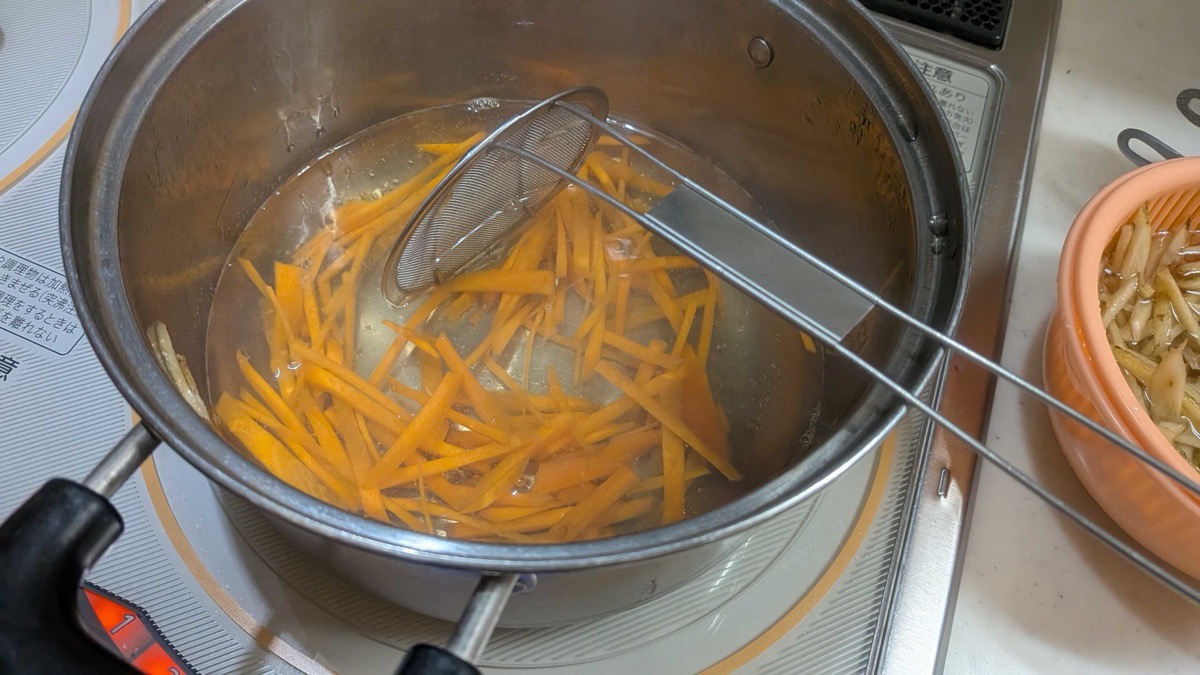
Kewpie’s recipe boils the burdock and carrot together. I did them one after the other in the same pot, because I wanted to watch the burdock on its own. Either way works. Put the carrot in the same water for about a minute, then scoop it out with a strainer and drain it with the burdock.
 Save
SaveLet everything drain and cool for a few minutes. Hot vegetables straight into mayonnaise make it split and go oily.
Step 6: Mix the Dressing and Toss
In a large bowl, stir the mayonnaise and soy sauce together until smooth. Add the burdock, carrot and squeezed cucumber, and toss until every strip is coated.

Taste it and adjust. If it’s flat, add a few more drops of soy sauce rather than more mayo. Then serve it in small bowls — in our house that means the two little navy bowls we use for every side dish.
Tips and Variations
- Keep the strips thin and even. Thick pieces of burdock stay woody after a minute; thin ones cook through and still crunch.
- Dress it close to serving. The cucumber and carrot keep releasing water, and the salad gets looser the longer it sits.
- Add toasted sesame. A spoonful of toasted sesame seeds, or ground sesame stirred into the mayo, is the most common variation you’ll see in Japanese delis.
- Make it sweeter. Some versions add a teaspoon of sugar or a little rice vinegar to the dressing. Try it as written first.
- “Crispy gobo salad” is a different dish. That’s a restaurant salad with deep-fried burdock shavings on top of greens. This one is the everyday boiled-and-mayo version.
- Leftover burdock? Use the rest of the root for kinpira gobo or drop it into miso soup.
What to Serve It With
Gobo salad is a side dish, and in a Japanese dinner it usually sits next to something hot and savory.
- Ginger pork or any fried or grilled main — the cool, creamy salad balances it.
- Rice and miso soup, for the full home-dinner set.
- Another cold side from the fridge, like daikon tuna salad, if you’re putting out a few small dishes.
- A bento box. It holds up well at room temperature for lunch and fills a corner nicely.
Storing
Gobo salad keeps in a covered container in the fridge for 2 to 3 days. It will get a little watery as the vegetables release liquid — stir it before serving and pour off anything that has pooled at the bottom.
Don’t freeze it. Mayonnaise separates when it thaws, and the cucumber turns limp. If you want to get ahead, boil the burdock and carrot the day before, keep them in the fridge undressed, and mix with the mayo and fresh cucumber when you eat.

Frequently Asked Questions
What is gobo salad?
A Japanese side dish of thin burdock root strips, briefly boiled and tossed with carrot and cucumber in a dressing of Japanese mayonnaise and a little soy sauce. It’s sold in almost every Japanese supermarket deli and is a standard bento side.
Do you need to peel burdock root?
No. Scrape the skin off lightly with the back of a knife to remove the dirt and the dark outer layer. Peeling it fully with a peeler takes away much of the flavor, which sits just under the skin.
Can you boil burdock root?
Yes — for salad, boiling is the standard method. Cut it into thin matchsticks, soak for about 5 minutes, then boil for about 1 minute after the water returns to a boil. Longer and it goes soft; for simmered dishes it’s cooked much longer on purpose.
Why do you soak burdock root in water?
Cut burdock darkens quickly and has a harsh raw bitterness. A short soak slows the browning and draws some of that out. About 5 minutes is enough; much longer and you start washing out the flavor too.
What’s the difference between gobo salad and kinpira gobo?
Both use burdock and carrot cut into strips. Kinpira gobo is stir-fried in sesame oil and seasoned with soy sauce, mirin and chili, and is served warm or at room temperature. Gobo salad is boiled and dressed with mayonnaise, and is served cold.
How long does gobo salad last?
2 to 3 days in a covered container in the fridge. It gets a little watery over time, so stir it and drain off any liquid before serving. It doesn’t freeze well because of the mayonnaise.
Gobo Salad (Japanese Burdock Root Salad)
Ingredients
Method
- Rinse the burdock and lightly scrape off the skin with the back of a knife. Do not peel it fully – the flavor is just under the skin.
- Cut the burdock into 5 cm (2 inch) lengths, then into thin matchsticks. Soak in water for about 5 minutes, then drain.
- Cut the carrot into matchsticks the same size. Cut the cucumber the same way, sprinkle with a pinch of salt, and set aside.
- Bring a pot of water to a boil. Add the burdock and boil for about 1 minute after the water returns to a boil, until it loses its raw edge but still snaps. Scoop out and drain.
- Boil the carrot in the same water for about 1 minute (or boil it together with the burdock). Drain well and let the vegetables cool for a few minutes.
- Stir the mayonnaise and soy sauce together in a large bowl. Squeeze the cucumber gently, then add it with the burdock and carrot and toss until coated. Taste and add a few drops of soy sauce if needed.


