Lettuce Sushi Roll (Japanese Lettuce Maki with Crab, Egg, and Mayo)
This lettuce sushi roll is retasu-maki (レタス巻き): a thick Japanese sushi roll filled with crisp lettuce, crab sticks, a sweet rolled omelet, and a line of Japanese mayo. There’s no raw fish in it, so it’s the kind of sushi roll Japanese families make at home and pack to take along, not something you order at a sushi counter.
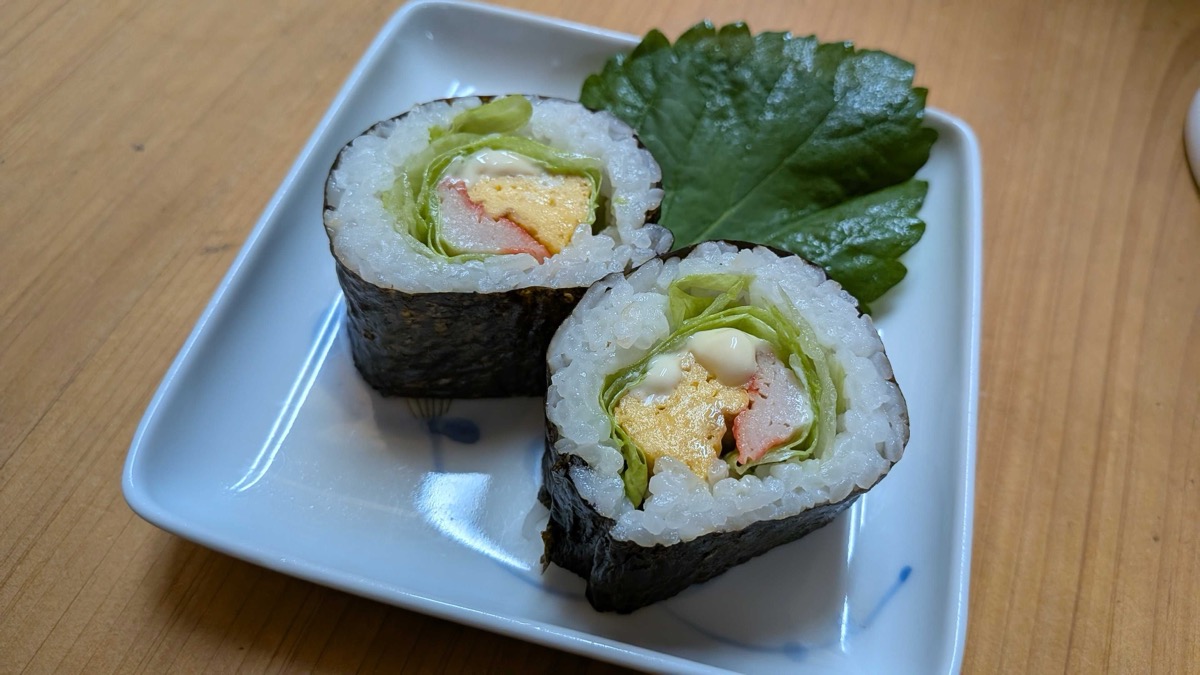
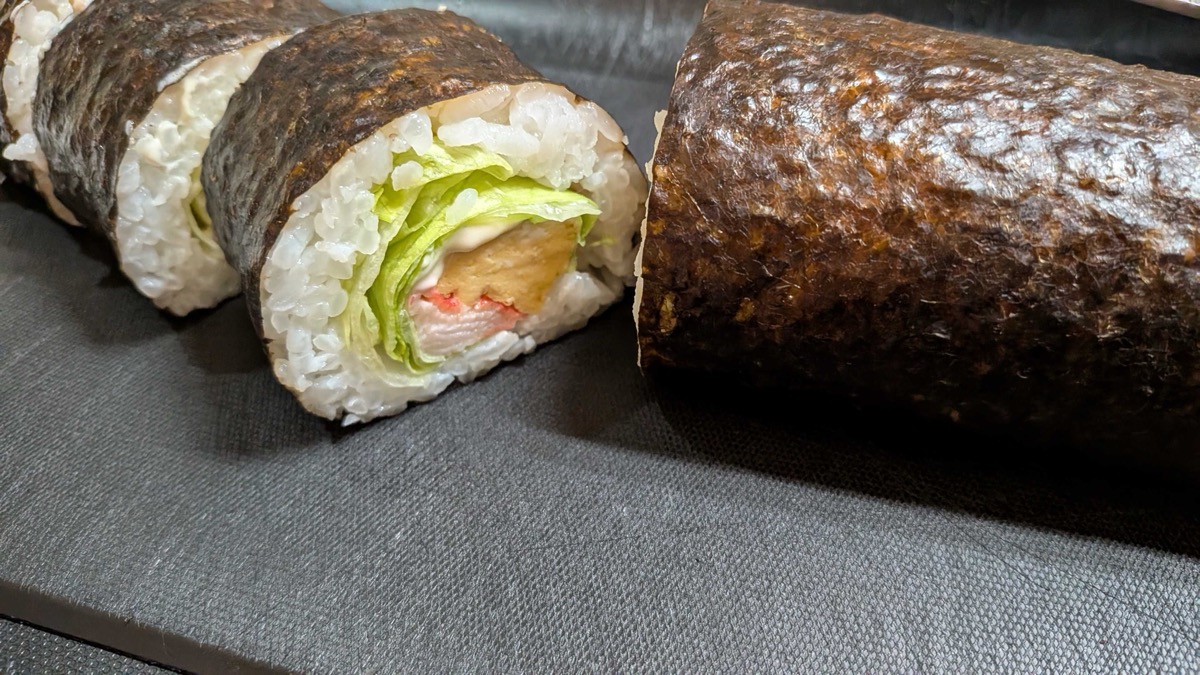
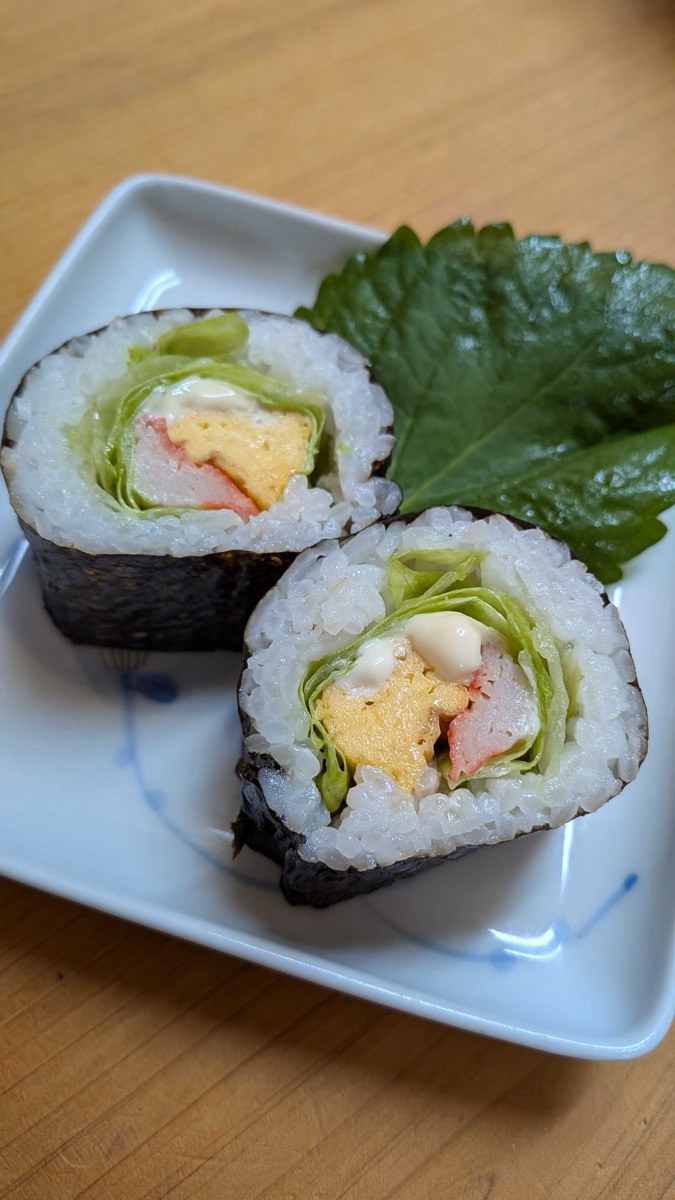
I made it to pack and take with us. I followed a recipe from a Japanese recipe site, but changed a few things: I cooked 2 rice cups and seasoned them with 4 tbsp of bottled sushi vinegar, used about 150g of it for one lettuce roll, and turned the rest into other sushi rolls. Because I was only making one lettuce roll, I used just one egg for the omelet. The fillings ended up a little off-center, as you can see in the photos. That’s how homemade sushi rolls usually look.
Disclosure: some links below are affiliate links. As an Amazon Associate I earn from qualifying purchases, at no extra cost to you.
 Save
The Short Answer
If you just want the method:
- What it is: a Japanese thick roll (futomaki) filled with lettuce, crab sticks, rolled omelet, and mayo. In Japan it’s also called a salad roll.
- For 1 roll: 1 sheet of nori, about 150g (5 oz) of sushi rice (cooked rice seasoned with roughly 1 tbsp sushi vinegar), 2–3 lettuce leaves, 3 crab sticks, an omelet made from 1 egg, and 1–2 tbsp Japanese mayo.
- The method: spread the rice over the nori with a bare strip at the far edge, lay the lettuce, mayo, crab, and egg across the middle, roll it tight with a bamboo mat, then slice with a wet knife.
- How Japanese homes use it: as a packed lunch or something to bring along and share. With no raw fish, it’s an easy sushi roll to make ahead and pack.
Why You’ll Love This Recipe
- No raw fish. Everything in it is cooked or fresh vegetables, so you don’t need sushi-grade fish.
- Supermarket ingredients. Lettuce, imitation crab, eggs, and mayo. Only the nori and sushi vinegar may need an Asian store.
- Crunchy and creamy. The cold, crisp lettuce against soft rice and mayo is what makes this roll.
- Easy to pack. It travels well for lunch or to share with others.
What is Lettuce Maki?
Retasu-maki means “lettuce roll.” It’s a futomaki, the thick kind of sushi roll made with a full sheet of nori, and it’s said to have been created at a sushi shop in Kyushu in the 1960s. Today you’ll find it at supermarket sushi counters and takeout sushi chains all over Japan, often sold as a salad maki (salad roll). The filling is almost always the same: lettuce, crab sticks, and mayo, sometimes with egg or canned tuna.
It’s close to a California roll in spirit, since both use imitation crab and mayo. The difference is that lettuce maki has the nori on the outside, uses lettuce instead of avocado and cucumber, and is much thicker. It’s also not the same as a “lettuce wrap sushi roll,” where lettuce replaces the nori. Here the lettuce is inside.
Ingredients (Makes 1 Thick Roll)
| Ingredient | Amount | Notes |
|---|---|---|
| Cooked Japanese short-grain rice | About 150g (5 oz) | Weight after mixing in the vinegar. I cooked 2 rice cups and used the rest for other rolls |
| Sushi vinegar | About 1 tbsp | Bottled, already seasoned. My ratio: 4 tbsp for 2 rice cups. Homemade substitute: see below |
| Nori | 1 full sheet | Toasted sushi nori |
| Lettuce | 2–3 leaves | Regular iceberg-type lettuce |
| Crab sticks (kanikama) | 3 sticks | Imitation crab |
| Egg | 1 | For the rolled omelet |
| Sugar | ½ tsp | For the egg |
| Salt | 1 pinch | For the egg |
| Japanese mayonnaise (Kewpie) | 1–2 tbsp | To taste |
| Vegetable oil | A little | For the pan |
We use Kewpie mayonnaise. It’s richer and tangier than American mayo, and it’s the standard in Japanese sushi rolls. For the rice, a Japanese-style short-grain rice gives you the sticky texture you need to hold the roll together. For the sushi vinegar, I bought a well-known one from Kyoto: Chidori sushi vinegar, made by Murayama Zosu, a Kyoto vinegar maker. The label says it’s made with Rishiri kombu. Chidori is hard to find outside Japan, so in the US, Mizkan sushi seasoning on Amazon is the easy choice. I haven’t used that bottle myself, but Mizkan is one of the biggest vinegar brands in Japan. Any bottled sushi vinegar works. If you can’t find it, mix your own: the recipe I referenced uses 3 tbsp rice vinegar, 1 tbsp sugar, and ½ tsp salt for about 500g of cooked rice. For the 150g in this roll, that’s about 1 tbsp rice vinegar, 1 tsp sugar, and a pinch of salt. Stir until the sugar dissolves (warming it briefly helps). I used the bottled kind this time, so I haven’t tried the homemade mix in this roll.
How to Make Lettuce Maki
Step 1: Make the Sushi Rice
Put the freshly cooked rice in a large bowl and pour the sushi vinegar over it. Mix with a cutting motion using a rice paddle, so you don’t mash the grains. Let it cool to about room temperature while you make the fillings.
 Save
Step 2: Make a Rolled Omelet
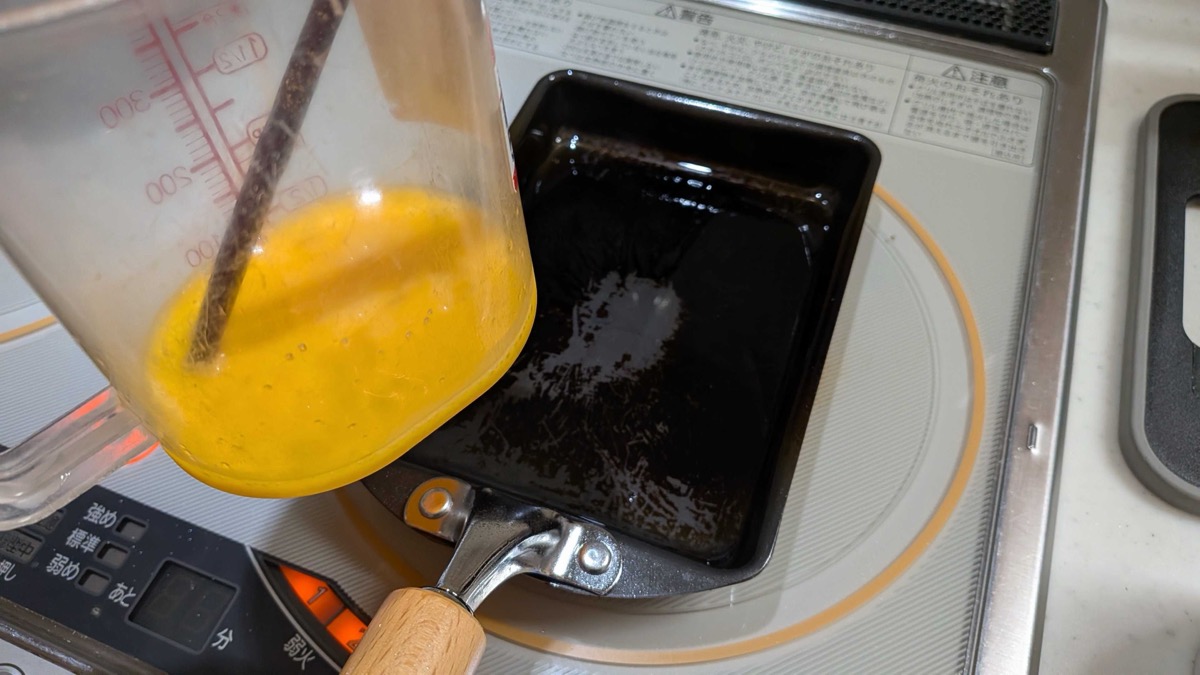
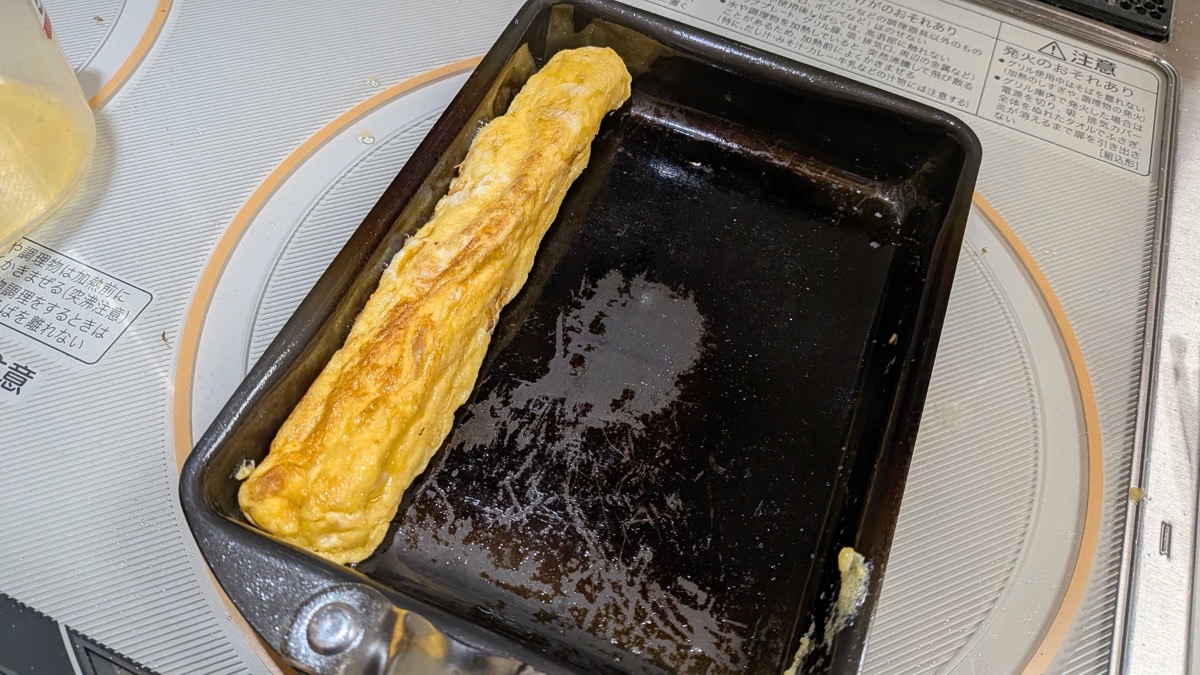
Beat the egg with the sugar and salt. Heat a lightly oiled tamagoyaki pan over medium-low heat, pour in a thin layer of egg, and roll it up once it’s almost set. Push the roll to the back, add more egg, and repeat until all of it is used. With just one egg, you’ll get a thin omelet stick, which is exactly the right size for a sushi roll. My full method is in my tamagoyaki recipe. Let it cool before rolling.
 Save
 Save
Step 3: Spread the Rice and Add the Fillings
Wash and dry the lettuce well. Place the nori shiny side down on a bamboo rolling mat (a plastic sushi mat works too). Spread the rice evenly over it with damp hands, leaving about 1 inch (2–3cm) of bare nori at the far edge. Lay the lettuce across the middle, squeeze on the mayo, then line up the crab sticks and the omelet on top.
 Save
Step 4: Roll It Up
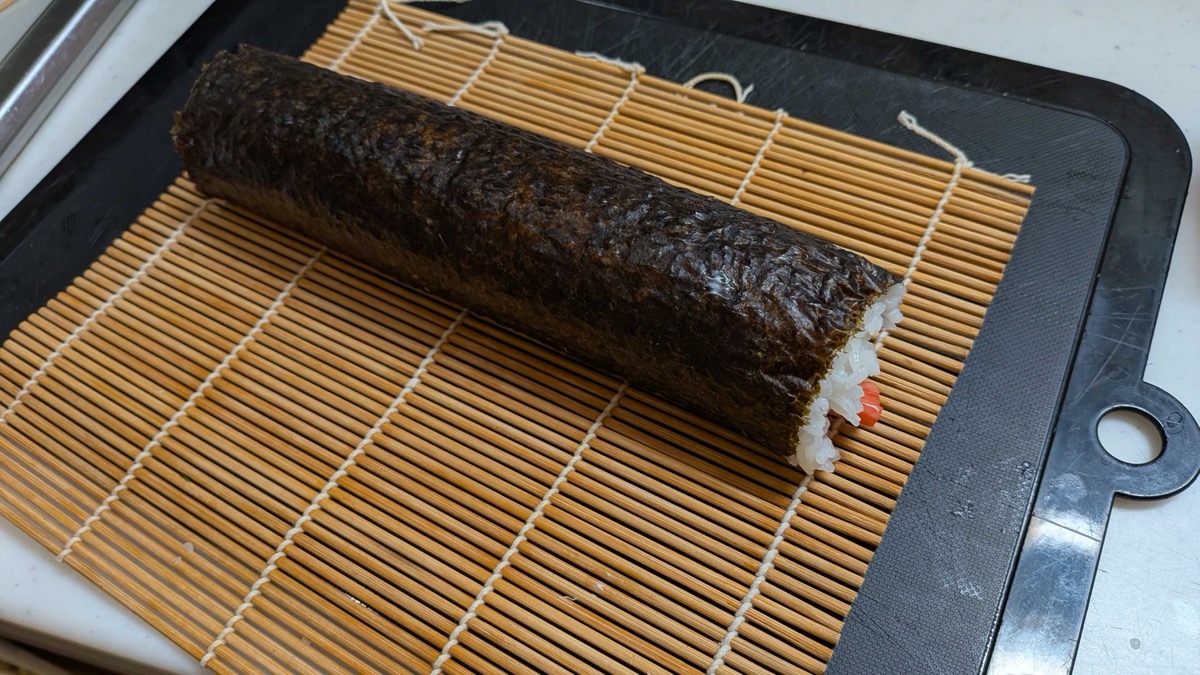
Lift the near edge of the mat with your thumbs while holding the fillings in place with your fingers. Roll forward in one motion so the near edge of the rice meets the far edge of the rice. Then press gently over the mat to firm up the roll, and finish rolling over the bare strip of nori to seal it. Leave it seam side down for a few minutes.
 Save
Step 5: Slice
Wet a sharp knife and cut the roll into thick slices, wiping and re-wetting the blade between cuts so the rice doesn’t stick. Cut it in half first, then cut each half into equal pieces.
 Save
 Save
Tips and Variations
- Dry the lettuce well. Wet leaves make the rice and nori soggy. Pat them dry with paper towels.
- Don’t overfill. Lettuce takes up more room than it looks. If the roll won’t close, take a leaf out.
- Keep the far edge bare. That strip of plain nori is what seals the roll. Rice all the way to the edge makes it hard to close.
- Swap the fillings. Canned tuna mixed with mayo is a common version in Japan. Cucumber or a shiso leaf also fit in well.
- No tamagoyaki pan? Make a thin omelet in a round frying pan, fold or roll it up, and cut it into a strip.
What to Serve It With
- For a packed lunch, add a couple of other sushi rolls or rice balls, like spam onigiri.
- A cold side dish that packs well, such as Japanese potato salad.
- At home, a bowl of miso soup and a light, vinegary side like harusame salad.
Storing
Lettuce maki is best eaten the same day. If you pack it to take along, keep it cool with an ice pack, since it has mayo and egg inside. The fridge keeps it safe, but the rice turns hard and dry and the lettuce wilts, so it’s never as good the next day. It doesn’t freeze.
Frequently Asked Questions
What is a salad sushi roll?
In Japan, a “salad roll” (salad maki) is usually a thick roll of lettuce, crab sticks, and mayo, which is basically this lettuce maki. Some versions add egg, cucumber, or tuna mayo.
Is the crab in this roll cooked?
Yes. Crab sticks (kanikama) are made from cooked white fish paste, so they’re ready to eat straight from the package. Nothing in this roll is raw except the lettuce.
Is it the same as a California roll?
They’re related but not the same. A California roll is usually rolled with the rice on the outside and filled with crab, avocado, and cucumber. Lettuce maki has the nori on the outside, is thicker, and uses lettuce and egg.
What can I use instead of sushi vinegar?
Mix rice vinegar with sugar and salt. Based on the recipe I referenced, that’s about 1 tbsp rice vinegar, 1 tsp sugar, and a pinch of salt for 150g of rice, or 3 tbsp vinegar, 1 tbsp sugar, and ½ tsp salt for about 500g. Plain rice vinegar on its own will taste sharp and not sweet enough, so don’t skip the sugar and salt.
Can I make it without a bamboo mat?
I used a bamboo mat and haven’t tried it without one. A clean kitchen towel covered with plastic wrap is the usual substitute. A mat makes it much easier to roll a thick roll tight, and it’s one of the cheap Japanese kitchen tools worth having if you make sushi rolls often. Mine is a plain bamboo one. If you’re buying one in the US, this non-stick plastic sushi rolling mat on Amazon is an option. I haven’t used that one myself, but plastic mats don’t soak up water or rice the way bamboo does, so they’re easier to wash.
Can I make lettuce maki ahead of time?
A few hours ahead is fine, which is why it works for packed lunches. Keep it cool and covered, and slice it close to eating time if you can. Overnight in the fridge, the rice gets hard.
Lettuce Sushi Roll (Japanese Lettuce Maki)
Ingredients
Method
- Put the freshly cooked rice in a bowl, pour the sushi vinegar over it, and mix with a cutting motion. Let it cool to about room temperature.
- Beat the egg with the sugar and salt. Cook it in a lightly oiled tamagoyaki pan over medium-low heat, adding thin layers and rolling them up, to make a thin rolled omelet. Let it cool.
- Wash the lettuce and pat it completely dry.
- Place the nori shiny side down on a bamboo mat. Spread the rice evenly with damp hands, leaving about 1 inch (2-3cm) bare at the far edge.
- Lay the lettuce across the middle, add the mayo, then line up the crab sticks and the omelet on top.
- Roll forward with the mat in one motion so the near edge of the rice meets the far edge of the rice. Press gently to firm it up, then finish rolling to seal. Rest seam side down for a few minutes.
- Slice into thick pieces with a wet knife, wiping the blade between cuts.


